Vial Label Samples: What Can You Actually Approve?
The sample looks good. What, exactly, have you approved? For a first vial-label order, that question matters more than the number of swatches in an envelope. A material sample, a PDF proof and a printed sample of your own artwork can answer different questions. Buying one does not quietly buy the evidence supplied by the others.
I would start a sample request with the decision it must support. Are you choosing a construction, checking the finished appearance, or deciding whether to release a particular production file? Give each job its own record. Otherwise, a pleasant sample review can leave the expensive uncertainty untouched.
Give each sample a specific job
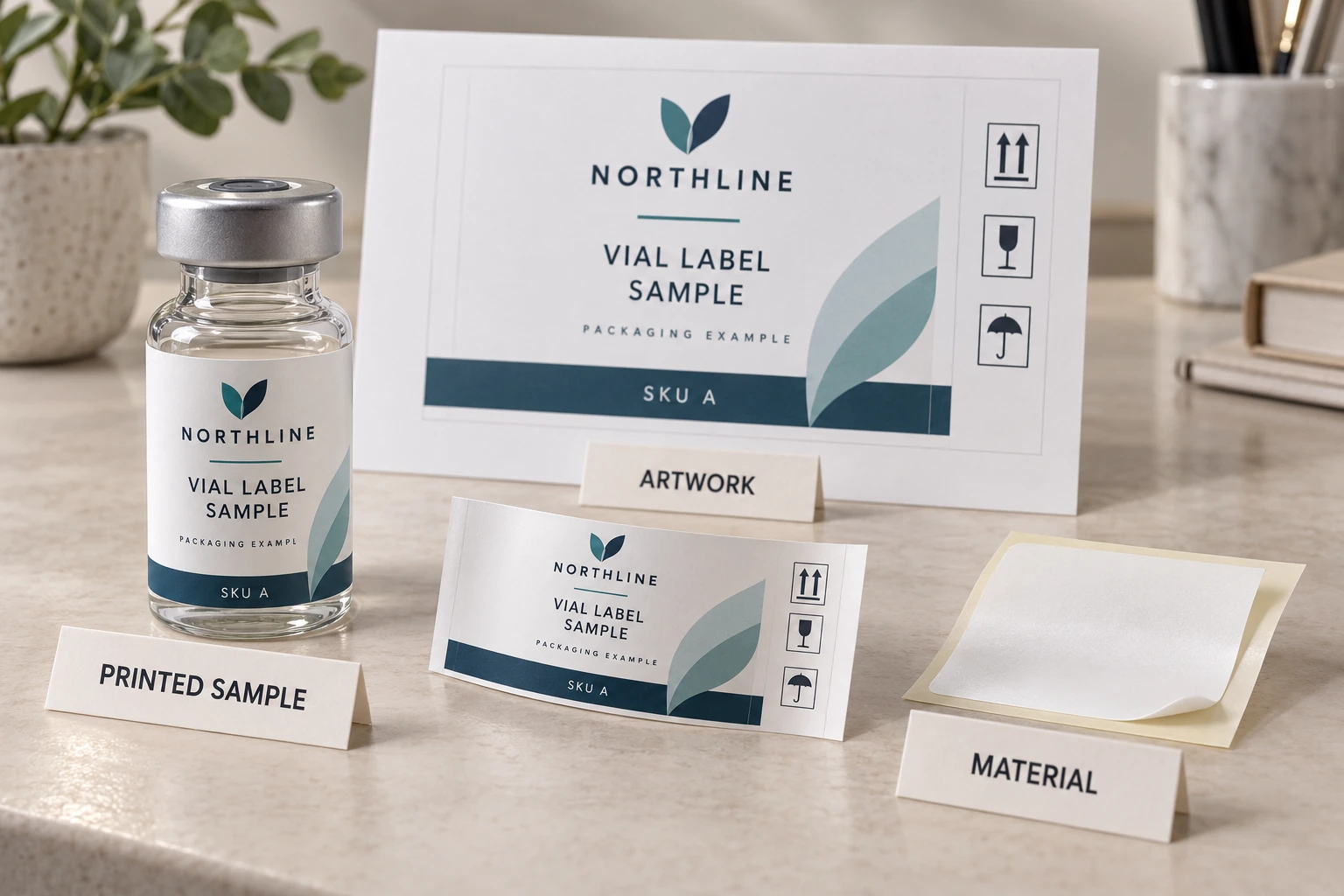
A PDF proof helps reviewers examine wording, layout and the proposed artwork version. A physical material swatch lets you handle a particular construction. A printed sample can show a combination of artwork, substrate and finishing. Ask what actually represents the proposed production order, and what has been substituted for demonstration.
Avery’s explanation of roll-label sample orders describes a route for obtaining a sample run with supplied artwork. It is a useful example of why a sample pack and an artwork-specific printed sample are different purchasing requests. Another supplier’s service is not an RP Labels offer or a universal production method.
Before requesting custom peptide vial labels, decide which uncertainty you need to remove first. If the artwork is still changing, an expensive artwork-specific sample may be premature. If the material is settled but a reflective finish changes the reading experience, another generic swatch may add little.
Compare a first launch with a material replacement
Consider an illustrative brand preparing its first small-vial label. The buyer has a logo and proposed wording but has not selected a final face material. The sensible first step may be a construction discussion and representative material samples. The label design can then develop around the selected surface rather than repeatedly chasing a moving background.
Now consider an illustrative buyer keeping an established design while changing material. Here, an attractive unrelated sample proves very little. The important comparison is the accepted old construction against the proposed new one, on the intended container, with the relevant artwork and handling conditions identified.
Neither example is a reported customer test. They show why the same request for “a sample” can lead to different useful deliverables. The first buyer needs to narrow options. The second needs to isolate a change. Sending both buyers the same presentation pack would be convenient for the sender, not necessarily helpful for the decision.
Write a sample brief before arranging shipment
Keep the brief short enough that the person preparing the sample can follow it. Include the container reference, proposed label size, construction being considered, artwork revision where relevant, and the question the sample should answer. State whether an actual container will be available for review.
- Identify the sample: material reference, artwork revision and preparation date when known.
- State the purpose: appearance selection, fit review, application trial or another defined question.
- List differences from the planned order: shape, printing, finish, adhesive, liner or supply format.
- Record who reviews it and which observations will permit the next step.
Do not impose invented test temperatures, universal dwell times or arbitrary pass limits. Agree conditions appropriate to the proposed construction and actual process. Avery Dennison describes application testing around the packaging lifecycle and environment. The purchasing lesson is to specify relevant conditions; it is not to claim that a supplier’s laboratory results apply to your sample.
Avoid changing every variable at once
Suppose you compare a glossy white printed sample with an unprinted clear swatch. One feels more convincing, but the comparison changes opacity, surface finish and printed content together. You cannot confidently assign the difference to one feature. Ask for a more controlled comparison if the decision depends on that feature.
You do not always need an elaborate test program. For an appearance decision, place identified samples on the intended containers and review the same information under the same ordinary viewing conditions. For application questions, involve the person who will apply the labels and agree what additional trial is necessary. A photograph can preserve an observation; it cannot replace every physical check.
Keep the accepted specimen and its identification together. A loose swatch without a reference can become a memory aid rather than a usable approval record. If the final proposal changes after sampling, ask which earlier conclusions still apply.
Separate observations from the production release
Use plain notes: what was reviewed, what was observed, what remains open and what the sample represents. “Appearance accepted for this construction and artwork” is more useful than an unexplained tick on the shipping envelope. Do not let a sample approval automatically release revised artwork that nobody checked.
The proof approval checklist handles the wording and file-release side. This sample plan supplies a different record: the physical evidence behind the material or finished-appearance decision. Link the two records when you authorize production.
If the shipment deadline arrives before an important check is complete, make that uncertainty explicit. A buyer may decide to wait, change the requirement or discuss another route. Removing the unfinished item from the checklist does not remove the risk.
Questions before requesting samples
Can a material swatch approve my final printed color?
It can help you assess the identified surface, but an unprinted swatch does not show your final printed artwork. Ask what printed reference is appropriate if color or reflective appearance determines acceptance.
Must every first order include a bespoke printed sample?
No universal route suits every project. Discuss the remaining uncertainty, available sample options, cost and timing. A stock sample may answer a construction question; an artwork-specific sample may be needed for another decision.
Does a sample approval cover later changes?
Only within the scope actually agreed. A change to construction, finish, artwork, container or application process can require further review. Record the difference and confirm what needs checking again.
Request the evidence you need next
Send your container details, proposed dimensions, artwork status, quantity per design and the single decision you need a sample to resolve through the project quote form. RP Labels provides artwork and digital proof support; ask which physical sample options are available for your specification before agreeing cost or timing. Keep the accepted specimen with the release file. The useful result is an answered question, not a larger envelope of attractive labels.