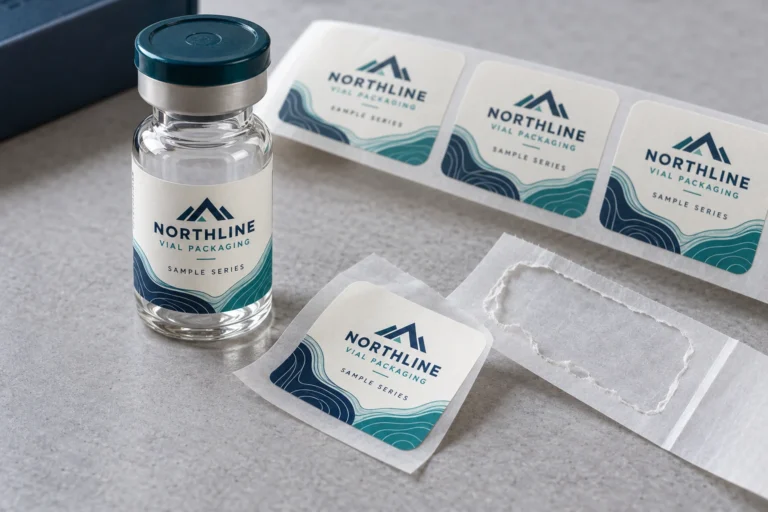
Roll Leaders and Trailers: Ask What the Packer Needs Before Label Printing
The web before the first label is part of the delivery brief
A label roll can match the artwork, core and winding direction while still leaving the packer short of the bare web needed for its setup. The opposite problem is also possible: a buyer mistakes an agreed leader or trailer for missing printed labels. Both come from leaving the non-label sections undefined.
Ask the packer what beginning and end sections its process requires, then have the converter acknowledge those requirements. Do not choose a universal length from another machine’s example. The requirement belongs to the actual handling and application arrangement.
Name the beginning and end separately
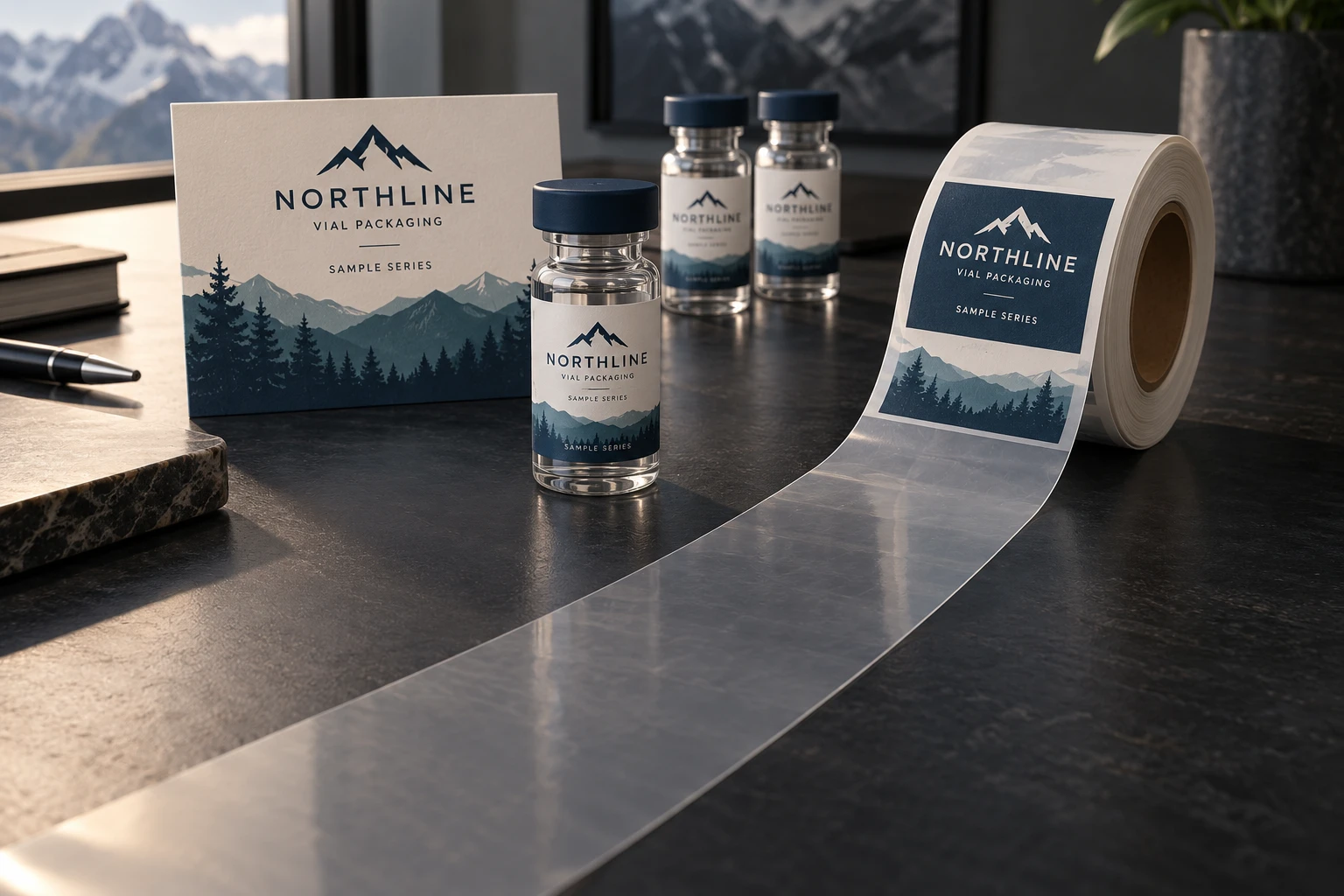
In this purchasing context, a leader is the web before the usable printed-label run, and a trailer is the web after it. The exact material and presentation must be specified. Bare release liner, printed setup labels and an attached extra section are not interchangeable descriptions.
Use a diagram with feed direction, first usable label and last usable label marked. State whether the requirement applies to every delivered roll, including partial rolls. Without that detail, the supplier and packer may interpret a total order requirement differently.
Also identify whether any join is allowed in those sections. A leader should not become an unrecorded exception to an agreed splice policy. The supplier should confirm how the requested construction and presentation will be delivered rather than relying on a verbal assurance that the roll will be “machine ready.”
Let the packer define the functional need
The operator or equipment provider should specify what is needed to prepare and finish the web path. Ask for units and the relevant diagram or written requirement. Keep this instruction alongside the core, maximum outer diameter and unwind arrangement.
Do not infer the requirement from a photograph of a similar machine. A visible strip of liner may demonstrate the idea without establishing the amount or construction needed for your setup. If the packer cannot yet confirm the requirement, mark it as an open item before approving the bulk order.
| Detail to agree | Why it matters | Who should confirm it |
|---|---|---|
| Start section | Establishes the web before the first usable label | Packer requirement, converter feasibility |
| End section | Establishes the web after the last usable label | Packer requirement, converter feasibility |
| Material and continuity | Avoids assuming an attached strip is equivalent | Converter and packer |
| Per-roll application | Covers full and partial rolls consistently | Buyer and supplier |
| Counting treatment | Keeps non-label web outside usable-label quantity | Buyer and supplier |
| Identification | Makes the beginning and end clear at receipt | Supplier and receiving team |
Keep non-label web out of the wrong count
If the order is expressed in usable printed labels, clarify that leaders and trailers are separate delivery features. A quotation based on web length requires more detail: label pitch, lane count and non-label sections affect how length relates to the number of labels.
This does not mean every supplier uses the same pricing or counting method. It means the buyer should understand the method being quoted. Ask whether the requested presentation affects roll division, packaging or price, and compare offers on the same basis.
For custom vial label orders, quantity per design and finished roll requirements should be submitted together. A low starting quantity does not establish that every roll arrangement or finishing request is available without further confirmation.
Two illustrative packing arrangements
A contract packer requests a defined bare-liner section before the first label on every roll. The buyer attaches that requirement to the order, including the final partial roll. The converter confirms feasibility and the counting treatment. The important approval is the delivered web arrangement, not merely a front-label PDF.
In a second example, a small manual application job has no equipment requirement for a long leader. Adding one because a previous machine-applied order used it may provide no benefit. A simpler agreed presentation can be the better choice, provided the labels remain identifiable and usable for the actual task.
These hypothetical situations show why a familiar roll specification should not be copied automatically. They do not establish any standard leader length, labor saving or production capability for RP Labels.
Review a representative sample when the requirement is unresolved
A short piece of finished web may communicate the relationship between liner and labels, while a full setup review may require a more representative roll. The packer should define the sample scope. Record whether the sample demonstrates the actual production construction or only the proposed arrangement.
Check the first and last usable-label boundaries, orientation and any allowed joins. If the supplier proposes a substitute liner or another way of adding the start section, ask the packer whether that changes its approval. An attractive sample photograph cannot establish compatibility with an untested setup.
Keep the approved diagram and sample reference in the reorder record. If the packer changes equipment or the supplier changes roll division, review which requirements need to be reconfirmed. The artwork may remain identical while the delivery arrangement needs a new decision.
Resolve omissions before they become production-day surprises
If stock has already arrived without an expected section, first compare the order confirmation with the packer’s requirement. Establish whether the requirement was omitted, acknowledged differently or supplied incorrectly. That distinction matters to the corrective discussion, even when the immediate priority is obtaining usable stock.
Ask the responsible parties for a feasible recovery proposal and record its effect on quantity, timing and acceptance. Do not improvise a join or extension and assume it preserves the original approval. Availability of reworking or other services requires confirmation; this article does not promise them.
Frequently asked questions
Is there a standard leader length for vial labels?
There is no universal number established here. Use the actual packer’s requirement and the converter’s confirmation for the proposed roll. A generic example may explain the feature but should not become a production specification.
Are leaders and trailers included in the label quantity?
Clarify the counting basis. If the order is for usable printed labels, non-label web should be identified separately. Where length is used for pricing or measurement, agree how it relates to the printed quantity.
Does every roll need the same arrangement?
Ask the packer and state the answer explicitly, including partial rolls. Avoid assuming that an instruction for the first roll automatically covers every delivered roll.
Keep the leader and trailer request alongside the roll-delivery specification guide so the starting web does not replace confirmation of orientation, core and roll limits.
Send the roll diagram with the artwork
For a printing quotation, provide quantity per SKU, label dimensions, artwork, feed diagram and the packer’s leader and trailer requirements with units. Include permitted joins, per-roll conditions and core or diameter limits. Ask the supplier to confirm the complete finished arrangement before release.