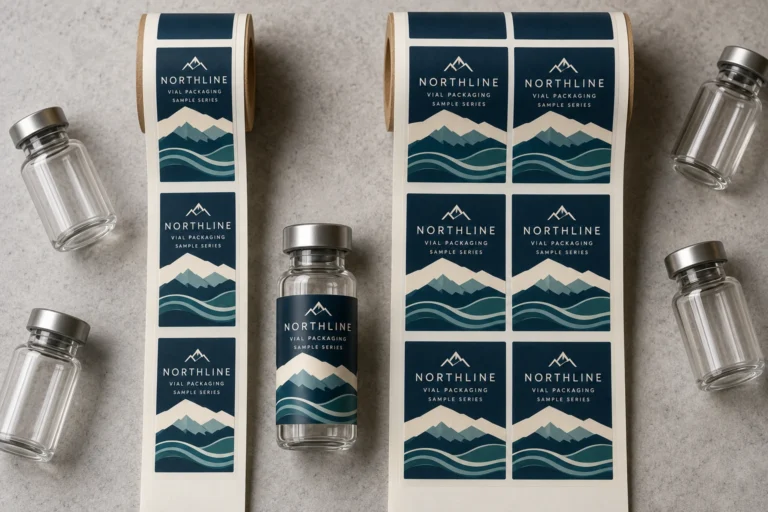
Can You Relabel Existing Vials? Check Cover-Up, Fit and Approval First
A new artwork file does not change the label already applied
The wording needs a correction, but the labels are already on the vials. Sending a revised PDF solves only the file question. The physical stock needs its own decision: can an approved replacement approach work, or should the affected packaging be held for another disposition?
I would establish who can authorize the handling before discussing a cover-up label. This guide helps define a packaging-print proposal using empty sample packaging or an appropriately authorized review. It does not give permission to alter a regulated product or replace the product owner’s quality and information responsibilities.
Identify what is actually wrong
Record the affected packaging reference, old artwork revision, exact correction and quantity involved. Distinguish an incorrect identifier from an optional visual preference. The required response may differ, but unsuitable information should not be left in use simply because a change is inconvenient.
Keep affected stock identifiable while the responsible people decide what may happen next. Do not assume that every carton or vial in a broader job uses the same revision. The purpose is an accurate scope, not an estimate based on the last file someone remembers sending.
The approved-artwork change guide explains the wider status and release process. The additional question here concerns the proposed physical label combination: what would cover, contact or replace the existing surface, and what evidence is needed before approving it?
Describe the old surface as part of the new brief
If a replacement would sit over the existing label, provide information about that surface rather than describing only the glass vial underneath. Record the old label’s known material, finish, dimensions and condition. If those details are unknown, send an identified specimen and say what cannot be established.
Do not assume a proposal intended for clean glass is suitable over an unspecified printed or finished label. Ask the supplier to review the actual receiving surface and proposed combination. A drawing of the new size can define coverage; it cannot establish adhesion or long-term behavior.
If removal is being considered, have the responsible parties define an appropriate permitted approach. This article supplies no chemical cleaning or product-handling procedure. A buyer’s preferred route still needs to be feasible for the packaging and accepted by the person authorized to release it.
Separate coverage, opacity and physical suitability
| Review question | What to provide | What should remain unconfirmed until reviewed |
|---|---|---|
| Coverage | Old and proposed dimensions, position and required information | Whether the proposal actually hides every affected area |
| Opacity | Existing print and representative replacement construction | Whether old information remains visible in relevant viewing |
| Contact surface | Known old label and surface condition | Whether the new construction works on that surface |
| Fit and handling | The actual empty sample packaging and intended conditions | Whether the added combination remains suitable |
| Authorization | Approved correction and responsible decision-maker | Whether any handling and release is permitted |
Avery’s description of a dedicated block-out material illustrates why hiding underlying print can be a specific construction requirement. It does not establish that an arbitrary white label will provide the same result, or that RP Labels supplies that named product.
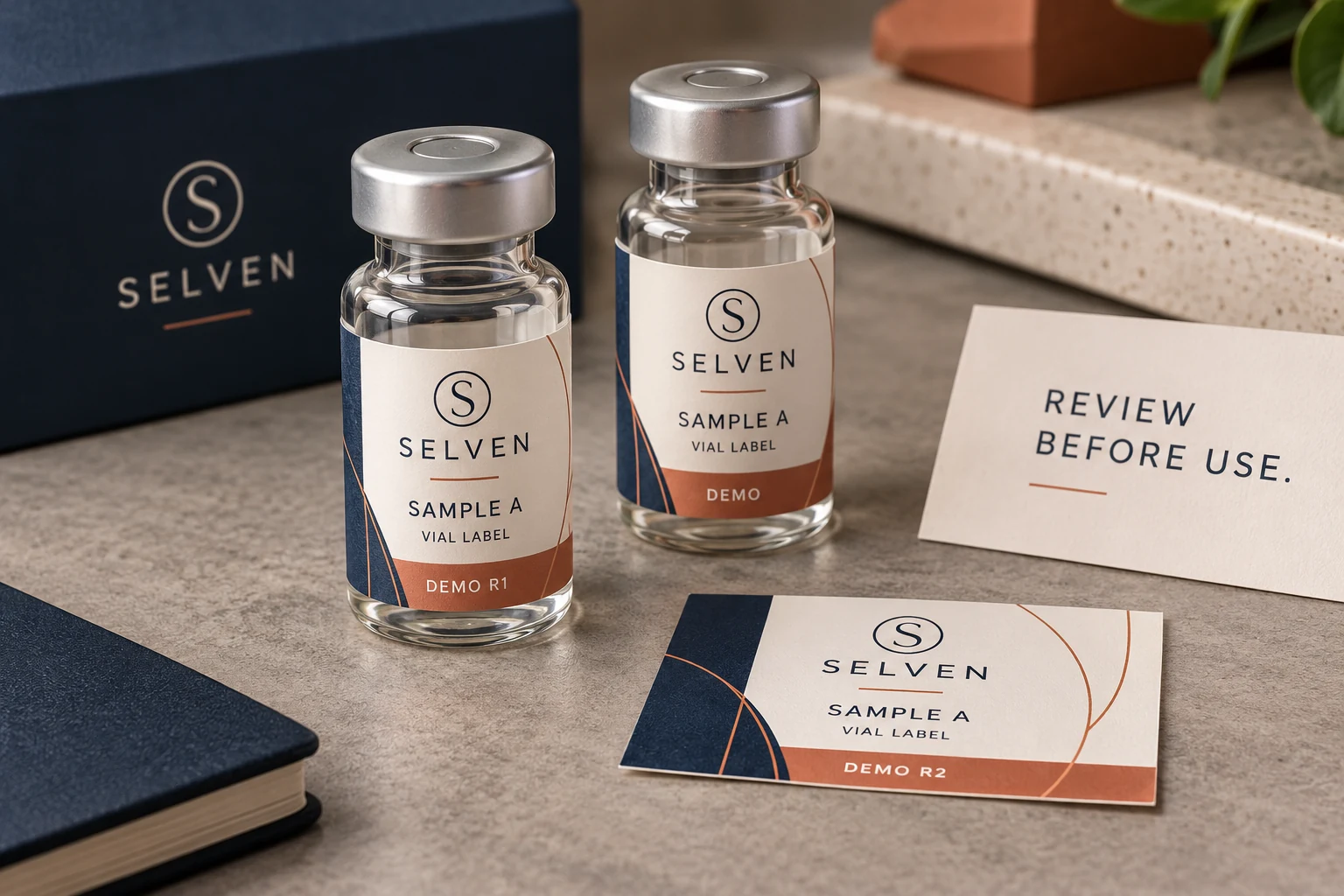
An AI packaging image can show an old revision and an unattached replacement candidate. It cannot prove the candidate covers, adheres or has been approved. Keep those statements out of the image caption and the purchasing record until appropriate evidence actually exists.
Compare alternatives without forcing a repair
A cover-up proposal may deserve review when the authorized correction, required coverage and actual packaging conditions can be addressed. It is not automatically the lowest total-effort route merely because it uses fewer new labels than a complete replacement plan.
Another route may involve replacing the affected packaging or choosing a different approved disposition. Ask the responsible parties what is feasible before comparing costs and timing. Do not invent a supplier rework service or imply that RP Labels will remove and reapply stock as part of a printing quotation.
For custom vial-label printing, the proposed deliverable might be an identified replacement label for review. The broader work of handling existing packaging must be separately established. A clear boundary makes the quotation more useful and avoids silently transferring responsibility.
Two illustrative situations need different decisions
Imagine an empty sample-packaging set with a small approved design correction. The brand wants to evaluate whether a fully specified replacement candidate could cover the old printed area. A representative sample review may be a sensible next step before any larger purchase is released.
Now imagine packaging whose required information cannot be reliably concealed, or whose handling is not authorized by the responsible owner. In that situation, a visually attractive cover-up mock-up is not enough. The proposal should stop at the unresolved question rather than becoming a rushed production instruction.
These examples are not successful repair cases. They show why the same request to cover a label can end in a trial, another packaging route or no authorized change. A fair supplier discussion leaves all of those outcomes available.
Release a reviewed proposal as its own revision
If a route is accepted, identify the replacement artwork, proposed construction, approved application context and relevant sample reference. Record the correction and what the approval actually covers. A successful observation on an empty example does not approve every future condition or permit product handling outside the agreed scope.
Keep the disposition of old stock separate from the release of new labels. Specify who communicates the accepted instruction to the people holding or using the packaging. The finished result should be traceable to a decision rather than to another attachment called corrected-final.
Questions about existing labeled vials
Can I simply order a larger white label?
Size is only one input. Confirm coverage, opacity, receiving surface, fit and authorization using a representative proposal. The color white does not establish the whole result.
Does a digital proof show whether old wording will remain visible?
It can show proposed geometry and layout. It cannot prove the physical opacity or suitability of the actual label combination. Appropriate representative evidence is still needed.
Does RP Labels provide a relabeling service?
No such handling service is established by this guide. Ask about the printing proposal and confirm any additional work separately rather than assuming it is included.
What information should I send for a replacement-label enquiry?
Use the project enquiry form with the vial and old-label references, approved correction, existing dimensions, relevant surface details and quantity. State what handling is authorized and what remains unresolved. Request a defined print candidate and review requirements before releasing a larger order.