Vial and Carton Labels: What to Review Together Before Ordering
Approve the set as well as the separate components
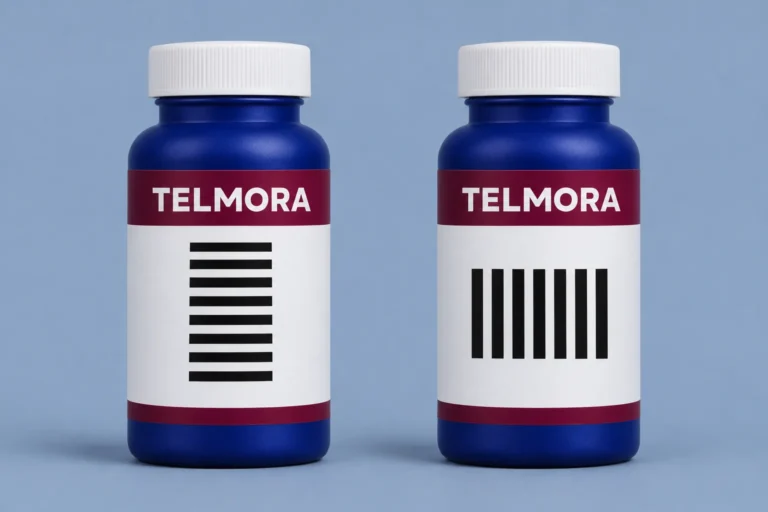
The vial-label proof is correct. The carton proof is also correct against a different revision. Only when the two are placed together does the brand notice that their product identifiers no longer describe the same version. Separate approvals can leave a gap if nobody reviews the intended packaging set.
I would create one component map before releasing related artwork. It should identify which vial label belongs with which externally supplied carton, which information must agree and who approves any intentional difference. This guide concerns that coordination task; it does not establish carton manufacturing as an RP Labels service.
Give the pairing an identity beyond its color
Use a readable SKU or project reference to connect the components. A navy accent can help people recognize a family, but it should not be the only instruction for matching a label to a carton. Similar colors and small design changes can make visual memory an unreliable release record.
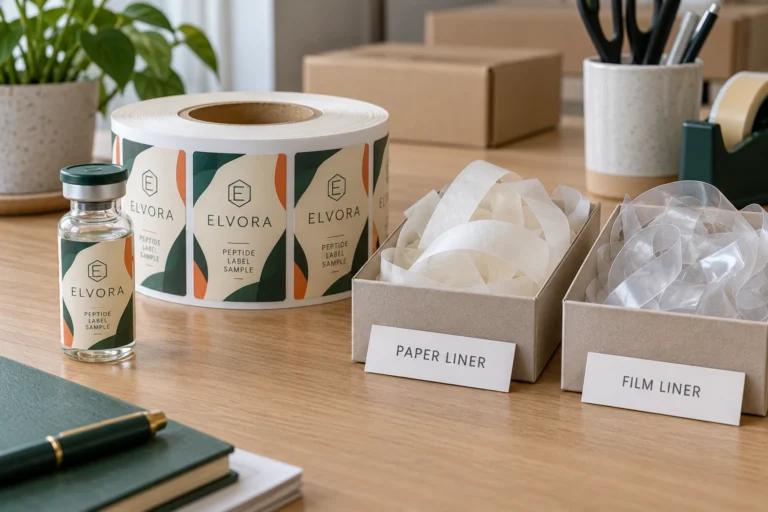
For custom peptide vial labels, keep the label artwork revision and the carton reference as separate fields within that pairing. They may be produced by different suppliers and revised at different times. The purpose of the map is to make that relationship explicit.
Do not assume every word must be identical on both components. A larger carton may carry a different amount of approved information. The brand’s responsible reviewers should identify which fields must match, which deliberately differ and which require their own product or market review.
Build a component matrix people can actually check

Keep the matrix short enough to review beside the final proofs. Use the actual approved data, not an example copied from this article. Leave pending items visibly pending rather than giving an uncertain file an approved-looking revision number.
| Set reference | Vial-label file | Carton reference | Information relationship | Release status |
|---|---|---|---|---|
| One actual SKU | Identified artwork revision | Identified external artwork revision | Fields that must agree and intentional differences | Named approvals and unresolved items |
| Another actual SKU | Its own identified revision | Its own external revision | The same explicit comparison | Its own approval, not inherited from the first row |
The table is a structure for your records, not a report of completed orders. Attach a readable preview of each component where it helps, but retain the authoritative file references. A screenshot alone can conceal which output was actually approved.
Compare the product identifier, variant designation and any other fields the brand has marked as linked. If operational codes are involved, their data and function require the appropriate review. Decorative symbols in an AI example should never be copied into production as working identifiers.
Review together without pretending the materials are identical
Place representative components together at their intended physical scale. Check the relationship between the smaller reading area on the vial and the larger area on the carton. A hierarchy that works on the box may need a different arrangement on the curved label.
Appearance matching is a separate question from identity matching. Paperboard, a label surface and a reflective accent can present color differently. Ask what should remain consistent and what difference is acceptable rather than demanding identical appearance under every angle and light.
The repeat-order color-reference guide helps with the next appearance-reference question. Here the priority is to identify the right pair of components before deciding whether their accepted visual relationship has been maintained.
Do not make a color adjustment to compensate for an unidentified file change. First establish that the compared components represent the intended versions. A carefully matched wrong SKU is still the wrong pairing.
Two illustrative sets expose different risks
Imagine a brand introducing two clearly named variants using one label layout and two externally produced cartons. The primary job is to confirm each label/carton pairing and the fields that link them. A simple matrix may prevent the team from relying only on the accent color during approval.
Now imagine an established range updating carton artwork while keeping an accepted vial label unchanged. The brand needs to decide whether the existing label remains an approved match and whether old and new cartons may be used with it. The answer should be recorded rather than inferred because only one supplier received a new file.
These are hypothetical coordination situations. They do not establish that either transition is permitted for a particular product. The responsible brand reviewers must decide whether existing components remain suitable, and the involved suppliers should receive only the instructions relevant to their work.
Route changes by what they affect
When a linked identifier changes, check the mapped components that carry it. When only an unrelated decorative element changes, the review scope may be narrower. Avoid both extremes: automatically releasing everything unchanged, or forcing every harmless layout edit through an unnecessary complete redesign.
Record which components are affected, which versions are superseded and who communicates the update. A label printer should not have to inspect an external carton file and guess whether its new wording overrides the approved vial-label instruction.
Keep existing stock visible in the decision. New artwork does not change printed components already on hand. If different revisions could coexist, agree how the responsible packing team distinguishes acceptable pairings and who can authorize their use.
Send one understandable label brief
For the label printing enquiry, provide the vial dimensions, label artwork, quantity per design and the relevant carton reference as context. Mark exactly which information or visual relationship needs coordination. Separate a request for label printing from any carton service that has not been agreed.
Ask for confirmation of the proposed label construction and final proof reference. The useful response makes the label’s place in the set clear while keeping the other supplier’s scope and the brand’s content responsibility intact.
Questions about matching vial labels and cartons
Must the carton and vial use identical layouts?
No. Their physical areas and reading tasks can differ. Identify the information and brand relationships that must remain consistent, then approve each appropriate layout and the pairing.
Is a matching accent color enough to identify the set?
Use an explicit product or SKU reference and file revisions. Color can be a supporting cue, but it should not replace a readable component map.
Can I assume an unchanged label works with a revised carton?
Check what changed and obtain the appropriate approval. A revised carton may or may not affect the existing label’s intended pairing; the difference needs to be identified.
What should go into a coordinated label enquiry?
Use the printing enquiry form with the vial reference, approved label file, quantity per design and relevant external carton artwork. Include the pairing matrix and unresolved linked fields. Ask for the label proposal without implying that unconfirmed carton production is part of the order.