Clear Vial Label Rolls: Check Detection Before Approving the Main Run
Approve the printed web as well as the clear-label appearance
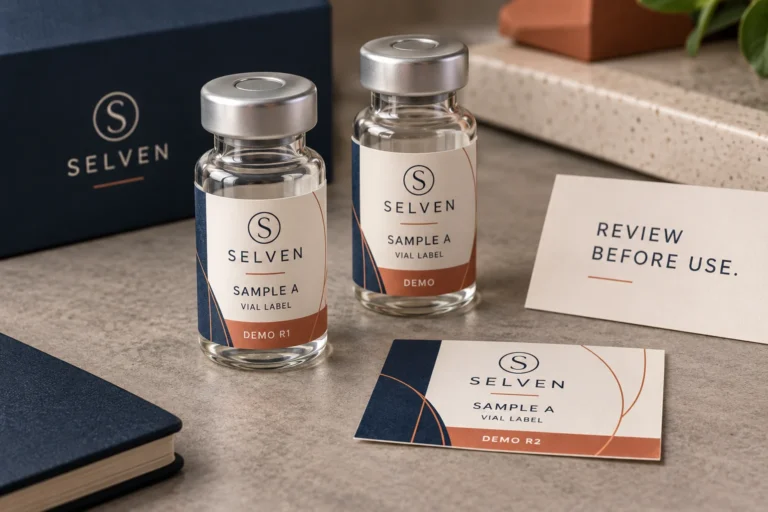
The clear label looks right on the vial. The brand mark is legible, the transparent area gives the intended effect, and the roll dimensions appear suitable. One procurement question can still be open: what will tell the contract packer’s machine where each label is?
Before approving the main printed run, I would ask the operator to identify the detection task and review the proposed label-and-liner web against the existing arrangement. A loose label on a bottle answers an appearance question. It cannot settle an unresolved web-detection question.
The useful outcome is an agreed printed-stock specification and evidence requirement. Buying a new sensor, changing all clear labels to white or copying an online gap setting should not be the first response to an unexamined assumption.
Find out what the line is actually detecting
A system may detect the transition between a label and the gap on its carrier. Another arrangement may rely on an agreed printed registration feature. Ask which task matters on the actual line, where the detector reads and what the operator needs from the stock. A decorative mark in the artwork is not automatically a usable registration feature.
Clear film and a liner can present a different detection problem from an opaque printed label. Reflective areas can also deserve specific review. This does not mean every optical arrangement fails or every transparent label needs the same alternative. The existing detector, complete construction and setup determine what the operator must evaluate.
SICK’s UFS product overview describes an ultrasonic fork sensor for detecting labels on carrier material, including transparent and reflective materials. That is evidence that detection principle is a relevant variable. It is one manufacturer’s model description, not a recommendation that this model fits your line or that it proves an RP Labels stock compatible.
Send a detection brief instead of a guessed setting
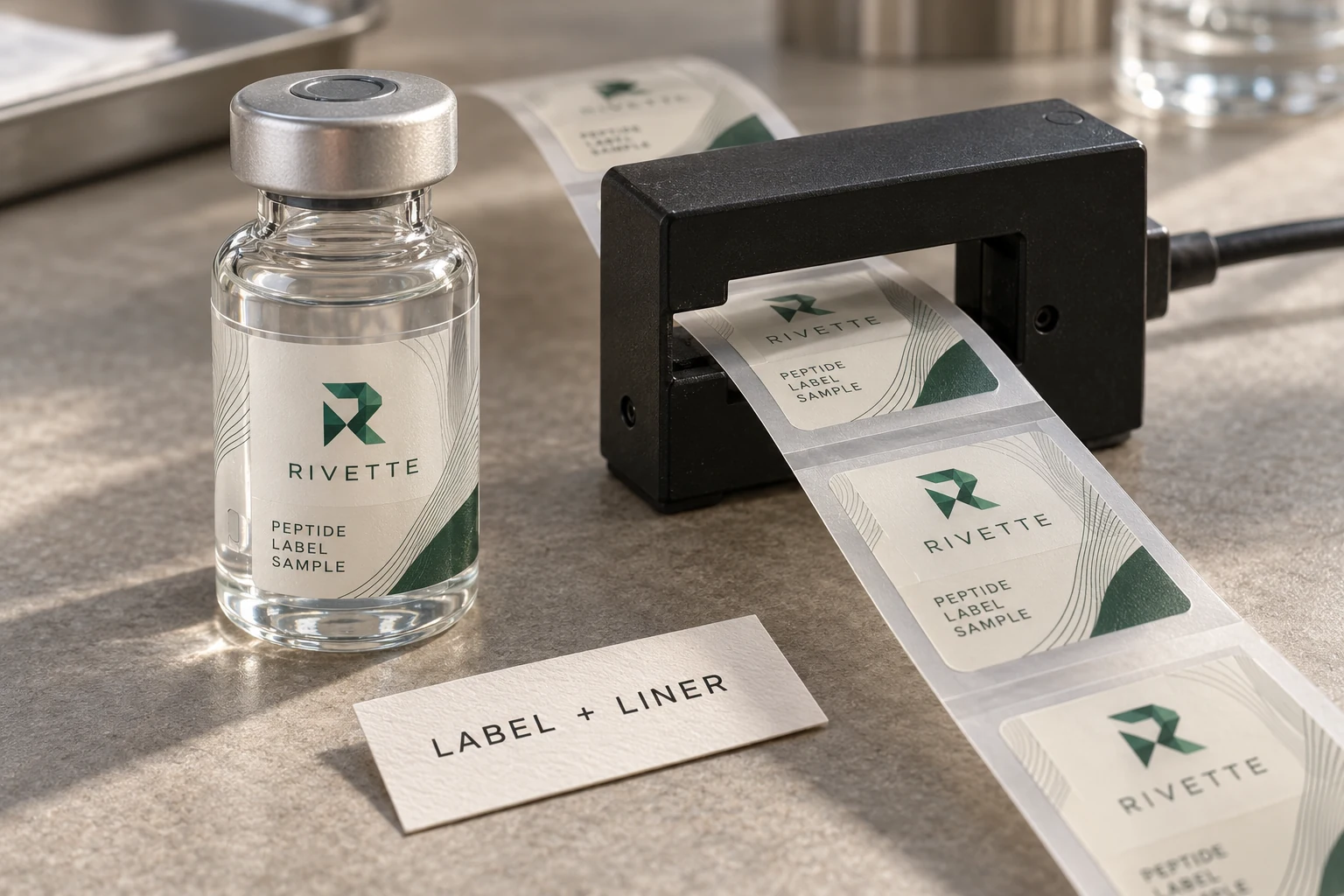
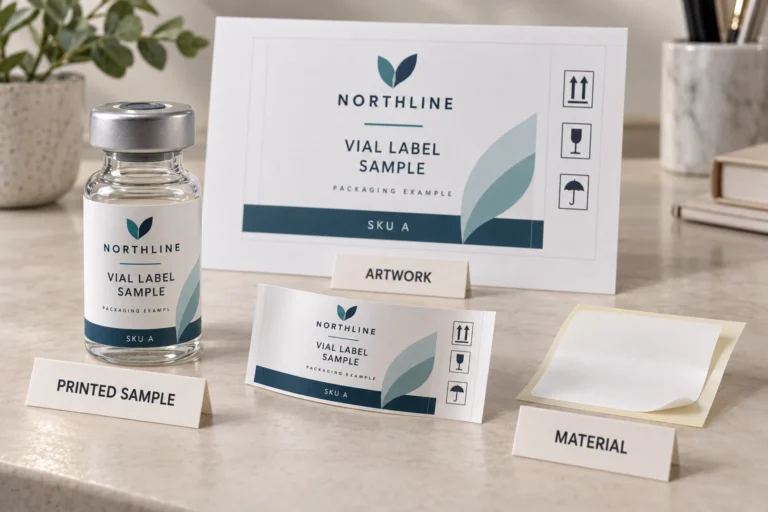
The example keeps the branded vial and the label web visible together. The generic sensor prop explains the question to discuss; it is not a validated installation, a model recommendation or evidence that the web has passed a trial.
| Input from the packer | Why it belongs in the printing brief | What to clarify next |
|---|---|---|
| Existing detector and intended function | Gap sensing and printed-mark reading are different tasks | Which feature must remain detectable? |
| Required web arrangement | The sensor encounters label plus carrier | Which face, liner and spacing must the specimen represent? |
| Reading path or approved drawing | Artwork may pass through the sensing area | Are there restrictions in that area? |
| Operator’s review procedure | A sample needs a defined purpose | Who observes and approves the result? |
| Conditions requiring renewed review | Repeat artwork may use changed stock | Which changes invalidate the earlier confirmation? |
Keep the operator’s requirement beside the proposed construction reference. Calling the material clear film leaves the liner and other relevant details unnamed. Ask the printer to identify what will be supplied, and let the responsible operator explain what evidence is needed to evaluate that proposal.
If the machine uses a printed feature, obtain the actual specification before adding it. Confirm location, orientation, whether it remains on the delivered web and which approved document controls it. Do not place a random black rectangle in the brand artwork and assume the application team can make it work.
Distinguish the cause before changing the order
If a trial raises a detection concern, keep the specimen and identify its stock reference. Ask the operator to separate material contrast, path or alignment, job setup and the intended detection function. The observation may call for a setup review, a different approved construction or another technically appropriate arrangement. It does not identify the cause by itself.
Avoid asking the printer to guarantee an unspecified machine setting. Equally, do not tell the packer that the artwork PDF was approved, so any feeding concern must be its fault. Both parties need the same reference: which label, carrier, gap or registration feature was actually evaluated on which arrangement?
The roll-delivery specification guide covers core size, outer diameter and feed orientation. Those requirements still matter. This detection review adds a different check; it does not replace the rest of the machine-ready stock brief.
Ask for a specimen that can answer the question
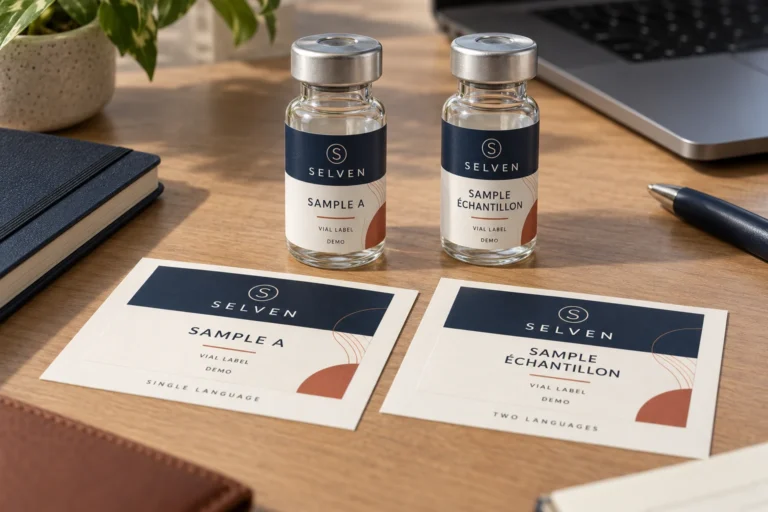
A bottle with one hand-applied label can support appearance approval. A flat swatch may help discuss material. When the unanswered question concerns repeated label transitions on a liner, ask the packer what representative web is needed. Confirm whether the supplier can provide it and what differs from the proposed main run.
Record construction, dimensions, spacing, orientation and revision alongside the specimen. Let the operator define the relevant trial conditions and observations. This article supplies no universal speed, sensitivity, gap or teach-in procedure. Those instructions belong to the equipment documentation and qualified operator for the actual setup.
After review, retain the accepted reference with the order. If a later proposal changes the liner, face construction, registration feature or relevant geometry, ask whether confirmation remains valid. Reusing the artwork name does not make a changed web the same operational purchase.
Two illustrative buyers need different next steps
Imagine a brand changing an accepted white label to clear film for a new visual effect. The packer’s sensing arrangement has not been reviewed against the new proposal. Here, appearance approval should leave the detection question open until the operator receives suitable construction information and any needed representative web.
Now imagine a repeat buyer retaining the accepted construction and delivery arrangement with no relevant change. The useful step may be confirming that those references remain unchanged, rather than buying new equipment or restarting every review. If the supplier proposes a substitute liner, however, the buyer should expose that change before relying on the earlier acceptance.
These situations illustrate procurement choices, not actual RP application trials. An accepted existing construction can reasonably win over a cosmetic change when the new proposal cannot yet address a necessary line requirement. Clear appearance is a preference; a usable agreed supply format is part of the purchasing task.
Questions about clear printed rolls
Does a clear label always require ultrasonic detection?
No universal conclusion follows from transparency alone. Ask the operator to assess the existing detection principle and complete proposed web. A manufacturer example explains an option, not a requirement for every machine.
Can a white information panel solve the sensing question?
Only if the actual arrangement is designed to use the relevant feature and the operator confirms it. Do not change the artwork’s appearance to solve an assumed problem without understanding the reading path and requirement.
Is an approved loose sample sufficient?
It depends on the open question. Loose specimens can support visual review, but may omit the carrier, spacing and repeated transitions needed for an operational evaluation. Ask the packer to specify the evidence it needs.
What should the label inquiry include?
For custom vial label printing, submit the packer’s detector or model information, detection function, proposed face and liner references, dimensions, spacing requirements and quantity per design through the printing inquiry form. Ask which available stock and representative evidence can address that brief before approving the main run.