Vial Labels Curl Before Application: Compare Handling and Stock
Find the moment the shape changes
The loose vial label curves at the packing bench, so someone asks for stronger adhesive. Before changing the order, check whether the piece was already curled on its carrier or changed shape while being removed. A pre-application shape question is not yet a diagnosis of failed attachment to the bottle.
I would locate when the curl first appears and compare identified specimens using an agreed handling method. That can help the buyer decide whether to discuss stock condition, removal practice or another construction. It prevents the next quotation from solving an assumed cause instead of the observed problem.
This is a purchasing comparison for ordinary handling of label samples. It gives no universal material setting, conditioning period or promise that a handling change will fix every curled label.
Keep three stages separate in the record
First examine the unopened or protected supplied stock where available. Next observe the label while it remains on the carrier. Finally note its shape after separation and before it touches the vial. Record the actual stage rather than using the broad description the labels curl.
The direction and extent of the shape can help describe the observation, but do not overstate what it proves. A supplied sheet curling as a whole is not the same as one label bending during removal. Both are different from an applied corner lifting later. The references and appropriate checks need to follow the stage involved.
Avery Dennison’s South Asia troubleshooting guide, dated November 2021, includes liner-removal handling as a way to avoid face curl. It separately discusses post-print and environmental factors in its sheet-printing context. This historical technical background supports checking more than one explanation; it does not prescribe conditions for an RP Labels order.
Compare removal without damaging the useful reference
Ask the supplier how the proposed label and carrier should be separated for the intended workflow. Where appropriate, have the packing team compare a representative specimen with that agreed method, keeping an untouched identified reference. Avoid repeatedly bending the same label and treating the resulting shape as the condition in which it arrived.
For manual handling, the guide’s distinction between moving the liner away and pulling the face is worth discussing with the supplier. It is not a reason to force a delicate label or improvise an unfamiliar process. If a piece is difficult to start, the cutting and backing guide helps clarify the supplied contours and removal point.
Record whether the concern occurs consistently under the same appropriate handling or only after a particular movement. Keep stock identity, artwork and dimensions unchanged during the comparison where possible. A different label size, liner and removal method together would make it harder to understand which difference matters.
Use a stage-by-stage comparison sheet
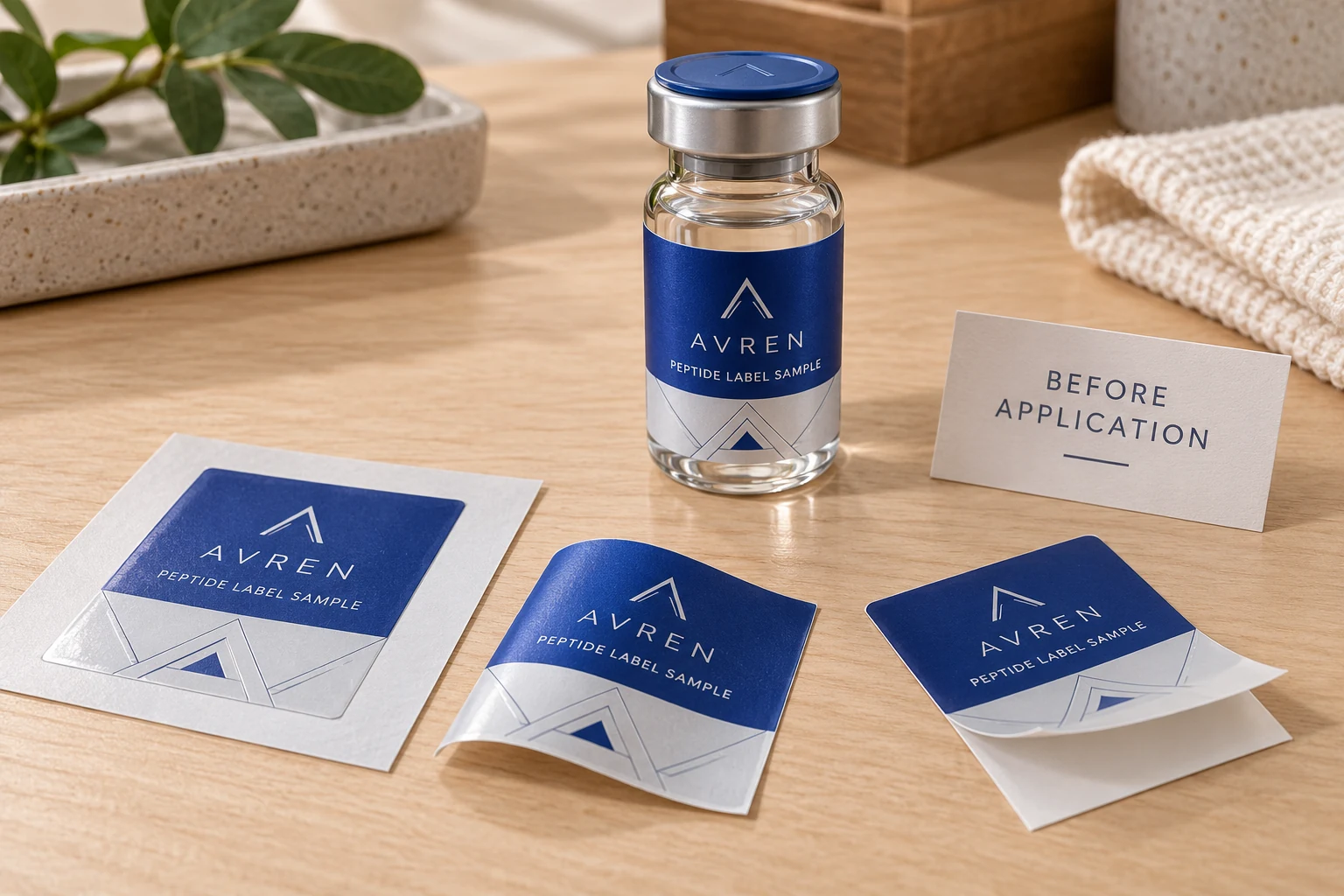
The specimens illustrate distinct stages and shapes. They do not demonstrate a validated removal technique or prove why a real label curled; retain actual sample identity and observe the agreed handling.
| Stage | What to observe | Useful next question |
|---|---|---|
| Protected stock | Condition of the supplied sheet or roll | Is the observation present before opening or use? |
| On the carrier | Label shape and location on identified backing | Is it localized or shared across the available specimens? |
| During separation | Approved removal method and starting point | Does handling introduce the visible shape change? |
| Loose specimen | Shape before contact with the vial | Is placement affected under the intended workflow? |
| Applied package | Fit and attachment as a separate check | Does a different question remain after placement? |
The table is a record of observations, not a sequence of universal pass criteria. Agree what the team needs to decide and who will evaluate the result. A neatly completed sheet does not turn an informal comparison into a standardized material test.
If storage history is uncertain, report that separately. Use the unused-label storage guide to collect the relevant reference and supplier instructions. Do not invent a temperature excursion from the curl alone, and do not assume that leaving an unidentified roll on the bench for an arbitrary period restores it.
Decide what deserves changing
If a suitable agreed removal method resolves the handling concern on representative specimens, the existing construction may remain a reasonable candidate. Record the limited observation and let the responsible team decide whether it addresses the intended packing task. There is no automatic need for a more expensive face film or a different adhesive.
If the concern is present before removal, persists under the agreed handling or affects placement materially, give the supplier the identified samples and conditions. Ask which additional comparison or alternative construction would help distinguish the cause. Do not request an unrelated material substitution without describing what the next sample must answer.
Once the label is placed, assess fit and attachment independently. The curved-vial edge-lift guide addresses that later question. A label that appears flatter while loose has not thereby passed every requirement on a small curved container.
Two illustrative benches reveal different problems
Imagine a small brand removing individual labels for hand application. The stock appears acceptable on its carrier, and a particular pulling action visibly bends each piece. The next useful discussion is the removal method and supplied starting point, followed by a comparison using the supplier’s appropriate handling advice.
Now imagine a buyer opening a protected pack and finding a shared shape concern before individual labels are separated. Asking staff to pull the backing differently cannot explain the earlier observation. The supplier needs the stock reference, received condition, history and representative specimens to assess the issue.
These are illustrative distinctions, not actual delivery complaints. Both can justify keeping uncertain stock identified while the question is reviewed. Neither justifies assigning every pre-application shape concern to glue strength, nor blaming an operator without examining how the stock was supplied.
Questions about loose-label curl
Is curl before application the same as edge lift afterward?
No. Record the stage at which the shape or attachment changes. A loose piece can raise a handling question, while an applied edge can involve container geometry, construction and application conditions.
Should we replace the liner immediately?
Not solely from the word curl. First identify the construction and when the concern appears. A liner change may alter other handling requirements and needs a defined reason and representative review.
Does a flatter sample prove the finished label will stay attached?
No. It addresses the observed pre-application shape under that comparison. The applied package still needs the appropriate fit and attachment review for its intended conditions.
What belongs in the inquiry?
For custom peptide vial labels, send label and carrier dimensions, identified stock or lot, where curl first appears, storage history, removal workflow and intended vial through the printing inquiry form. Ask which sample and handling comparison can resolve that specific stage before changing the main order.