A Supplier Proposes a Substitute: Approve the Construction Change Explicitly
“Equivalent material” is the beginning of the discussion
The artwork is approved, but the supplier proposes another face material, adhesive, liner or finish before production. The buyer may be tempted to answer quickly because the proposed label looks similar. Before accepting, identify exactly what changes and which earlier approvals depended on the original construction.
A substitute can be a workable solution. It should earn approval through a defined comparison rather than disappear under the word equivalent. The purchasing decision is whether the changed proposal meets the actual requirements and what must be reconfirmed before release.
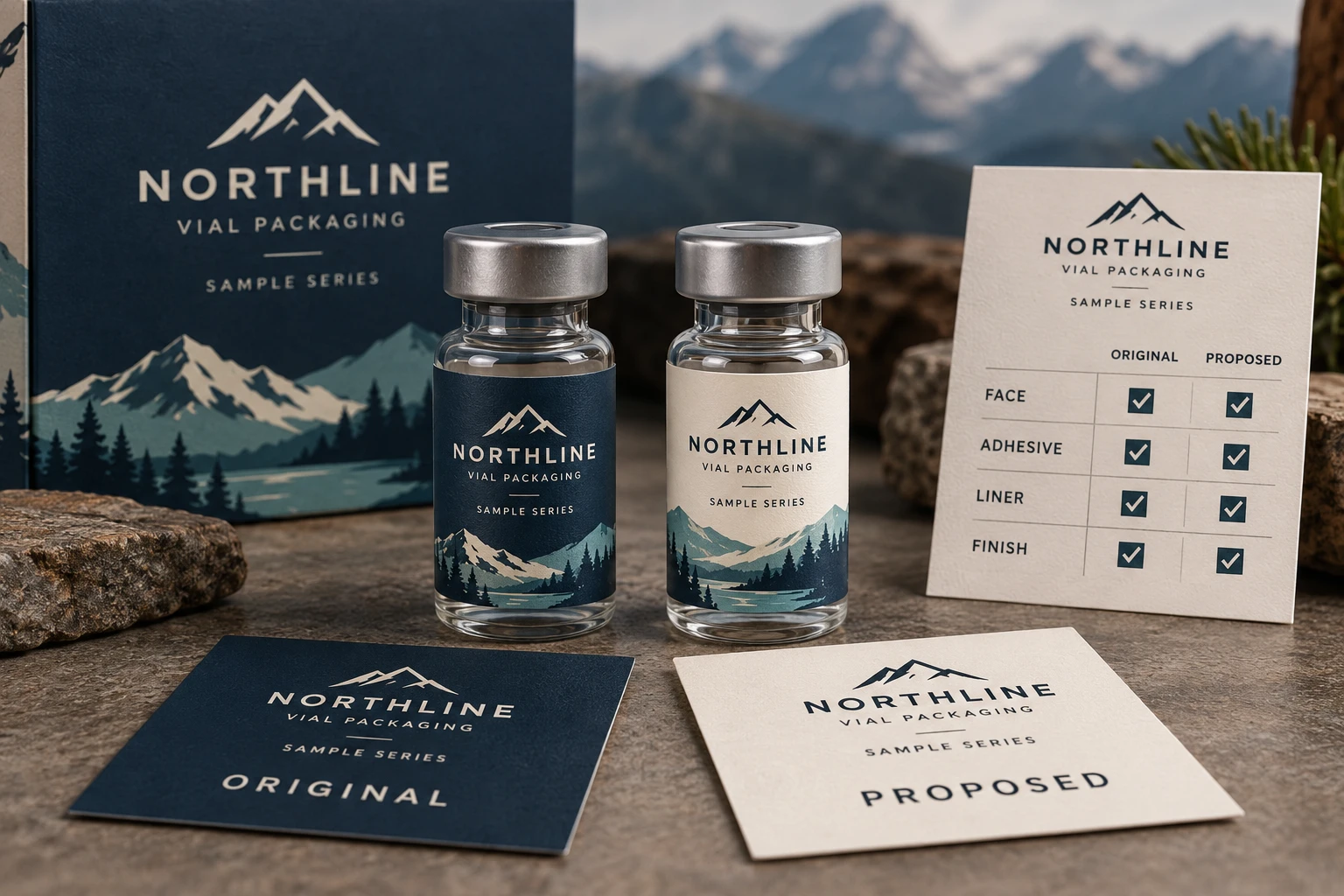
Ask for a difference list
Request the original and proposed construction references, the reason for substitution and the stage the order has reached. Separate a supplier’s proposal from a change already made. If production status is uncertain, clarify it before assuming the original specification can still be retained without impact.
List each changed component and any consequence the supplier identifies for appearance, application, dispensing, later marking, timing or price. Keep unknowns visible. A material code can support traceability without explaining every practical consequence on its own.
Do not request proprietary formulation details that are unnecessary to the purchasing decision. Ask for sufficient identification, relevant specifications and representative evidence to assess the required outcome. The supplier should state what it can confirm and what needs a sample review.
Reopen only the approvals affected by the change
| Proposed change | Approval question to revisit | What may remain unchanged |
|---|---|---|
| Face material | Appearance, geometry and relevant handling | Approved wording, if the layout remains suitable |
| Adhesive construction | Actual container and application conditions | Graphic content, subject to any construction effect |
| Liner | Release, sensing and finished roll compatibility | Front artwork, unless delivery orientation changes |
| Protective finish | Appearance, later marking and relevant exposure | Base wording and SKU identity |
| Several components | The complete proposed package relationship | Only items explicitly shown to remain applicable |
This table scopes questions rather than guaranteeing equivalence. The actual change and intended use determine the review. A different liner may require a packer discussion even when the brand team sees no visual difference.
Compare against the original requirement
Use the same vial, artwork revision, dimensions and intended conditions where possible. If a sample also changes those inputs, record it as a combined alternative. Otherwise the buyer may attribute a better-looking result to the substitute material when the design or container changed too.
For custom vial labels, ask the supplier to identify whether the sample represents the full production construction or only one component. An unprinted swatch can answer a texture question while leaving the finished print and application questions open.
Keep the commercial proposal alongside the technical comparison. Confirm any change in quantity basis, lead time, sample scope and quotation validity. A substitute described as similar should not silently carry different terms that become visible only after approval.
Two illustrative substitution decisions
In one hypothetical order, the supplier proposes a different liner while retaining the visible label construction. The brand approves the appearance immediately, but the packer’s detection and dispensing requirements remain unreviewed. The useful next action is a representative web assessment with the packer, not another front-label mockup.
In another order, a proposed face material changes the texture that the brand intentionally selected. Even if the supplier believes the alternative meets the handling requirement, the appearance decision remains open. Waiting for the original material or choosing another confirmed option may be more appropriate than accepting the substitute solely to keep an estimated date.
These examples are illustrative and do not establish any RP Labels supply constraint. They show that equivalence depends on the requirement being compared, rather than on a single supplier adjective.
Give the original proposal a fair chance
The substitute is not automatically worse, and it is not automatically the only reasonable route. Ask whether the original remains available, under what confirmed conditions, and whether a later date or another quantity arrangement is feasible. Do not assume such options exist without confirmation.
If the existing proposal meets an important approved requirement that the substitute leaves uncertain, retaining it may be the stronger decision. If the substitute is adequately supported and resolves a genuine constraint, it may be the practical choice. The buyer needs the actual alternatives and their consequences, not pressure to approve an undefined change.
Avoid inventing a cost saving from a different material name. Compare actual quotations on the same scope and record any exclusions. A lower label price can be outweighed by unplanned review or packing changes, but those effects should be assessed rather than assigned made-up numbers.
Release the substitute as an identified revision
Record the accepted construction, artwork revision, applicable quantity and the approval scope. State which original proposal it replaces and which existing stock remains under the earlier specification. Obtain the supplier’s acknowledgement of the revised release.
Update the receiving and packing brief where the change affects their task. A procurement approval is incomplete if the packer continues to expect the original liner or finished presentation. Keep the old and new stock identifiable during any transition.
For the next reorder, refer to the accepted revised specification rather than “same as last time” without a reference. The substitution should become a controlled purchasing record, not an undocumented exception that is repeated accidentally.
Frequently asked questions
Does equivalent mean identical?
No. Ask which requirements are claimed to be equivalent and what evidence supports them. Different constructions may meet the same task, but their differences and approval limits should remain visible.
Must every substitution trigger a full redesign?
No. Reopen the decisions affected by the actual change. The wording or layout may remain suitable while material, appearance or dispensing needs another review.
Can a supplier substitute without another proof?
The agreed order and change process govern the release. Ask for an explicit construction change record and the appropriate approval evidence; a front-artwork proof alone may not cover the substituted component.
If the substitution is proposed after release, the post-approval change guide helps establish work status and replacement authorization before assuming the order can change.
Submit a change comparison
For a project review, provide the original and proposed constructions, reason for change, current job status, artwork, vial reference and quantity per design. Identify the requirements that must remain equivalent. Ask for a clear difference list and the evidence needed before accepting the revised order.