Labels for Tapered Vials: When a Rectangular Wrap Is the Wrong Starting Point
Check the shape before changing the adhesive
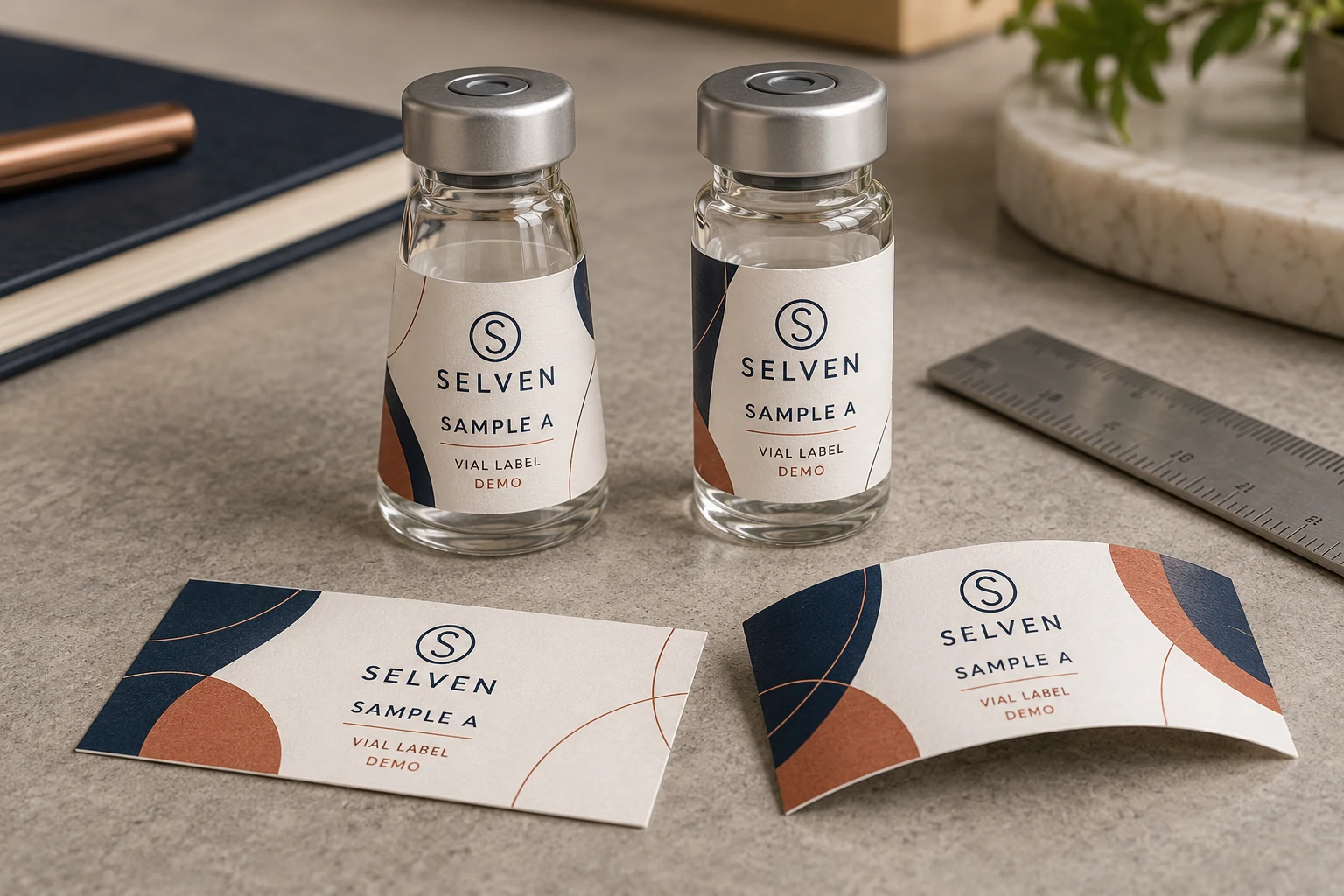
The label width appears correct, but the paper mock-up refuses to sit smoothly around the vial. One edge wants more room than the other. Reducing the artwork a little may change the symptom without answering the important question: is the intended labeling surface actually cylindrical?
For a tapered vial, I would establish the surface geometry before releasing a rectangular wrap. A shaped label, a smaller panel or a different labeling position may deserve review. None is automatically appropriate. The next useful input is an identifiable container and a shape discussion, not a request for stronger glue.
Identify the actual labeling zone
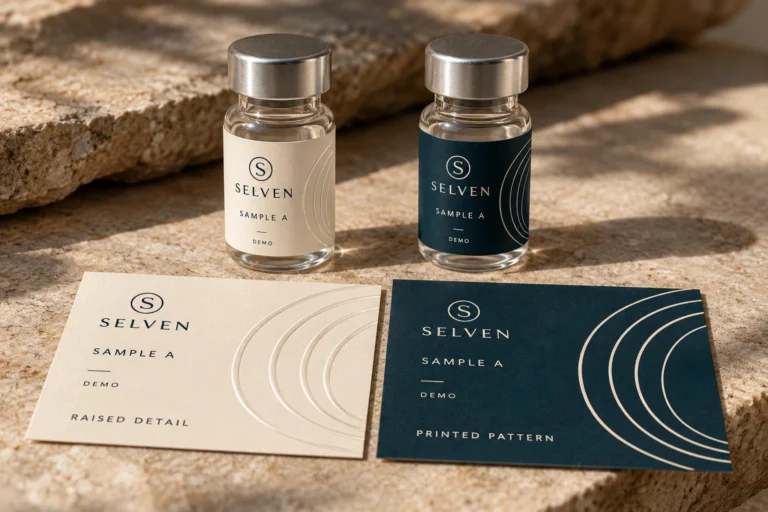
Look at the part of the vial the label is meant to occupy. The full bottle may include a shoulder, rounded base or other transition while still offering a useful straight section. Conversely, an apparently simple side wall can narrow across the proposed label height.
Record the top and bottom of the intended zone, a side photograph and relevant dimensions. Use the actual packaging reference rather than its nominal capacity. Two containers sold with the same capacity can leave different shapes and usable areas for the label.
The existing vial measurement guide explains the ordinary circumference-and-height starting point. This guide addresses the next decision when that rectangular starting point is questionable. A formula based on one diameter cannot describe every changing surface across the proposed label height.
Use a paper trial to identify a geometry question
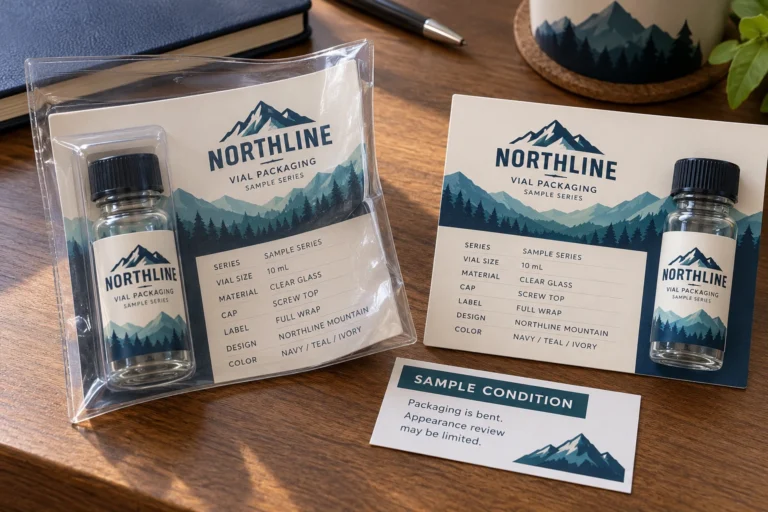
A paper mock-up is useful for observing where the proposed shape meets the vial. Mark which edge is intended to be the top, which way the design reads and where the seam or panel boundaries belong. Keep the same orientation during comparison so an apparent improvement is not simply an accidental rotation.
Check whether the top and bottom can lie in the intended positions without forcing one part into folds. Record what happens rather than naming a cause immediately. Wrinkles in a loose paper trial suggest a fit question; they do not, by themselves, identify the finished adhesive or film that should be ordered.
Avery’s sizing guidance notes that tapered containers may need a curved custom shape. That supports having the geometry reviewed. It does not provide a universal curved template for every vial or prove that a particular proposed label will perform after printing.
Compare the available routes fairly
| Candidate route | When it deserves discussion | What still needs review |
|---|---|---|
| Use a straight-sided zone | Enough suitable surface exists elsewhere | Information space and the package’s intended appearance |
| Reduce the coverage | A smaller panel can meet the design task | Reading area, position and finished construction |
| Review a shaped dieline | The chosen surface changes across its height | Container-specific shape, artwork and application feasibility |
| Reconsider the container | Label and information requirements cannot be reconciled | Packaging availability, responsibility and wider project effects |
These are design routes to discuss, not a list of services already promised for every order. Ask the printer which proposal can actually be supplied and what sample or drawing it needs. A special shape should earn its place by resolving the relevant problem rather than merely looking more customized.
Do not ask the designer to stretch the same rectangle into a guessed curved outline and send it straight to production. The final technical shape needs confirmation against the intended package and process. There is no general taper threshold or corner allowance established in this article.
Two illustrative buyers can take different routes
Imagine a brand whose vial has a short straight area below the shoulder. Its original design extends beyond that zone mainly to accommodate a decorative border. A smaller panel, with the hierarchy rearranged, may preserve the necessary information without requiring a complicated wrap.
Now imagine a brand whose required reading area occupies a visibly narrowing surface. Moving the label does not create a suitable cylindrical zone. Here a container-specific shape review may be necessary before the brand polishes its flat artwork. A preferred standard rectangle is not a reason to ignore the surface it must follow.
Neither example establishes a production result. The first route also has a counterexample: if the reduced panel cannot carry the approved content legibly, shrinking it further is not a solution. The decision must return to the shape, layout or container rather than sacrificing the information requirement.
Keep geometry approval separate from construction approval
Even an acceptable paper fit does not establish that the finished printed label will adhere or handle as required. Face material, print coverage, protection and application conditions remain relevant. Ask for an appropriate representative review after the geometry is sufficiently defined.
This separation makes problem-solving more useful. If the initial paper shape already fails to follow the intended surface, an adhesive discussion is premature. If the shape works but the offered finished construction later behaves differently, investigate that combination rather than assuming the dieline remains the only variable.
For custom peptide vial labels, retain the container reference, accepted shape revision and proposed construction together. A later bottle change should identify which of those approvals needs to be revisited. The same artwork name does not establish the same physical fit.
Questions about labels for tapered vials
Does taper mean a rectangular label can never be used?
Do not decide from the name alone. A suitable smaller or differently positioned panel may be possible. Examine the intended labeling zone and confirm the proposal on the actual container.
Can the label-size calculator supply the final shaped dieline?
A basic dimensional calculation is a starting tool. It does not define a container-specific curved shape, production allowance or application result. Ask for the appropriate technical review.
Does a good paper mock-up approve the adhesive?
No. It helps discuss geometry and layout. Review the proposed finished construction separately under the relevant application and handling conditions.
What should I send first?
Use the printing enquiry form with side photographs, the container reference, upper and lower dimensions for the proposed label zone, usable height, artwork needs and quantity per design. Describe what the mock-up did. That gives the supplier a shape question it can investigate without guessing from a capacity alone.