The Barcode Scans, but Does It Match the Number Printed Beside It?
Two readable values can disagree
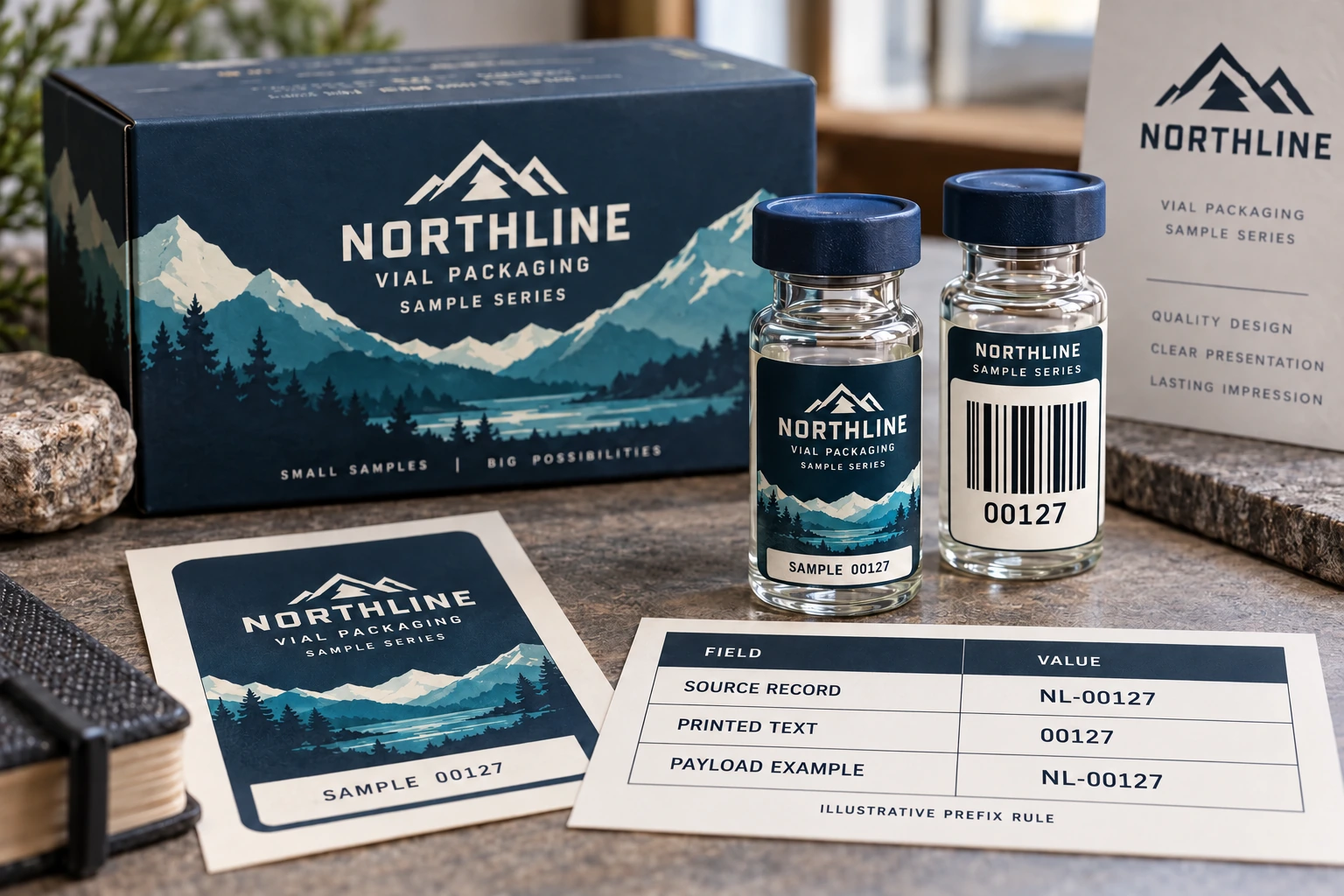
A vial label’s symbol decodes successfully, and the human-readable identifier beside it looks correct. Those two observations do not establish that they represent the same authorized value. The buyer needs to compare the decoded payload, printed text and source record using the system’s actual mapping rule.
Do that comparison before treating a successful scan as approval. This is a packaging-data consistency review, not a barcode verification standard or a claim that every code should contain exactly the text visible beside it. Some systems intentionally encode additional structure; the responsible data owner must define the relationship.
Write the expected relationship first
Identify the field that supplies the human-readable text and the field or rule that supplies the symbol. State whether they should be identical or related through a documented format. Include prefixes, separators and other meaningful characters.
Ask the receiving system owner how the scanner’s displayed output relates to the raw decoded data. Software may interpret or present a value differently. A screen that shows a shortened identifier can be useful operationally while still being insufficient to check the full payload.
Keep the authorized source and design mapping with the review. The printer should not decide which of two conflicting values is correct merely because one is easier to read.
Compare three checkpoints
| Checkpoint | What to compare | Question it answers |
|---|---|---|
| Authorized source | Exact approved values and mapping rule | What relationship was intended? |
| Generated output | Symbol input and human-readable field for the same label | Did the artwork workflow use the correct fields? |
| Physical sample | Decoded value and visible text on the same specimen | Does the finished example preserve the required relationship? |
| Receiving workflow | How the system interprets and accepts the value | Does the intended operational path use it correctly? |
These checks are related but different. A symbol can decode while carrying the wrong value. A correct payload can be linked to the wrong artwork. A correct physical sample does not automatically verify every record in a larger production file.
Avoid a comparison made from different specimens
Record the sample identity and compare its visible text with its own decoded result. A screenshot from another label can make two individually correct observations look like a mismatch or conceal a real one.
Where variable data is involved, retain a stable row or label reference for the review. Ask how exceptions will be recorded and which party checks the complete dataset. Do not use a small set of attractive previews as proof that every record is correct.
For custom vial label orders, confirm whether the supplier can support the intended code and checking workflow. Availability of a printed symbol in a design example does not establish a verified data service or compatibility with the buyer’s receiving system.
Two illustrative mismatches
In one hypothetical project, the visible text uses the current identifier column while the code generator still uses an older column. Both fields contain plausible values and the symbol scans. The buyer should correct the mapping and review the affected output, rather than change the symbol’s size to address a data disagreement.
In another project, the encoded value intentionally contains a documented prefix that is not printed in the adjacent text. The difference may be correct under the approved system rule. A reviewer who demands literal equality without understanding that rule could introduce an error into an otherwise suitable label.
These examples are illustrative, not verified system behavior or actual print incidents. They show why the relationship must be defined before a mismatch is judged.
Separate payload accuracy from print readability
If the code cannot be decoded reliably in the intended process, physical construction, size, contrast and system requirements may need review. If it decodes consistently to the wrong value, the immediate question is data or mapping. Both can matter, but their corrections differ.
Ask the appropriate reviewer what formal verification, if any, is required. This article supplies no universal symbol grade, quiet-zone dimension or scanner setting. Use current requirements for the actual symbology, application and receiving system.
The same distinction applies to human-readable text. A correct string can be too small for the intended reading task, while a beautifully legible string can be wrong. Review content and usability separately rather than allowing one successful check to stand for both.
Release the data relationship with the artwork
Keep the field definitions, mapping rule, approved data version and output reference together. If the buyer changes the text format, ask whether the encoded value should change too. Do not let a designer make a cosmetic text edit that silently breaks an operational relationship.
If the receiving software changes, ask which earlier checks remain applicable. The printed label may be unchanged while the interpretation path is different. Conversely, an unchanged system does not automatically approve a new data issue.
A fair alternative may be a simple human-readable identifier where no operational symbol is needed. A code should serve an actual task, not merely make the label look technical. If the symbol is required, its value and intended system use need a defined owner.
Frequently asked questions
Does a successful phone scan approve the code?
It demonstrates one decoding event in that setup. It does not establish payload accuracy, full-file consistency, formal print quality or acceptance by the intended receiving system.
Must the printed number always equal the raw payload?
Use the approved mapping rule. Literal equality may be appropriate in one system, while another intentionally encodes structured information. Do not invent the relationship during proof review.
Who decides which conflicting value is correct?
The authorized data owner should resolve the source value and rule. The printer or designer should report the conflict rather than guess from appearance.
If the symbol decodes correctly but the application returns the wrong result, the receiving-system code guide addresses that receiving-system stage separately from the visible-text comparison.
Submit the mapping rule and sample values
For a code-label inquiry, provide safe representative source values, expected visible text, expected decoded values, design mapping and quantity per design. Identify the receiving-system contact and required checks. Ask what production and review scope is available before approving the dataset and physical output.