A Paid Label Sample: Agree the Deliverable and Any Order Credit Before Paying
Price the sample you will actually receive
A physical label sample has a preparation fee, and the buyer is told that something may be credited against a later order. Before treating the sample as free, confirm two things separately: what the current payment buys, and what event would create an agreed future credit. An attractive sample and a possible discount do not define either obligation.
For a supplement jar or vial project, request an itemized sample scope tied to the decision still open. Keep the current cash commitment visible even when production is likely. A conditional credit should remain conditional until the agreed trigger is satisfied and the credit appears in the actual order record. RP Labels’ physical sample arrangements, fees and any credit require project-specific confirmation.

Separate sample evidence from commercial scope
The sample-evidence guide explains why a stock swatch, digital proof and artwork-specific physical sample support different decisions. Here the task is commercial: what work, specimens and delivery does the proposed sample charge cover, and what happens if the project changes?
Avery describes a separately priced custom roll-label sample order. Its terms distinguish sample line items by features of the proposed order. That is one supplier’s published arrangement, not an RP Labels price, quantity allowance or credit policy. The useful lesson is to identify the actual sample deliverable rather than compare two unexplained sample-fee totals.
Free design support and a digital proof do not establish free physical production, containers or courier delivery. Likewise, paying for a sample does not automatically purchase a portable production tool or unrestricted source artwork. Ask about the relevant deliverable directly instead of expanding the meaning of one fee.
Define the current sample package
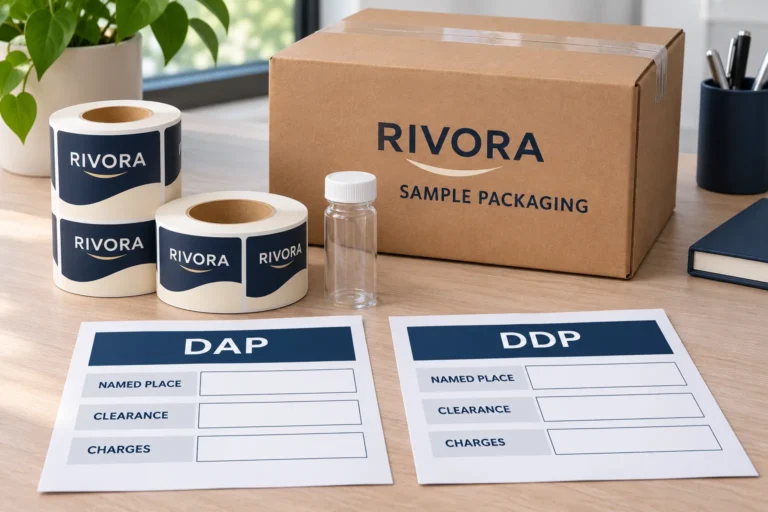
Identify the artwork revision, dimensions, construction and sample format. Record how many designs and specimens the proposal includes where applicable. Ask whether the supplier supplies a labeled container, loose printed labels or another defined item. A jar visible in a reference image need not be part of the shipment.
State the sample’s intended question: selecting an appearance, reviewing a particular information panel or examining an offered construction on the actual surface. List any substitutions. A lower-cost sample may be perfectly useful if those substitutions do not affect the question; it may be unsuitable if they remove the very feature being assessed.
Keep the supplier’s confirmed preparation work separate from the buyer’s review and from delivery. Typical preparation periods do not establish an arrival date. If the artwork is not ready, ask which work can proceed and which remains dependent on the released file. Do not pay for a description that assumes an approval nobody has given.
Use a sample-cost and credit schedule
The schedule needs no invented rates. Fill it from the actual offer, mark unknowns, and obtain a revised confirmation when scope changes.
| Line | What to confirm now | Later condition to keep visible |
|---|---|---|
| Preparation | Included artwork, setup and specimen work | Whether a changed file creates new work |
| Physical deliverable | Designs, specimens, construction and format | Which differences from production remain |
| Delivery | Destination and included transport scope | Any later shipment or receiving change |
| Repeat work | What a correction or additional candidate includes | Whether a new fee needs approval |
| Possible credit | Whether any credit is actually offered | Trigger, amount basis, eligible order and application |
| No production order | Current committed sample payment | Any agreed cancellation or refund terms |
Do not turn a blank credit field into zero cost. If no credit is offered, compare the paid sample on the value of the question it resolves. If one is offered, record its conditions in plain language. A future benefit with unresolved terms should not be deducted from today’s payable amount.
Ask what happens after a revision
Suppose the sample represents one approved logo and finish, but the buyer then changes the information panel and requests another finish. Ask which changes are artwork work, which require another physical preparation, and what the proposed additional payment covers. Avoid classifying every second sample as a free correction or every change as a completely new job without checking the actual agreement.
If the received specimen differs from the agreed sample brief, identify that discrepancy separately from a new buyer preference. Record the expected reference, what arrived and the requested review. The responsible parties should decide the appropriate correction under their actual terms; this article supplies no automatic refund entitlement.
Keep each new offer and sample reference connected. Reusing the original purchase description after several revisions can conceal which construction or artwork the payment now concerns. A short consolidated change list is usually more useful than a long sequence of messages saying please try again.
Treat an order credit as a separate event
If the supplier confirms a credit, ask which production order qualifies, whether the specification must remain unchanged and how the credit is applied. Record any deadline or threshold only when actually stated. Do not invent a minimum order, credit percentage or eligibility period to make the quotation look complete.
When production is proposed, compare its gross scope with the separately stated credit and actual net amount. Ensure the same expense is not counted twice or silently removed from the historical sample cost. The quotation-scope guide helps distinguish included, separately priced and unconfirmed work in that next offer.
A legitimate alternative is to stop after the sample. If it answers that the proposed route does not suit the project, declining production may be the useful outcome. A conditional credit should not pressure a buyer into a larger unsuitable order just to avoid recognizing a sample expense.
Questions before authorizing a sample fee
Does paying for a sample release mass production?
Only the actual agreement establishes what is authorized. Keep sample preparation and the later production release explicit rather than relying on an informal order reference.
Can several designs share one sample fee?
Ask for the actual included scope. Similar dimensions do not automatically make different constructions, finishes or artworks one sample item.
Should every sample fee be refundable or credited?
No universal policy is established here. Compare the offered work and confirmed commercial terms. Record any actual refund or credit conditions before committing.
Request the next useful specimen
For supplement bottle and jar labels, use the project inquiry form with the intended sample decision, artwork status, container reference, dimensions, quantity per design and destination. Ask for the physical deliverable, preparation and delivery scope, revision treatment and any offered credit terms. Approve the sample you need now, with its actual cost and limits understood.