Distributor Codes and Brand SKUs: Keep One Label-to-Order Crosswalk
Two valid codes can describe one design
The brand orders a label using its internal SKU. The distributor’s purchase order uses another code, and the packer expects a shortened warehouse reference. None is necessarily wrong, but the relationship must be explicit before labels are printed and delivered.
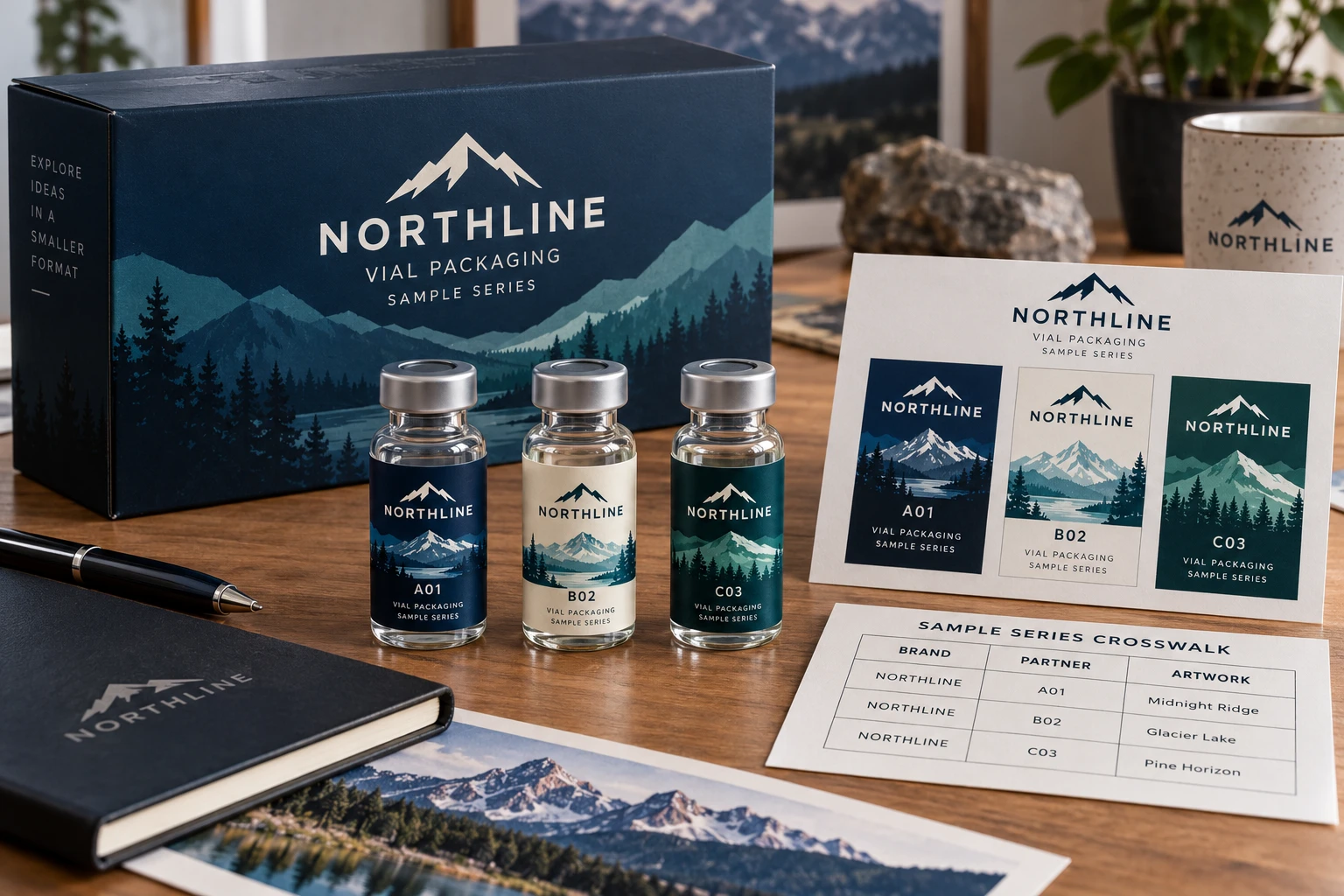
Create a crosswalk that connects each authorized business code to the actual released artwork. Do not let the printer infer the mapping from similar names or accent colors. This is an identity-control task, not a reason to create another label design for every internal naming system.
Decide which codes belong on the label
Some identifiers are product-facing content; others are only order or warehouse references. Ask the responsible owner which should appear in the artwork and which should remain on pack identification or commercial documents.
Adding every internal code to a small vial label can weaken the reading hierarchy without improving the intended task. Conversely, omitting an approved required identifier to simplify the design may make the package unsuitable. The content owner should define the requirement and the designer should review the actual space.
Keep the released artwork code separate from the business aliases. One product code may map to more than one market version or revision. The crosswalk should resolve that difference rather than conceal it.
Build the mapping at the design level
| Record | What it identifies | What to confirm |
|---|---|---|
| Brand SKU | The brand’s internal item | Exact authorized value and scope |
| Distributor code | The partner’s corresponding order item | Which brand item and version it maps to |
| Packer reference | The receiving or production job identity | How incoming stock will be matched |
| Artwork release | The actual design and revision to print | One controlling file for the ordered version |
| Quantity | Labels required for that released design | Avoid double-counting aliases as separate designs |
The table is a proposed structure, not a dataset. Use authorized values and record unknown mappings. A blank relationship should not be filled with a guess merely to complete the order sheet.
Reconcile the quantity only once
If two codes are aliases for the same ordered design, do not add their forecasts automatically as if they are separate requirements. Ask the commercial owner whether the quantities overlap or describe different commitments. A code crosswalk cannot establish demand by itself.
For custom vial label procurement, send the confirmed quantity per actual design and identify any delivery divisions. If a distributor needs separate packaging identification, ask what the supplier can provide and how it affects the proposal.
Keep separate versions separate. If two distributor codes require different approved wording, they may be different artwork releases even when the brand treats them as one product family. The mapping should identify the real difference rather than force one file to serve both.
Two illustrative handoffs
In one hypothetical project, the brand and distributor use different codes for the same approved label. The buyer provides a crosswalk and one artwork reference, while the outer pack identification carries the agreed receiving code. Creating a second nearly identical design solely for the alias would add no useful content difference.
In another project, the partner’s code also identifies a distinct market wording version. The buyer must supply that approved content and its own artwork revision. Treating it as a harmless alias could send the wrong version to the packer.
These examples do not establish actual partner systems or a guaranteed integration service. They show why the relationship between codes and content needs a named owner.
Test the crosswalk with the people who use it
Ask the brand approver, commercial coordinator and packer to verify their relevant fields. The printer should acknowledge the released artwork and quantity mapping, not become the authority for another company’s internal codes.
Use a fixed version of the crosswalk with the purchase release. A shared spreadsheet can be useful during preparation, but silent edits after approval can make the original instruction unclear. Identify changes and issue a replacement version when necessary.
If a code changes while the artwork remains the same, record whether only the commercial alias changed or whether pack identification must change too. Do not automatically redesign the printed label when the actual content requirement is unchanged.
Keep receiving evidence connected
Agree how each delivered roll or stack will be identified and how the packing list refers to the crosswalk. A readable outer code is useful only if the receiving team can connect it to the intended job and actual contents.
At receipt, apply the agreed verification rather than treating the pack label as independent proof of correctness. If a mismatch appears, preserve the original identification and contents together. Replacing the pack labels immediately can erase the relationship the supplier needs to investigate.
For a reorder, reconfirm any changed partner code or artwork version. Historical mappings should remain available, but obsolete aliases should not look like active instructions. The goal is one clear relationship for the current purchase with its history preserved.
Avoid unnecessary system complexity
A small project may need only a short acknowledged table. A larger recurring relationship may use a controlled internal system. Neither is automatically better; choose the approach that the responsible team can maintain and that the supplier can understand.
Do not add operational barcodes merely to decorate the crosswalk or imply automatic reconciliation. If machine-readable identifiers are needed, define the data and receiving requirements separately and confirm the actual service scope.
Frequently asked questions
Does every distributor code need another label design?
No. Determine whether it is an alias or represents different approved content. The artwork should follow the actual package requirement, not multiply because internal names differ.
Who approves the mapping?
The responsible business owners should confirm their codes and relationships. The printer acknowledges the production references but should not guess another party’s item identity.
Can one product code cover several artwork revisions?
It may in the buyer’s system, so include the specific artwork release. A product code alone may not identify the exact version to print.
If two partner codes represent different approved content, the multi-SKU guide helps manage the genuine artwork variants rather than treating them as aliases.
Submit the crosswalk with the design schedule
For a multi-party label quotation, provide brand and partner codes, the released artwork mapping, quantity per design, delivery identification needs and intended vial. Mark aliases and genuine content variants clearly. Ask the supplier to acknowledge the production mapping before release.