Labels on Squeezable Bottles: Check the Deformed Package, Not Only the Resting Shape
A label can fit a bottle at rest and still face a different job in use
The finished label looks smooth on an untouched plastic bottle. The package is then squeezed during its intended dispensing action. Its wall moves, and the label now has to follow a changing surface rather than only the original curve. Static fit is useful evidence, but it does not answer the whole requirement.
Describe the permitted movement with the packaging owner before choosing stock. Use an empty or otherwise appropriately authorized specimen for a safe review. Do not change a controlled product’s handling or compress a package beyond its intended use simply to create a dramatic demonstration.
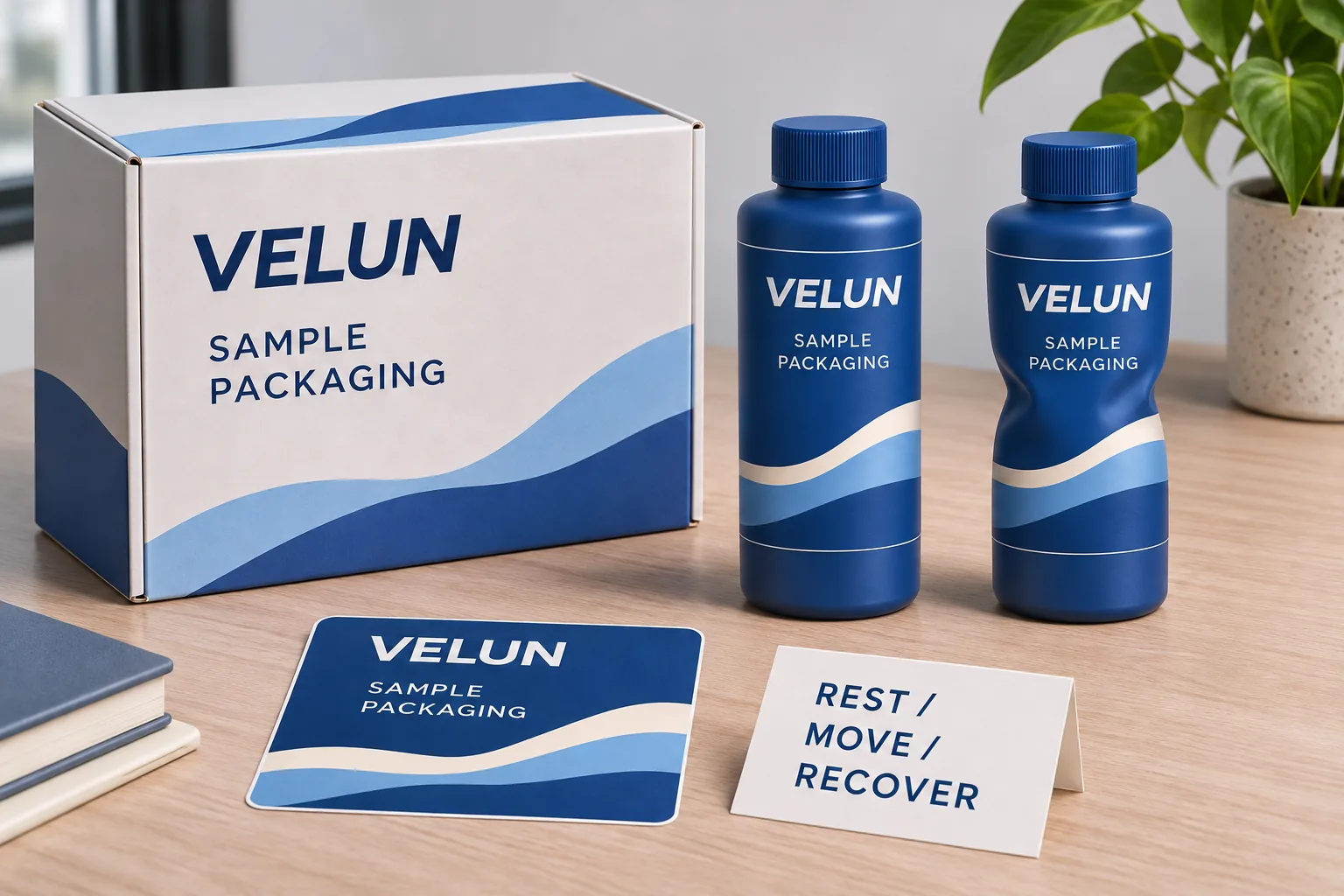
Define the movement instead of asking for flexible labels
Tell the supplier which container reference is involved, where its wall deforms and how the label crosses that area. State whether the package returns toward its original shape, remains compressed or is used through another defined sequence. Avoid treating every container described as plastic as the same brief.
Avery Dennison describes conformable film options for different squeeze applications. This illustrates that container movement can be a material-selection input. It does not identify the stock RP Labels will offer or prove that a film carrying the word flexible will suit the proposed package.
Keep the complete construction visible: face material, print, finish, adhesive and any local buildup. A decorative layer or protective finish is part of what moves with the package. An unprinted stock strip may not represent every feature of the finished label.
Observe rest, movement and recovery separately
Agree a representative review sequence with the responsible team. Record the actual conditions, specimen and observations. This guide sets no universal squeeze count, force, recovery interval or pass threshold.
| Stage | Question | Useful observation |
|---|---|---|
| Rest | Was the applied candidate initially suitable? | Position, edge condition and information readability |
| Intended movement | Where does the package change shape? | Movement zone and visible response of the label |
| Recovery or next state | What remains after the defined action? | Persistent crease, edge change or altered reading area |
| Repeated handling, if required | Does the agreed use sequence change the result? | Observed condition against the specified requirement |
| Final review | What does the specimen actually represent? | Construction, printing and finish differences from the offer |
Use the observations to locate the problem. If the label is already lifting before movement, investigate application and static fit first. If the visible change appears only during an authorized movement, preserve that sequence in the report. A photograph without timing can make those different situations look identical.
Keep deformation distinct from initial bubbles
The clear-label bubble guide addresses appearance and surface questions that can exist before the bottle moves. Do not classify every temporary shape change during squeezing as trapped air.
Likewise, an edge lifting on an unsuitable shoulder is not automatically a squeeze-film problem. The curved-bottle construction guide covers static geometry, surface and contact. The new requirement here is the package’s intended movement and what happens through that movement.
A useful report says when the observation appeared, where it occurred and what remained afterward. It should not diagnose adhesive weakness, permanent stretching or another mechanism from one unmeasured image.
Give the artwork a dynamic reading check
Identify which wording and codes must remain usable through the actual reading task. A brand panel might be read while the bottle rests, while another operation requires identification during handling. Have the responsible owner define the task instead of assuming one viewing state covers both.
Observe whether a graphic change is temporary or remains after the agreed movement. Keep that distinction clear in the sample record. A visually attractive resting photograph cannot establish readability in another condition, and an extreme squeeze photograph may not represent any required reading task.
Do not enlarge or relocate mandatory information without the appropriate content review. The printing proposal should work around approved requirements; it does not authorize changes to product wording or use instructions.
Compare construction changes one at a time where practical
If the supplier offers another face film, ask which other components change with it. Comparing a clear unprinted strip with a heavily finished printed label changes several variables. The result may guide exploration, but cannot isolate the cause of a difference.
An identified candidate with the actual artwork and finish can be more useful when the decision depends on the complete package. Confirm the sample’s scope and any substitutions. Keep the accepted reference so future offers can be compared with something more precise than the phrase squeeze-compatible.
A smaller or differently positioned label may also deserve review if it keeps artwork away from an unnecessary movement zone. That is a packaging and layout alternative, not permission to remove required content or change the intended dispensing action.
Two dispensing tasks can justify different choices
Imagine an illustrative flexible bottle whose side panel moves during a normal authorized dispense. The design spans that panel. Its material discussion needs a representative movement sequence rather than an approval based only on the resting bottle.
Now imagine a container that is described as flexible but is not intended to be squeezed during the relevant packing and use process. The buyer should establish that actual task before purchasing a more elaborate construction solely because of the container category.
Neither example reports a verified result or guarantees a stock choice. A different label position, another available construction or an authorized package revision may be the better route when the current combination cannot meet the agreed requirement.
Questions before ordering
Does a smooth resting label pass flex review?
Movement and recovery remain open. Review the permitted handling with an identified representative construction.
Are film labels equally conformable?
Do not assume equivalence. Identify the offered construction and relevant package evidence.
Should I squeeze harder to prove durability?
Use the agreed representative action. An undefined extreme action may not answer the actual use question.
Send a movement brief with the inquiry
For supplement bottle label options, use the project form with container reference, label dimensions, quantity per design and a safe description or permitted demonstration of the movement. Include artwork and finish requirements. Ask which complete construction can be evaluated against that sequence, then approve the represented combination rather than a general material adjective.