Scratch-Off Code Labels: Approve Concealment and Reveal as Separate Checks
Start with two separate acceptance questions
The silver patch covers the demonstration number, and the buyer calls the label approved. That leaves the second half of the job unanswered: after the intended reveal action, will the authorized information still be complete and usable? For a scratch-off code label, concealment before use and readability after use need separate observations.
Begin with non-sensitive demonstration values and an identified proposed construction. Do not send live credentials or customer records to make an early sample look realistic. The buyer should define what the concealed information does, who may receive it and which party operates any destination or checking system. Printing a covered number does not create an authentication service.
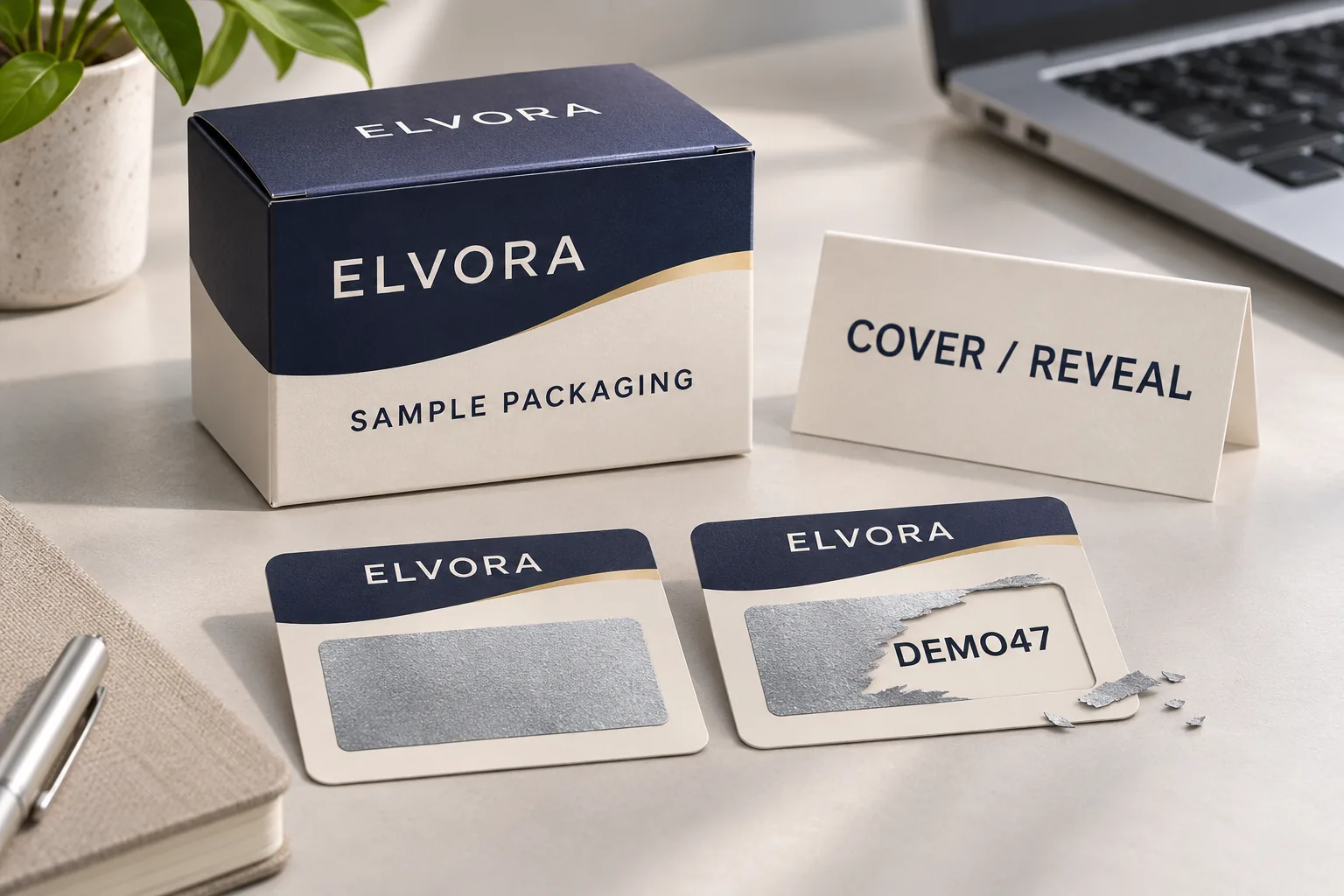
Specify what the patch covers
Mark the concealed field on the actual-size artwork. Include the longest permitted value, any human-readable wording and the clear area required around a symbol if one is proposed. Distinguish the data area from the visible scratch instruction and decorative background.
Ask the supplier to identify the proposed layers and opening action. Is the covering printed as part of the construction, or is a separate covering label applied over existing information? The procurement brief must describe the offered arrangement rather than assume every silver rectangle works in the same way.
Scratch Off Systems describes a purpose-designed security scratch-off product. Its stated features belong to that manufacturer’s product. They do not demonstrate that another silver patch has the same construction or that RP Labels supplies an equivalent security mechanism. Confirm availability and evidence for the actual proposal.
Use a conceal-and-reveal worksheet
Write down the relevant viewing, handling and reveal conditions with the responsible owner. This article sets no universal opacity, scratching-force or security threshold. The worksheet is a way to make an agreed review observable.
| Stage | Input and action | Record before moving forward |
|---|---|---|
| Identify | Label reference, base print, cover method and demonstration data | Which offered construction the specimen represents |
| Before reveal | Inspect under the agreed ordinary viewing conditions | Whether information is concealed to the agreed extent |
| Handling | Use the agreed representative packing and handling sequence | Any premature exposure or disturbed covering |
| Reveal | Follow the specified opening instruction on an identified specimen | How the covering separates and what remains |
| Read | Read the complete revealed demonstration value | Missing characters, damaged print or obstructing residue |
| Confirm scope | Compare specimen and production proposal | Changes requiring another review |
Keep observations beside the actual specimen reference. A photograph can document appearance, but cannot prove every security or handling property. If the review concerns sensitive-code protection, the responsible security owner must define the additional assessment and access arrangements.
Do not let the covering damage the information
The covering can appear satisfactory before opening while the revealed print is incomplete. Record whether the missing portion was absent in the source, outside the covered region, damaged during reveal or simply obscured by remaining material. Those are different questions for the artwork and construction owners.
Do not solve an incomplete value by guessing its missing character. Use the authorized demonstration source to compare the result. For production values, the data owner must control corrections and any reissue process. A plausible replacement is still an unauthorized change.
The barcode and printed-text comparison guide covers agreement between a symbol and the text beside it. For a concealed-code project, that relationship must be reviewed after the intended reveal as well as in the underlying source. Correct data in a PDF does not establish that the reader can retrieve it from the finished label.
Separate decorative cover, exposure evidence and verification
A metallic-looking covering may serve visual presentation. A specified construction may provide defined evidence that the information has been accessed. A separate system may check a submitted identifier. These functions require different descriptions and cannot be purchased as one unexplained word such as secure.
Use the holographic function guide when the proposed cover also includes an optical effect or a visible code. Specify who operates the checking destination and what it actually establishes. Do not describe a normal web link as proof of authenticity.
Ask how samples and production records will use demonstration versus authorized data. Limit access to the information needed for the agreed job. Confirm whether rejected or extra printed specimens require a specific agreed disposition; this article establishes no automatic destruction or data-management service.
Two projects can require different proposals
Consider an illustrative brand that wants a packaging demonstration with a covered reference word. Its immediate task may be showing an opening sequence to the packaging team. A safe demonstration construction can help discuss coverage and readability without introducing real customer information.
Now consider a project in which disclosure of a code has operational consequences. A visually attractive demonstration cannot answer the entire requirement. The owner needs the actual construction, controlled data handover and a defined assessment of exposure and subsequent use. If those requirements cannot be supported, the project should not be released under an undefined security promise.
An uncovered reference can also be the better option when concealment has no purpose. It removes a reveal step and its additional review. The right purchase follows the real information task, rather than adding a patch because it looks more sophisticated.
Approve the combination that was actually reviewed
Link the released artwork, demonstration or authorized data version, covering dimensions, supplier construction reference and accepted specimen. Keep any difference from the specimen visible, including a change to the underlying print or the method used to apply the cover.
If the printed field grows, do not enlarge the font or shift the patch without reviewing the whole area again. If the proposed covering changes, confirm which earlier observations remain relevant. Approval should identify what was checked, what passed and what remains outside its scope.
Questions before ordering
Does a silver patch prove security?
No. Identify the actual construction and assessment requirement. Appearance alone establishes neither controlled access nor a checking service.
Should an early sample contain live codes?
Use safe demonstration values for coverage and reveal review. The data owner must authorize production data.
What if the revealed value is damaged?
Record the failed stage and compare with the authorized source. Do not guess missing characters.
Request a concealed-field proposal
For custom optical and code label options, use the project inquiry form with label dimensions, a safe demonstration value, the concealed-field drawing, quantity per design and the intended reveal task. Ask which construction is available and how the sample will represent it. Agree capability, sample costs and the evidence needed before supplying final authorized data.