Holographic Appearance, Tamper Evidence and QR Verification
A holographic label can be the right purchase for a visual task without proving that a package is unopened or genuine. Before choosing a seal, decide which results this order must deliver: a recognizable optical appearance, visible evidence of removal, printed identification, or a response from a verification system. Approve each required result separately. Leave unnecessary functions out of the order instead of buying a more complicated label to answer an undefined concern.
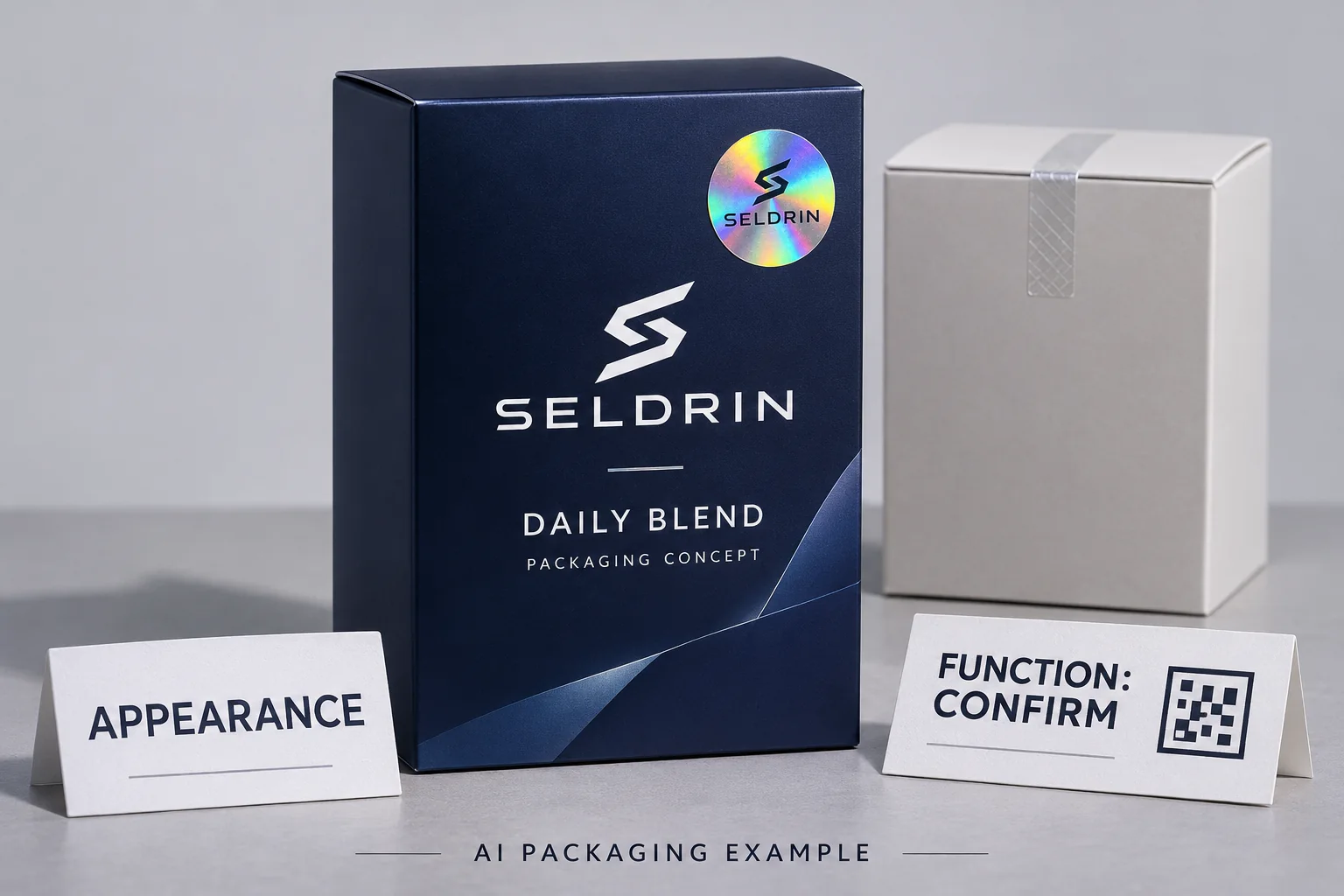
Start with the action someone must take
Write the required outcome as an observable action. For appearance, someone should recognize the logo and read the intended wording under the viewing conditions you specify. For removal evidence, an observer should notice a defined change after a particular opening or peeling event. For a code, the intended device should read the approved information and produce the expected result in its application.
These are separate questions even when they share one small sticker. A changing rainbow background does not establish authenticity. A printed number does not establish who issued it. Opening an information page does not demonstrate that a system has checked an individual package. Avoid using “security label” as the entire specification.
The person accepting the result matters. A brand designer can approve appearance while a packaging colleague reviews the closure and a system owner checks the destination. Name those responsibilities before asking one person to approve everything from a screenshot.
Use an approval matrix before selecting the construction
Copy the following fields into the project brief and mark each requirement as required, not required, or unresolved. A blank field remains unresolved. “Not required” is a useful decision when the feature adds no value to this project.
| Requirement | Input and responsible reviewer | Evidence to retain | Release or stop decision |
|---|---|---|---|
| Optical appearance | Brand reviewer supplies authorized logo, intended effect, placement and viewing task | Identified physical appearance reference and artwork revision | Accept the stated appearance only; stop if an essential visual relationship is still assumed |
| Removal evidence | Packaging reviewer identifies surface, closure, event and visible change to inspect | Representative applied specimen and observations under agreed conditions | Accept only the evaluated construction and use; stop if the relevant opening leaves the requirement unanswered |
| Printed code or serial | Data owner supplies approved payload or numbering source and intended reader | Source-to-output comparison and reading result from a representative printed sample | Accept data and readability within the recorded scope; stop on a mismatch or unresolved reading failure |
| Digital verification | System owner defines destination, expected response and operating responsibility | Recorded result from the intended workflow, including the handling rules relevant to its stated purpose | Accept the defined system behavior separately; stop if no responsible owner or working process exists |
Do not turn four approvals into one tick marked “sample approved.” Record the sample identity, construction, container, artwork revision and any substitutions. The useful record says which question was answered and which question remains open.
Choose appearance without implying an extra function
If the purpose is brand presentation, compare the logo, readable areas and changing effect on the intended package. Review identified samples under the same ordinary lighting and viewing positions. A digital composition can explain placement; it does not reproduce every aspect of the physical optical response.
Ask which element is printed and which belongs to the optical material or design. A custom printed logo over an identified existing pattern can be a sensible alternative when a brand-specific optical image is unnecessary. Do not assume exclusivity, specialist origination or repeat-order rights from the word “custom.” Confirm the actual proposed scope.
For a decorative front label, approval may reasonably stop at appearance, fit and relevant handling requirements. Adding a removal feature would introduce another decision and another sample question. A simpler construction should remain an option when it serves the buyer’s defined task.
Evaluate removal evidence at the intended location
If opening evidence is required, identify the opening itself. A seal on the front face may have no relationship to the lid or flap being monitored. Mark where the proposed label crosses the relevant interface, including the surfaces and geometry it will encounter.
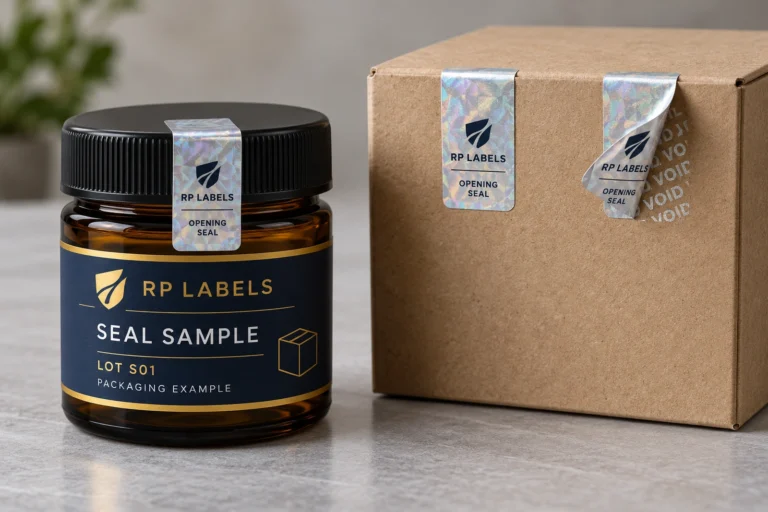
Ask what construction can actually be proposed for that use. VOID-style and destructible approaches describe different intended behaviors; the names do not guarantee a particular result on your package. Agree application, ordinary handling, removal and inspection conditions appropriate to the candidate. This guide supplies no universal waiting time, temperature or pass grade.
Avery Dennison’s tamper-evident polyester bulletin recommends evaluating the intended application and identifies surface and application conditions as relevant. It concerns its own material family, not an RP Labels specification or confirmation that a pictured seal will behave the same way.
Inspect ordinary handling as well as the deliberate event. A change that appears during routine packing needs investigation before it becomes an instruction to customers. The closure-focused tamper-evidence guide develops that placement and observation review. An informal sample check does not create certification or prove the contents of the package.
Keep code printing and verification responsibilities visible
A QR code may simply open buyer-approved product information. That is a legitimate purpose and does not need to be described as authentication. A serial number may support an agreed identification workflow without providing a customer-facing verification service.
GS1’s Digital Link explanation describes linking packaging to online resources and adding further functionality through a resolver. That distinction helps frame the purchasing question: define the destination and service you need rather than assuming that printing a symbol supplies every later function.
Separate three checks: can the intended device read the finished symbol, does the decoded value match the approved source, and does the application return the expected result? Record the stage that fails. Changing the optical finish will not resolve a missing destination or an incorrect source record.
If the project requires authentication, the responsible system owner must define what is checked and how relevant situations, including copied or reused identifiers, are handled. Confirm the separate scope and responsibilities. Printing does not automatically supply that infrastructure. The code and receiving-system brief helps organize the data and application questions without prescribing one universal code arrangement.
Release only the scope that has been answered
Before production, reconcile the matrix with the quotation and final artwork. Keep required functions, accepted evidence and unresolved items visible together. If a necessary check remains open, pause that release or agree a revised requirement explicitly. A changed surface, construction, artwork or system can require renewed review; an earlier attractive sample cannot approve the change by itself.
Start with the custom holographic label options to discuss the available appearance and construction routes. Then send a function-specific enquiry with your authorized logo, label dimensions, quantity per design, package photographs and the matrix rows this order actually needs. For a code requirement, include the approved destination or data specification and name the system owner. Ask which evidence can be supplied next and what remains outside the printing scope.