A Printed Logo on Holographic Stock or a Custom Optical Image? Quote the Right Job
The logo can be custom while the optical background is standard
A buyer asks for a custom holographic logo label. One proposal shows the brand printed over an existing rainbow pattern. Another describes a brand-specific optical design. Both may be discussed under the word custom, but they do not define the same work. Identify which part of the result must be unique before comparing the quotations.
I would separate three references: the printed artwork, the optical pattern and the finished label construction. A custom size or printed logo does not, by itself, establish that the changing optical image was created specifically for the brand. Equally, an existing optical background can be a sensible choice when the buyer only needs a distinctive presentation.
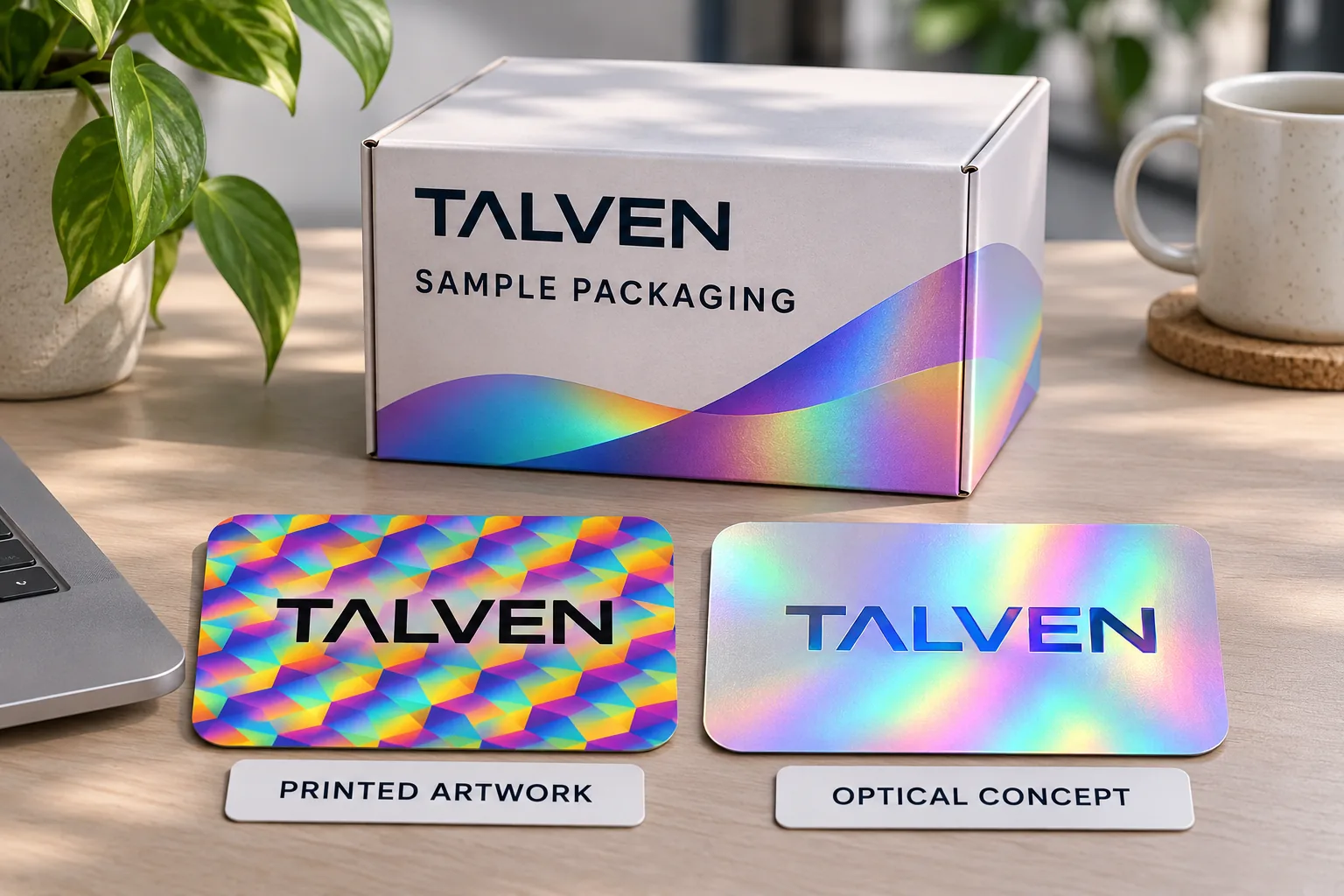
Mark what belongs to the print and what belongs to the optical brief
Use an annotated reference image to show the logo, wording, background effect and desired changing feature. Ask the supplier which elements are ordinary printed artwork and which are features of the offered optical material or process. Keep uncertain elements marked as questions.
KURZ presents diffractive and three-dimensional stamping effects as specialist decoration options. The useful lesson is that an optical effect has its own design and production context. That manufacturer example does not establish RP Labels’ equipment, a particular origination service or ownership of any proposed optical master.
Do not copy another brand’s seal and ask for an identical optical identity. Supply your authorized brand assets and describe the visual task in your own words. An attractive reference can communicate a direction without supplying permission or production-ready information.
Ask for a scope statement before a price comparison
Use separate fields for what is supplied, what is newly prepared and what must remain reproducible on a repeat order. The supplier should explain the actual available route; the buyer should not prescribe specialist production terms it cannot verify.
| Part of the proposal | Question to resolve | Useful retained reference |
|---|---|---|
| Printed logo and wording | What artwork is being prepared or supplied? | Approved print revision |
| Optical background | Is an existing effect being selected? | Identified material or effect sample |
| Brand-specific optical feature | What new design work is actually proposed? | Written scope and review deliverable |
| Finished label | What layers, shape and supply format are offered? | Complete construction specification |
| Repeat order | Which references and conditions carry forward? | Confirmed repeat-order basis |
An empty field is an open question. Do not fill it with the word bespoke because the sales image contains your logo. Where a special design route is unavailable or outside the project budget, compare a clearly identified existing effect rather than leaving a misleading scope in the order.
Match the sample to the decision
A sample of an existing optical pattern can help choose a background. It cannot demonstrate a different brand-specific image that has not been made. A digital rendering can explain the proposed composition while leaving the final optical response unresolved.
Ask what the next review item will show. Is it printed placement on a selected material, an optical concept, or a representative finished specimen? Record substitutions and the limited question each item answers. This prevents a general swatch approval from silently releasing unrelated specialist work.
The sample-selection guide explains the difference between material references and artwork-specific evidence. Apply that distinction here: a useful sample is one that represents the part of the proposal you are deciding about.
Keep pattern position and artwork position distinct
A repeating background can appear differently inside separate cut labels. Ask whether the pattern is expected to be positioned relative to the printed logo or merely present across the chosen material. Do not infer a registration promise from one attractive sample.
If a particular optical feature must sit behind a symbol or border, mark that relationship explicitly. Have the supplier identify whether it can be controlled and how a representative review will demonstrate the proposed relationship. This guide supplies no cutting or registration tolerance.
Allow the ordinary printed text its own readable area. A specialist optical brief does not remove the need for contrast and actual-size reading. The white-ink readability guide addresses that adjacent task without deciding whether the optical image itself is custom.
Clarify repeat work and permitted use
Ask what references the buyer and supplier will retain, who can access any specialist design files, and what a future order would require. Record the actual agreement about permitted use, availability and any new setup work. A setup charge alone does not establish exclusivity, source-file delivery or transferable rights.
The buyer may want continuity from an accepted sample, rather than ownership of every manufacturing input. Another buyer may need an agreed route for future supply. Describe that operational need and confirm the available arrangement before treating two quotations as equivalent.
Keep any rights question with the relevant parties. This article does not determine ownership under a particular contract. If a proposed identity depends on another party’s asset or restricted material, resolve that dependency before release.
Compare a visual launch with a defined optical identity
Imagine a small brand that wants a clear printed logo with an attractive changing background. It has no requirement for a brand-specific optical motif. An identified existing effect with suitable printed artwork may meet its presentation goal, subject to the actual construction and sample review.
Now imagine a buyer whose brief requires a particular symbol to change visibly within the optical image. A printed symbol over a standard pattern would not answer that same task. The buyer needs a confirmed specialist scope and a review that actually represents the requested feature.
Neither situation proves security or market value. A less complicated printed design can win when the optical requirement adds no useful result. The choice should follow the desired appearance and feasible supply arrangement, not the most elaborate terminology.
Questions before ordering
Is a printed logo the same as custom optical origination?
No. Confirm which work creates the print and which work creates the optical image in the actual proposal.
Does custom imply exclusive rights?
Confirm rights, permitted reuse and any origination terms in the agreement.
Can a screen approve the optical effect?
Use it for intended layout. Identify physical references for the viewing effect and their approval limits.
Confirm the order in separate references
Release the printed artwork, selected optical reference or accepted special-design scope, complete construction, shape and quantity together. State which appearance relationships were accepted and which assumptions remain subject to confirmation. Retain the agreed sample identity for later comparisons.
For a holographic label inquiry, send your authorized logo, finished dimensions, quantity per design and an annotated explanation of which feature must be optical. Start with the custom holographic range and ask what can actually be proposed. The useful quote describes the job behind the image.