Approving a Replacement Label Run: Ask What the Correction Will Demonstrate
Replacement quantity is only one part of recovery
A supplier offers to replace a label run after a problem is reported. That may resolve the immediate shortage, but the buyer still needs to know what will differ and how the replacement will be assessed. Repeating the same unidentified specification can repeat the uncertainty that caused the first dispute.
Ask for a correction proposal tied to the actual observation. Separate confirmed cause, working hypothesis and commercial replacement arrangement. A supplier may reasonably offer replacement before a complete investigation is finished, but that should not be described as proof that the cause has been established.
Begin with the original acceptance question
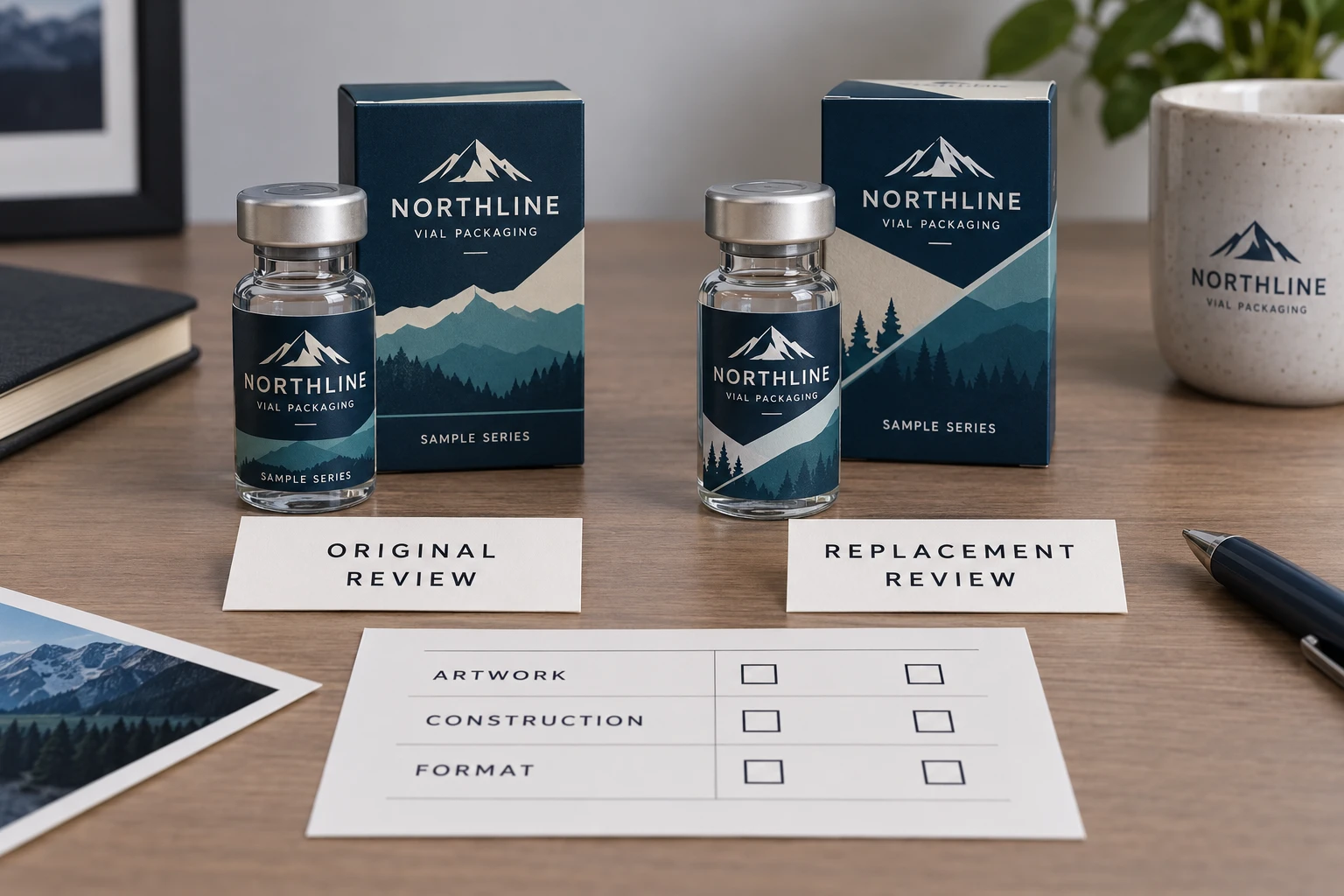
Identify the order, artwork revision, construction and condition that did not meet the agreed requirement. Keep the original specimen and the supplier’s response together. A vague record saying “quality problem” is too broad to guide a meaningful replacement review.
State what the buyer needs the replacement to demonstrate: correct wording, an accepted print relationship, suitable delivered roll presentation or another specific result. Do not add unrelated requirements merely because a replacement is being discussed. New scope should be identified and quoted separately where relevant.
Ask which parts of the original specification remain unchanged and which will change. If the proposal changes several components, record all of them rather than calling the result the same label with a fix.
Use a correction-to-evidence table
| Proposal element | Question to ask | Useful evidence |
|---|---|---|
| Observed issue | What exactly is being corrected? | Identified original specimen and requirement |
| Proposed change | Which file, component or delivery feature differs? | Revised specification or marked comparison |
| Expected result | What should the reviewer observe? | Defined acceptance task rather than a broad promise |
| Sample scope | Does the sample represent the replacement? | Construction, artwork and stage identity |
| Quantity and timing | What will be supplied and when is it confirmed? | Agreed recovery proposal |
| Old stock | What remains held, accepted or awaiting disposition? | Separate inventory status record |
The table supports a purchasing decision. It does not establish a formal corrective-action standard, contractual remedy or guarantee that a proposed change eliminates every possible recurrence.
Two illustrative replacement proposals
In one hypothetical case, a printed identifier differs from the approved file. The replacement proposal identifies the corrected artwork revision and the quantity to be reprinted. The buyer should verify the corrected output and confirm that the supplier has accepted the new release. A material trial may be irrelevant if the construction itself is unchanged and suitable.
In another case, labels could not be used through the agreed packing arrangement. The supplier proposes a different liner and roll presentation. A correct front-label PDF cannot approve that correction. The packer needs an appropriate representative review of the revised delivered web.
These examples show why one universal replacement checklist is insufficient. The evidence should follow the actual failed requirement, while the commercial quantities and old-stock status remain visible in both cases.
Keep the trial meaningful
Agree what the replacement sample represents and what remains to be confirmed. An unfinished sample may answer an artwork question while leaving the final surface open. A few loose labels may answer appearance while leaving roll handling untested.
For custom vial labels, provide the actual container and packer requirements when they are relevant to the correction. A substitute demonstration on another vial or another line should be clearly limited rather than presented as approval of the intended project.
If a comparison changes both stock and application conditions, record the combined scope. The result may support that arrangement without proving which single change mattered. Do not use a successful short trial to claim unlimited durability or universal compatibility.
Give proportionate alternatives a fair hearing
A full replacement may be appropriate when the affected stock cannot meet the agreed use. A targeted replacement or another documented arrangement may be reasonable when the issue is limited and the remaining stock can be assessed. Neither should be selected solely to produce the quickest reassuring message.
Ask what each proposal means for usable quantity, timing, packer coordination and unresolved questions. Do not invent cost savings or assume the supplier offers rework, storage or expedited delivery. Obtain the actual confirmed scope.
The existing approved construction may remain suitable if the correction concerns execution of a defined requirement. A new construction should be chosen only when it addresses a supported need and its other consequences have been reviewed. Recovery is not automatically an opportunity to add more expensive finishing.
Close both the new and old stock records
Identify the replacement’s release, received quantity and acceptance result. Separately record what happened to the original stock. A successful replacement does not prove that held cartons were returned, disposed of or otherwise controlled.
Retain the final approved specification for the next order. If the replacement included a changed material or presentation, ensure the reorder references that accepted version. Otherwise the next buyer may unintentionally request the older proposal using the same product name.
Keep the investigation’s certainty honest. “Replacement accepted under these conditions” is useful evidence. “The problem can never recur” is a much broader claim that the available review may not support.
Frequently asked questions
Must the cause be fully proven before any replacement is ordered?
Not always. Commercial recovery and technical investigation can proceed with different information. Record what is confirmed and ensure the replacement review addresses the required result rather than claiming an unsupported diagnosis.
Is a corrected digital proof enough?
It depends on the issue. It can address intended artwork, while material, physical output or dispensing questions need relevant evidence beyond the screen file.
Does receiving replacement stock close the complaint?
Receipt is not the same as acceptance or old-stock disposition. Record those decisions separately and confirm the outcome with the responsible parties.
If recovery involves another supplier, the specification-transfer guide helps carry authorized artwork and known requirements into that separately qualified proposal.
Submit the failed requirement and proposed correction
For a replacement printing review, provide the original order, approved revision, identified observation, affected quantity and proposed change. Include the actual vial or packer requirements where relevant. Ask what sample, release and acceptance record will demonstrate that the replacement addresses the specific problem.