Ordering Roll Labels for a Machine? Confirm Unwind Direction and Core Size
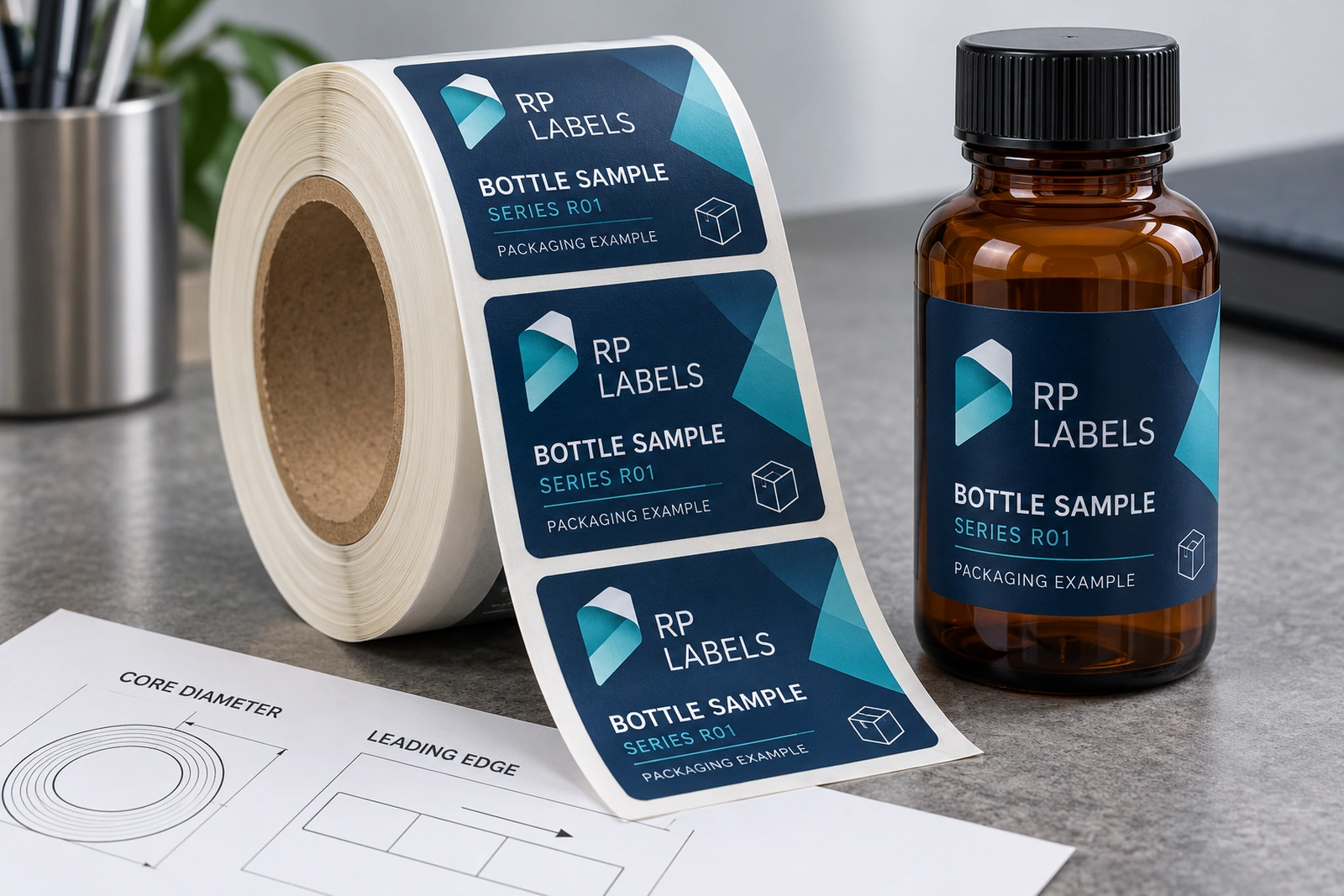
The bottle artwork can be correct while the delivered roll is still wrong for the packing line. The print may face the wrong way, the core may not fit the holder or the roll may exceed the equipment’s available space. None of those problems is obvious from a front-label PDF.
Once a buyer has chosen machine-applied roll labels, I would put the delivery specification beside the artwork specification. Let the packer confirm the equipment requirements, then get the supplier to acknowledge the same diagram and dimensions. A roll needs to arrive in a form the line can actually use.
Ask the person running the labeler
Start with the equipment model and the packer’s operating requirements. A purchasing manager may know the bottle size and order quantity without knowing how the liner feeds through the machine. The operator or equipment supplier is the appropriate source for that part of the brief.
Request the relevant diagram or manual instructions. Identify which requirements are fixed and which depend on the intended setup. If a contract packer will apply the labels, get its approval before placing the printing order. Assuming that all roll labels are interchangeable can shift a preventable purchasing problem onto production day.
Our rolls versus sheets guide covers the earlier format choice. This guide starts after rolls have been selected and focuses on the delivery details needed for the planned machine process.
Confirm inside or outside winding
The printed label can be wound toward the outside of the roll or toward its inside. That is one part of the feed arrangement. The artwork orientation relative to the feed direction is another. Describe both so the supplier does not have to infer the setup from a verbal instruction.
Avery’s unwind direction explanation notes that machine application requires the correct arrangement. The practical procurement lesson is to confirm how the labels leave the roll before production. It is not evidence that any particular Avery setup is the right one for your machine.
Use the diagram agreed with the packer. If a supplier assigns numbers to winding options, attach its actual diagram rather than relying on a number alone. The picture should show the print face, roll, feed direction and orientation clearly enough for both parties to approve.
Identify the leading edge of the artwork
Ask which edge reaches the application point first: the top, bottom, left or right of the finished design. Keep the artwork’s reading direction visible in the diagram. A plain rectangle without a marked top can leave the same ambiguity as a vague description.
For a wraparound bottle label, confirm how that feed orientation presents the design on the container. The leading edge of the label is not automatically the front-facing product-name area. Let the packer review the intended position and its application setup together.
Keep the accepted drawing with the order confirmation. If the artwork is rotated later to improve the print layout, ask whether the delivery orientation remains correct. A new file should not silently overturn an already approved machine requirement.
Separate core diameter from outer roll diameter
The core is the tube at the center of the roll. Its inside diameter must match the planned holder or arrangement. The roll’s outside diameter describes the full wound roll and must fit the space available on the equipment. These are different dimensions and both deserve a field in the enquiry.
Ask the packer for its required core size and maximum outer diameter. Do not choose a familiar core because a previous supplier used it on a different job. State units consistently and confirm whether the supplier’s description refers to the core’s inside diameter.
The requested quantity may need to be divided across rolls to stay within the agreed limits. Ask how many labels will be supplied per roll and how any final partial roll will be identified. A total order count does not tell the operator what each delivered roll will contain.
Discuss liner and sensing requirements
Ask whether the labeler has requirements for liner width, spacing, registration or label detection. These depend on the equipment and job. A reflective, transparent or otherwise unusual construction deserves a specific discussion rather than an assumption that the standard setup will detect it correctly.
When clear or reflective stock leaves detection unresolved, the clear-label web compatibility review separates gap detection from printed-mark requirements and explains what representative web information to obtain from the packer.
Have the packer specify any approved liner and sensing arrangement. The supplier should explain the proposed delivery against that requirement. Avoid prescribing a universal gap or sensor setting from a generic article; the actual line and construction determine the relevant choices.
If splices, roll direction changes or partial rolls could affect handling, ask how they are managed and identified. That question is especially useful when a buyer is comparing offers that mention only the finished label size and total pieces.
A hypothetical order caught before printing
Imagine a hypothetical supplement brand ordering 5,000 identical bottle labels for a contract packer. The buyer initially submits a print-ready file and asks for rolls. The packer then supplies its core requirement, outer-diameter limit and a diagram showing the label’s top edge leading.
The buyer attaches that diagram to the order and asks the label supplier to acknowledge it. The supplier confirms how the quantity will be divided into rolls. This is an illustrative purchasing process, not an RP Labels order history or a claim about a particular machine’s capacity.
The counterexample is a small hand-application job with no dispenser constraints. Some orientation details may matter less there. Once a machine or specified dispenser is involved, however, convenience for a hand-labeling job is not a reliable guide to compatibility.
Approve a representative trial where needed
Ask whether the packer needs a sample roll before releasing the main quantity. Agree which features the sample must represent: construction, liner, dimensions, orientation and roll arrangement. A few loose labels may support an artwork review while failing to answer a feed question.
Record the observed result and any agreed changes. If the label material or equipment changes later, decide whether a renewed trial is needed. A repeat design can still be a different production setup when the delivery specification changes.
Check the final order confirmation against the accepted artwork and machine brief. Keep the roll specification visible in the job record instead of burying it in an old message. That makes a repeat order easier to review without relying on someone’s memory.
Questions about machine-applied label rolls
Is unwind direction just an artwork rotation?
No. The winding arrangement and the edge leading through the equipment need to be considered together. Confirm the print face and feed orientation with a shared diagram.
Can I assume a standard core size?
Ask the packer or equipment supplier first. The core must fit the planned arrangement, and the maximum outer roll diameter is a separate requirement.
Are all winding-option numbers interchangeable?
Use the actual diagram supplied and approved for the job. A number without its accompanying picture leaves room for misunderstanding, especially when more than one supplier is involved.
What should a sample roll demonstrate?
Agree that with the packer. It may need to represent liner, construction, dimensions, sensing, orientation and feed arrangement. A visual artwork sample alone may not answer those questions.
Send a machine-ready enquiry
Review our custom supplement label options, then send RP Labels the packer’s roll specification with the artwork and quantity. Include the approved diagram, core requirement and roll limits. The best-looking label still needs to arrive ready for the application process you have planned.