An Old Vial Label Quote: What Needs Reconfirmation Before You Order?
An unchanged PDF does not keep an offer current
The buyer finds last month’s quotation and is ready to order the same labels. The artwork may be unchanged, but the offer’s validity, material proposal, quantity split and timing still need confirmation. Treat the old document as a reference for a refreshed purchase, rather than assuming every condition remains available.
The useful question is narrow: which parts of the previous offer are still confirmed for this order? Asking it does not mean accepting an unexplained increase or expecting a new design project. It gives both sides a chance to identify genuine changes before the buyer relies on an outdated total or arrival estimate.
Identify the offer and the intended purchase
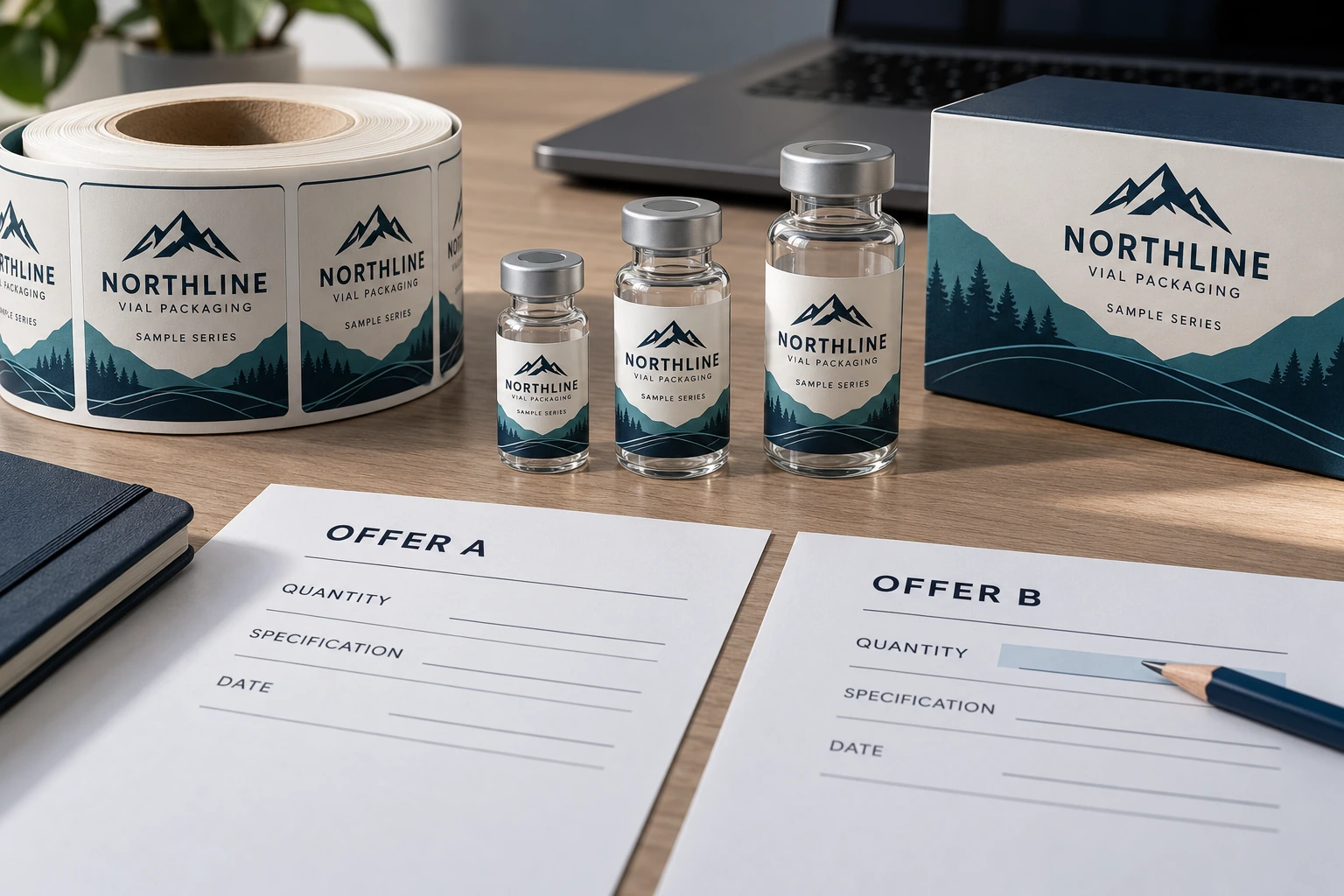
Send the quotation number, date and revision together with the current quantity per design. Confirm the artwork revision, finished dimensions, construction, supply format and destination. State whether anything changed since the original inquiry, including the intended packer or container.
If nothing changed, say so explicitly and ask the supplier to confirm the current proposal against those references. Do not describe the job only as “same labels.” An earlier offer may have contained alternatives, estimates or unresolved material choices that were never finally selected.
Keep requested dates separate from confirmed dates. A previous estimate made before artwork approval does not automatically reserve production or transport capacity. Ask which milestone starts the refreshed schedule and what information is still required.
Reconfirm the conditions that can affect the decision
| Previous field | Current question | Record to retain |
|---|---|---|
| Validity | Is this offer still available on its stated basis? | Written confirmation or revised offer |
| Construction | Is the exact proposal available, or is an alternative being suggested? | Identified material and finish reference |
| Quantity | Is the per-design split unchanged? | Current order schedule |
| Included work | Does the price cover the same preparation and samples? | Confirmed scope and exclusions |
| Destination | Does the transport basis still apply? | Current address, charge and stated conditions |
| Timing | What is confirmed now, and from which milestone? | Updated production and transport plan |
An empty answer is not agreement. Keep unresolved items visible and ask a consolidated clarification. The aim is a usable purchase instruction, not a longer quotation document for its own sake.
Route each change to the approval it actually affects
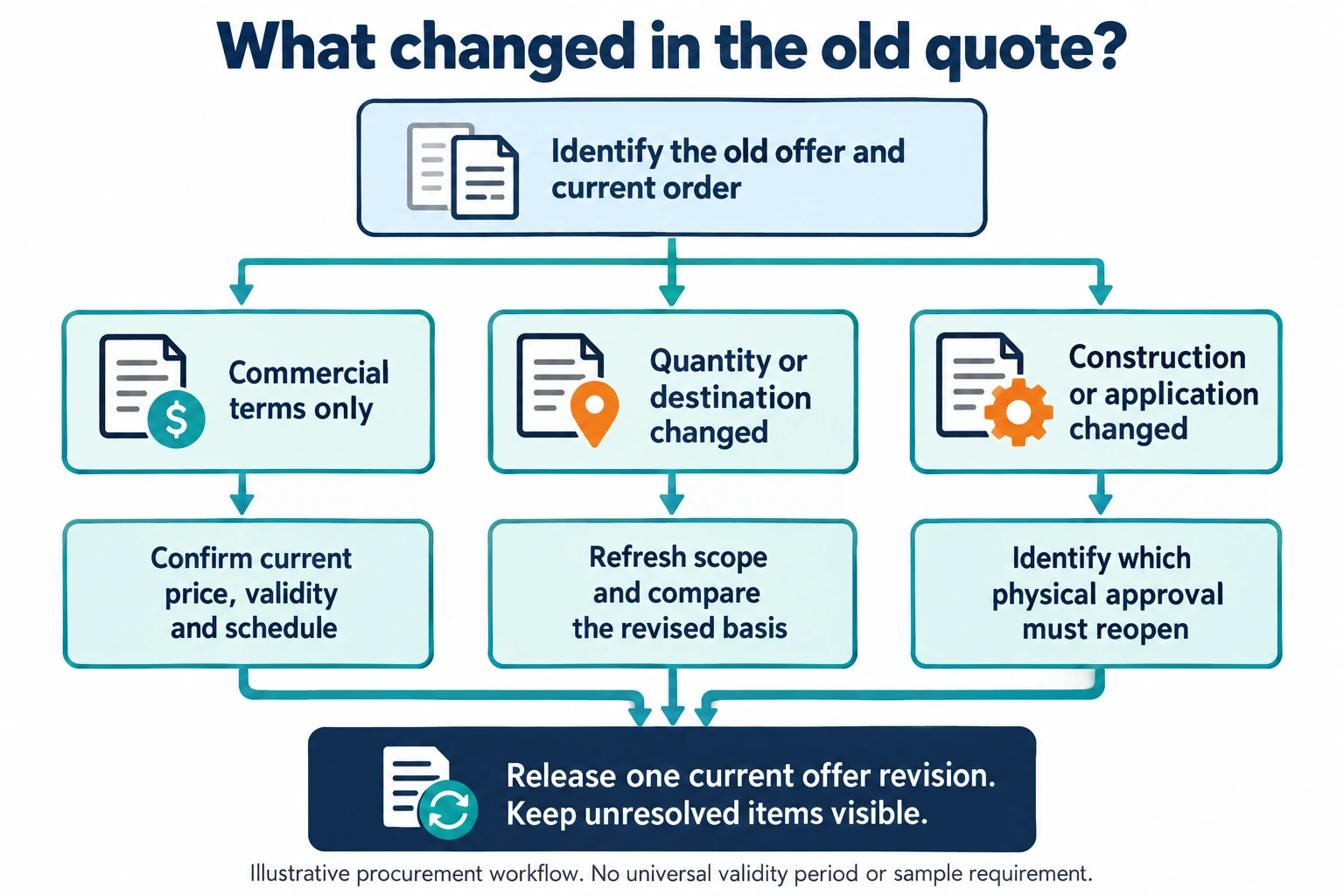
Consider an illustrative offer Q1 and a requested order Q2. The references are fictional; they contain no prices or supplier promises. Read the fields side by side rather than asking whether the entire old quote is still valid as one undivided question.
| Field comparison | What needs a current answer | What should not be reopened automatically |
|---|---|---|
| Same artwork, construction, quantity and destination; commercial validity unconfirmed | Supplier confirms current terms and available schedule against the identified offer | A fresh design concept or physical sample solely because the document is older |
| Same printed item, but different quantity per SKU or destination | Revised scope and quantity/transport basis; identify the controlling offer | Artwork already accepted, unless another relevant requirement changes |
| Different construction, container or application arrangement | Identify the changed interface and the physical review relevant to it | Treating a price confirmation as approval of changed material performance |
A supplier could confirm a price while leaving the proposed replacement material unidentified. That answers a commercial question, but leaves a separate physical one open. Conversely, a new quotation number for an unchanged confirmed job does not by itself make the old artwork unusable. Ask which field changed and which decision remains unresolved.
If a different construction is proposed, the material substitution guide describes the next review. If the offer is unchanged but the delivery date matters, the production milestone guide helps separate approval, production and transport. Neither destination supplies the actual supplier’s current commitment.
Compare a revision by the change it contains
If the supplier sends a revised offer, ask it to identify what changed from the previous version. Separate price, construction, quantity and delivery differences. A higher total may reflect a different quantity or destination; a lower total may omit a sample previously included.
Do not attribute every price change to raw materials without evidence. Equally, do not assume an old unit price is a permanent entitlement. Compare the actual confirmed scope and, where necessary, discuss the commercial terms with the responsible parties.
For custom vial labels, each design and specification needs confirmation. A starting quantity does not fix every later order’s price or allow arbitrary SKU combinations under an old total.
Two illustrative repeat inquiries
In one hypothetical project, a buyer repeats an accepted design, construction and quantity promptly within the stated offer period. The supplier confirms the same scope and a current schedule. A concise confirmation may be sufficient; repeating unnecessary concept work would add no purchasing value.
In another project, several months have passed and the buyer now wants fewer labels across more designs, delivered to a contract packer in another location. The old quotation is useful background, but its quantity and transport assumptions no longer describe the purchase. A refreshed itemized proposal is the better basis for approval.
These examples do not establish a universal validity period or predict price movements. They show why the relevant comparison is the current job against the quoted assumptions, rather than the age of the PDF alone.
Decide whether an alternative actually serves the task
The supplier may propose another construction or quantity because the original arrangement is unavailable or no longer economical. Review it as a separate alternative. Ask what practical requirement it meets, what differs and which approval needs to be reopened.
Keeping the original specification may be reasonable if continuity is important and the supplier can confirm it on acceptable terms. A different available proposal may also be appropriate after review. The buyer should not be forced into an undefined substitution simply because the old quotation has expired.
If timing is the constraint, discuss confirmed options rather than promising a packer the earliest estimate in the message history. A later but clearly supported plan can be more useful than an attractive date whose prerequisites remain unresolved.
Release the purchase against one controlling version
Once the proposal is accepted, identify the current quotation revision in the order. Attach the approved artwork and quantity schedule, and ask the supplier to acknowledge the same references. Mark superseded offers as historical so they do not become competing instructions.
Keep payment, approval and scheduling milestones clear. A payment referencing an old quotation number should not leave the supplier guessing whether it accepts the old or refreshed proposal. Resolve any inconsistency before production is treated as released.
Retain the difference list with the order. It helps the next buyer understand whether a future comparison involves a genuine price change or another change in scope. Do not turn an isolated quotation into a claim about market-wide label prices.
Frequently asked questions
Does an old quote become invalid automatically after a month?
Use the actual stated validity and current supplier confirmation. This article establishes no universal period. If the offer is silent, ask rather than inventing a deadline.
Can I reuse the old proof?
It may remain a relevant artwork reference if unchanged and suitable, but confirm which revision controls the new order. It does not confirm current material availability, price or timing.
Should every revised offer trigger another physical sample?
Only the actual change and open requirements can answer that. An unchanged commercial confirmation differs from a construction substitution that affects appearance or application.
If the refreshed offer changes inclusions, the quotation scope-comparison guide helps distinguish scope differences before comparing the new total with the historical price.
Send a reconfirmation brief
For a repeat-order quotation, provide the old offer reference, current artwork, construction, dimensions, quantity per design, destination and required date. Identify changes explicitly and ask which previous conditions remain confirmed. Approve one current proposal before relying on its price or schedule.