Waterproof Labels: Specify the Splash, Soak and Wipe Before Choosing the Material
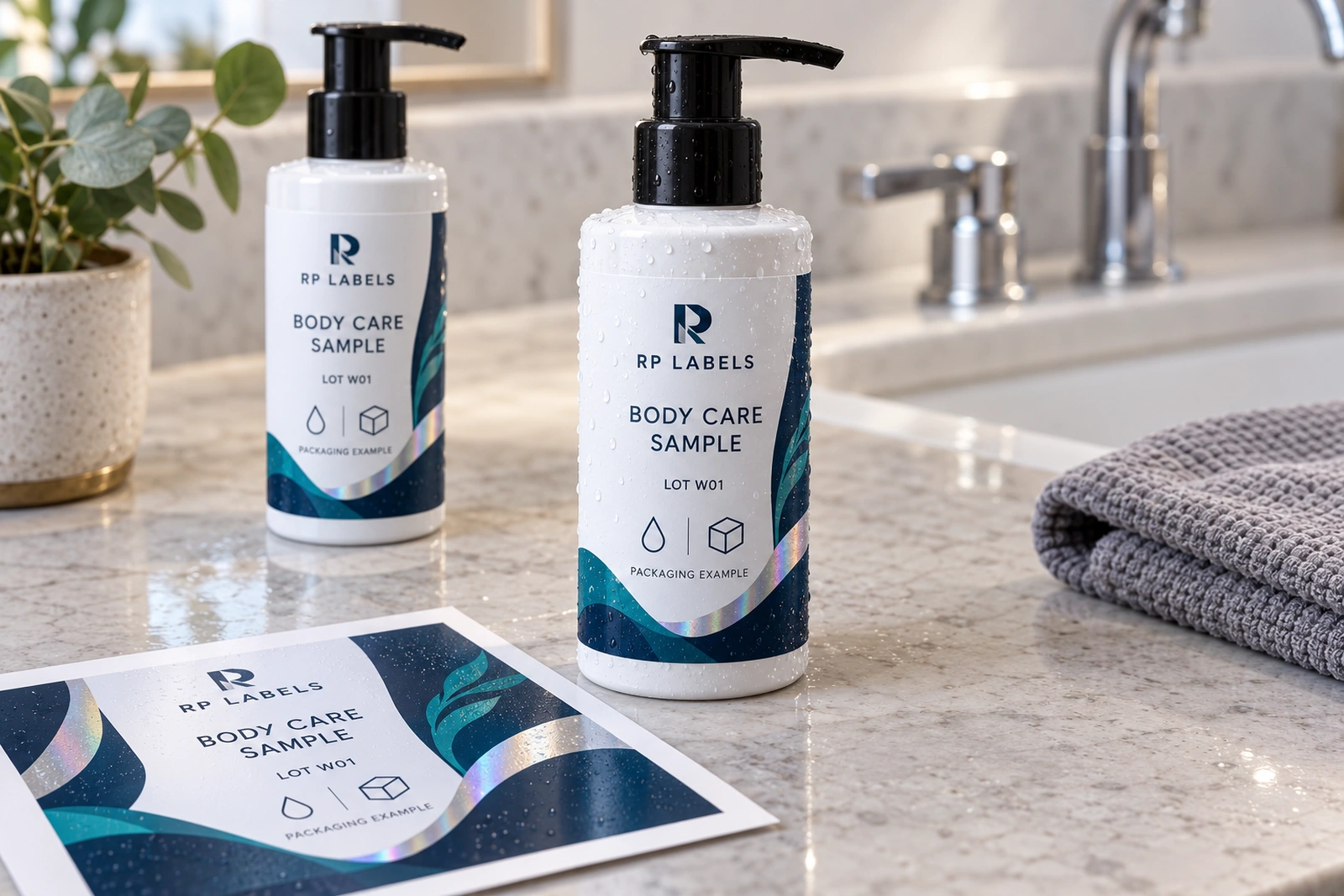
“We need waterproof labels” sounds like a clear inquiry until the next question: what will happen to the package? A few drops on a bathroom counter, repeated rinsing and several hours sitting in water are different jobs. I would rather receive a photograph of the use environment and a plain description of the exposure than a long list of impressive material names.
The buying mistake is treating waterproof as a single property of a shiny face film. Your customer sees the finished package. They notice whether the name remains readable, the surface still looks presentable and the label stays where it belongs. A material recommendation needs to address that complete result, with conditions attached.
Describe the water before choosing the label
Start with the source, duration and frequency of contact. Is the package splashed while someone washes their hands? Is it regularly wiped? Can water collect beneath the bottle? Will it be submerged? Add whether the exposure involves plain water or another liquid. A water-related observation does not establish resistance to oil, alcohol, cleaners or the product inside the container.
Avery distinguishes water-resistant labels intended for lighter moisture exposure from waterproof options intended for more demanding wet use. That is a useful starting distinction, rather than a specification for an RP Labels order. Ask for the proposed construction's capabilities and limitations under your actual conditions.
Avoid borrowing another manufacturer's testing statement as evidence for your package. If a customer needs a particular documented test, identify it in the inquiry and agree who will arrange it. The appearance of a printed sample cannot supply a test report that does not exist.
A bathroom counter and a wet work area are different purchases
Consider a hypothetical brand selling a bottle that normally lives on a dry shelf. The customer may splash the front and wipe it with a damp cloth. The buyer wants the brand panel to remain clear through that ordinary handling. An extended immersion requirement could add cost without addressing the exposure that actually matters.
Now consider a second hypothetical buyer whose containers regularly sit in a wet work area. Water reaches the edges repeatedly, and people handle the bottles while their hands are wet. This buyer should describe the entire sequence, including contact time and any wiping, instead of ordering the same finish because both products are called body care.
These are illustrative purchasing situations, not reported customer tests. Neither one tells you which material to order by itself. They show why two similar-looking bottles may justify different sample plans and different quotations. Start from use, then discuss construction.
Ask three separate questions about the finished label
First, what happens to the face material? Look for changes such as swelling, clouding or loss of the intended appearance. Second, what happens to the printed information? Inspect the main name and any changing data as well as decorative areas. Third, what happens at the bond with the container? Record movement or lifting independently of the print.
Separating those observations makes the next supplier conversation much more efficient. “The waterproof label failed” could mean several unrelated things. “The name smeared when wiped, although the label stayed attached” directs attention toward the printed surface. “The print stayed clear, but one edge lifted” points toward a different investigation.
Also distinguish moisture during application from moisture after application. This article concerns the finished package's wet use. If you apply labels to chilled or damp containers, review the separate cold-vial application guide and give the supplier that information before choosing an adhesive.
Compare representative samples consistently
Use the intended container and a sample representing the proposed print and finish. A plain film swatch can help discuss a material, but it cannot show how your particular printed information will respond. Keep an untouched reference and identify each candidate so that later photographs still mean something.
- Write down the expected liquid, contact time, frequency and handling sequence.
- Apply each candidate using its agreed application instructions and preparation conditions.
- Include the intended exposure and wiping method in a consistent comparison.
- Inspect face appearance, printed information and attachment as separate outcomes.
- Keep photographs and written observations linked to the construction and artwork revision.
This is a practical purchasing comparison unless you arrange a controlled formal test. Do not invent a universal soak duration or rub count simply to make the checklist look scientific. If an acceptance requirement matters commercially, define it before ordering and confirm how it will be evaluated.
Appearance and durability still need separate approval
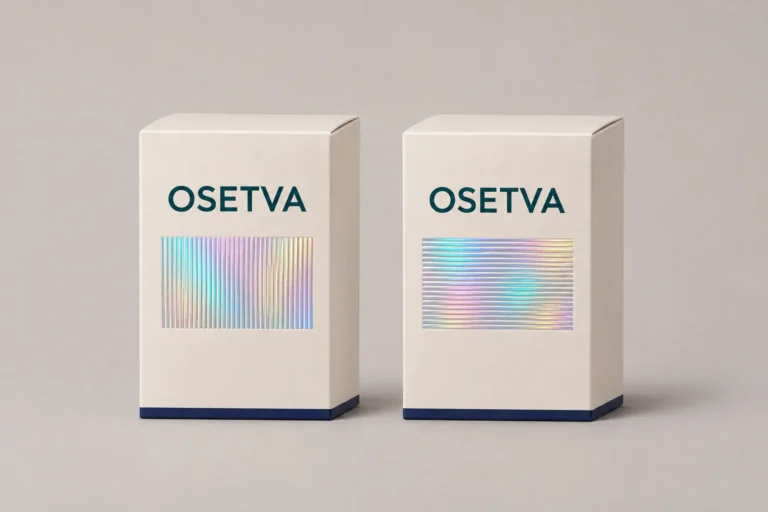
A glossy or holographic border can make a bottle look finished, but visual preference should not become the only approval criterion. Check the information under the light used by customers or staff. Wet reflections may make a crowded design harder to inspect even when the print has not changed.
Discuss an appropriate protective surface where needed, including any effect on later writing or overprinting. A finish that suits the static artwork may not suit the method used to add a batch identifier. Ask about the complete label rather than approving its layers independently and hoping the combination works.
Use the materials and finishes guide to organize that discussion. Keep the requirements proportionate: a shelf sample, a splash-exposed bottle and a repeatedly soaked package should not automatically receive the same recommendation.
Send a useful wet-use label inquiry
Include the container material, photographs, dimensions, artwork and quantity per design. Then describe the water exposure in ordinary language, including how the package is handled afterward. Mention any chemicals separately. Ask what candidate construction and sample review would address those conditions.
Request a custom label quote from RP Labels with that information. Orders can be discussed from 100 pieces per design, subject to specification. Confirm the actual construction and approval criteria before production. A precise description of one wet-use problem is worth more than an unsupported promise that a label resists everything.
Frequently asked questions
Are waterproof labels also resistant to every chemical?
No. Water exposure and chemical exposure are different requirements. Identify the actual substance, concentration where relevant, contact and handling conditions, then discuss suitable evidence and samples with the supplier.
Is a film label automatically waterproof?
The face material is only part of the construction. Printing, finish, adhesive, application and the container also matter. Evaluate the representative finished label against the intended use.
Should I test a label before or after applying it?
Review the finished label on its actual container using the agreed procedure. Loose swatches can help compare appearance, but they do not reproduce the bond, edges and handling of the finished package.
What if the label only encounters occasional splashes?
Describe that limited exposure rather than specifying a more demanding condition by habit. The supplier can discuss appropriate candidates, and you can compare them using representative samples before committing to production.