Holographic Label Shim Lines: When to Specify a Seamless Face
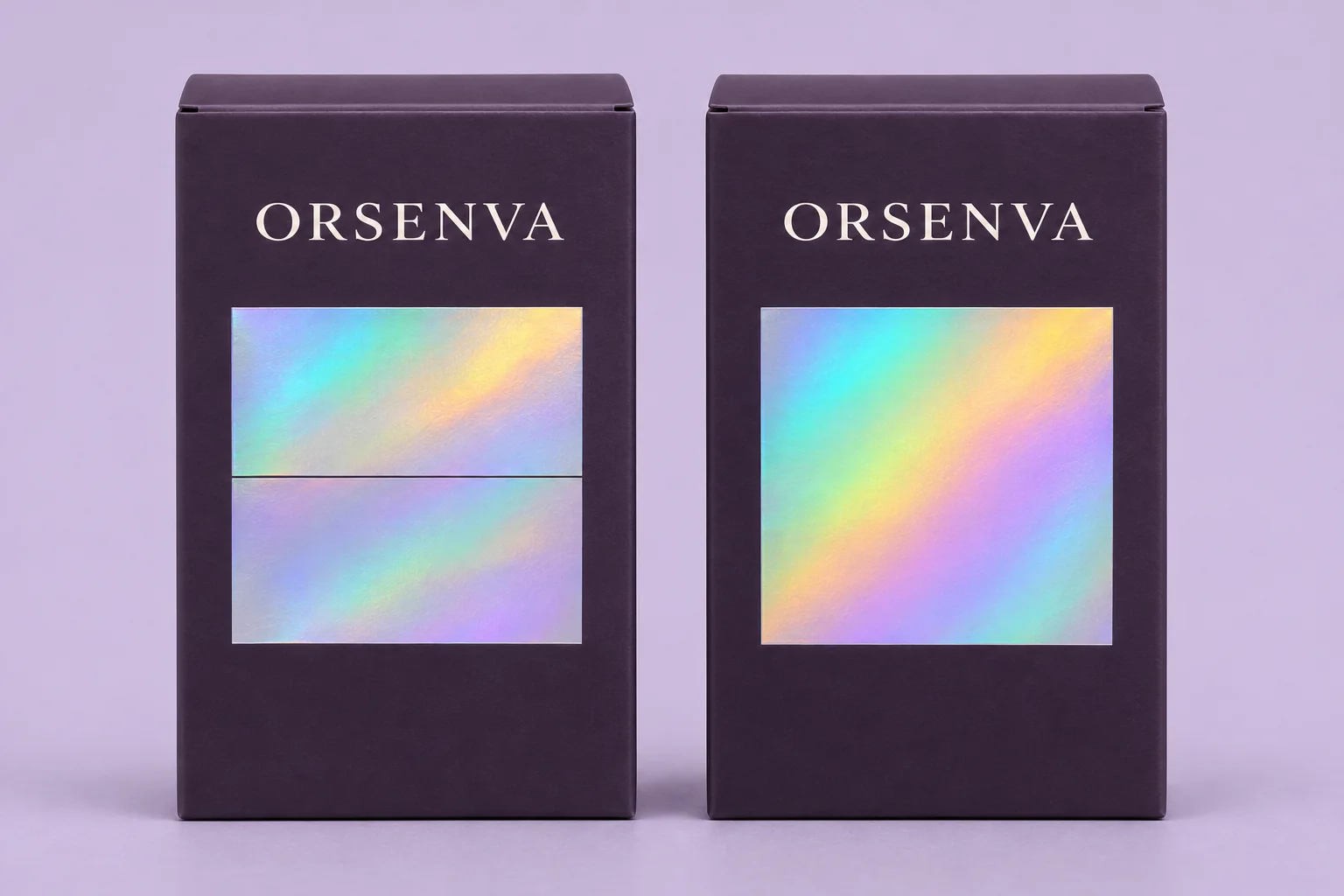
Ask for a finished label review across the holographic material repeat when an exposed rainbow area must look continuous. Some holographic stocks can show a fine line where the optical pattern repeats. A swatch cut between repeats can look right while leaving a visible line unapproved. Before ordering, decide whether a line may appear anywhere, only in a defined area, or nowhere on the accepted finished face.
Start with the part of the label customers will see, such as an exposed panel beside the wordmark on a carton. If every visible interruption matters there, price an identified material and process that can meet that requirement. If the appearance remains acceptable with a faint line away from important elements, write down the accepted area and keep a sample. This gives the printer one requirement it can discuss instead of a vague request for a cleaner hologram.
Find out what the line could be
A shim line is a boundary associated with reproducing the optical pattern in some holographic material. It can show up as a thin interruption in the reflected effect. Avery Dennison’s holographic materials portfolio describes how these lines can be more noticeable on certain rainbow and iridescent stocks and lists examples designed to avoid them. That portfolio describes the manufacturer’s products. Ask the converter to name the specific construction being quoted for your order.
A finished pack can also show a label edge, abrasion, a mark in the printed artwork or a crease from application. Note whether the line is visible on a loose label before it touches the pack. Mark its direction and position, and ask the supplier to compare it with a reference of the offered stock. If your concern is a joining point physically connecting two parts of the backing web, specify it separately. The roll splice guide addresses that supply question.
An optical line can matter without impairing other parts of the label. Conversely, a clean looking optical panel does not establish adhesion, opening evidence or code readability. Give each required function its own evidence and owner.
Turn the preferred look into a quote instruction
Mark the intended label cut, text and exposed holographic regions on the artwork. Identify the pack front and call out the area where an interruption would be objectionable. A large uninterrupted window beside a logo may be more sensitive to a boundary than a small accent used in a busy design. Review the printed construction because the area actually left reflective may differ from the full stock area.
| If the finished label needs | What to ask the converter to demonstrate |
|---|---|
| An uninterrupted optical field over the whole visible face | Identify the offered material and how the requirement would be met. Ask for finished specimens representing the relevant repeat or for substantiation of the offered seamless construction. Hold the purchase if neither is available. |
| A clean logo area with flexibility elsewhere | Supply a drawing showing the critical region and an acceptable example outside it. Ask whether the proposed layout or artwork can keep any visible line out of that region. |
| An accent that remains satisfactory with ordinary optical variation | Retain a representative acceptable specimen and a comparison the reviewer would reject. Record the part of the pack, viewing conditions and reason. |
| A preferred look the proposed construction cannot support | Compare a smaller exposed area, a less conspicuous pattern or another identified construction. Confirm the revised sample and quotation together. |
A converter may propose layout control, stock selection or another decoration approach. Ask what can be confirmed for the actual job and what it changes in the quote, usable quantity, or sample and approval schedule. A claim of seamless material also needs scope. Ask whether it describes an optical pattern boundary in the selected material, and which directions or visible areas it covers. Keep that answer with the material reference.
Check more than a favorable sample
Ask the converter for specimens identified by stock, label revision and source position in the material where that is relevant. Explain why a specimen chosen for its attractive face cannot answer a question about what happens across the repeat. Where a repeat boundary exists, ask to see finished labels representing the affected area and neighboring areas, or agree an appropriate review of the production arrangement with the converter. A single swatch can still help select the basic effect.
Compare the pieces first flat and then on the actual carton or container. Identify the intended front position and light source. Look straight on and tilt through the views that matter to the display. Record whether the line remains visible, whether it enters the protected region, and which specimen shows it. Retain at least one acceptable reference and document any appearance that the buyer would reject. A still photo can help locate a mark, while the retained sample lets the next reviewer see how its appearance changes with angle.
If the proposed condition cannot be observed in the sample, keep the acceptance question open. The buyer and converter can define how the follow-up inspection will handle the affected face, what quantity is usable and what happens when a sample fails. Avoid writing a universal repeat distance or inspection count into the brief. Those details depend on the construction, layout and agreed check.
Request the right appearance evidence
Review the options for custom holographic labels, then request a holographic label and sample quote with the label dimensions, marked artwork, packaging surface and quantities per design. Say whether any visible line is acceptable and send the marked area it must stay out of. Ask which offered material and finished specimen can resolve that condition before printing.