Holographic Labels Look Good on Screen. Check Scuff Resistance Before Shipping.
A foil finish can photograph beautifully and still need a different protective layer. Compare sample labels in your actual pack-out before committing to production.

Practical RP Labels guides to custom label sizing, materials, application formats and packaging verification.

A foil finish can photograph beautifully and still need a different protective layer. Compare sample labels in your actual pack-out before committing to production.
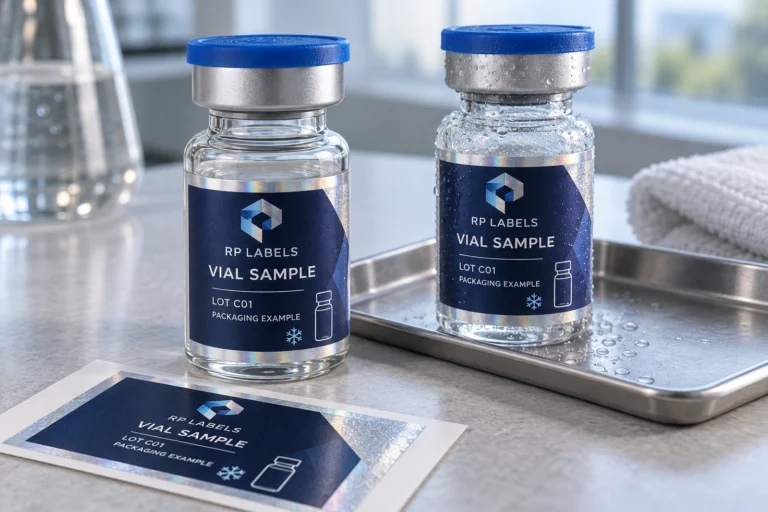
A label that stays attached in storage may still fail when applied to a cold, damp vial. Separate the application conditions from the storage requirement.
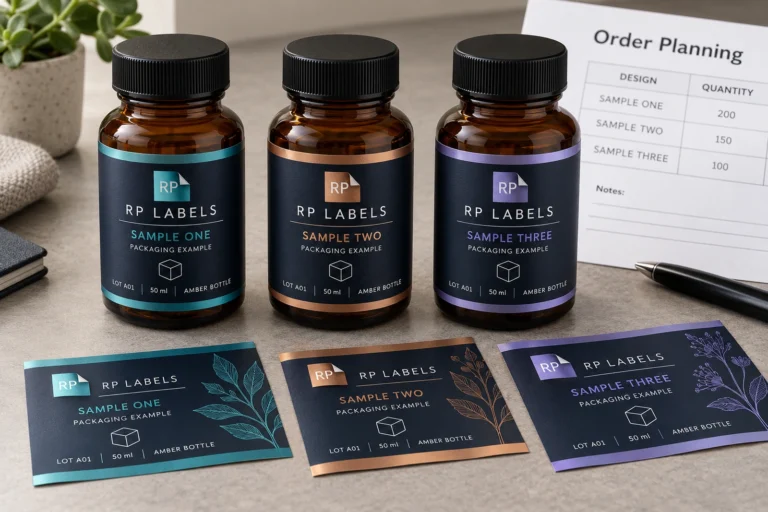
A low unit price can hide unused stock. Build a short-run label quote around quantities per design, approved artwork and the cost of the labels you will actually use.

The rainbow should attract attention while the product name stays clear. Separate reflective accents from opaque information zones before approving a holographic label.

A code can scan on a screen and still be awkward on a curved vial. Review its destination, clear space and real printed placement before releasing a label order.
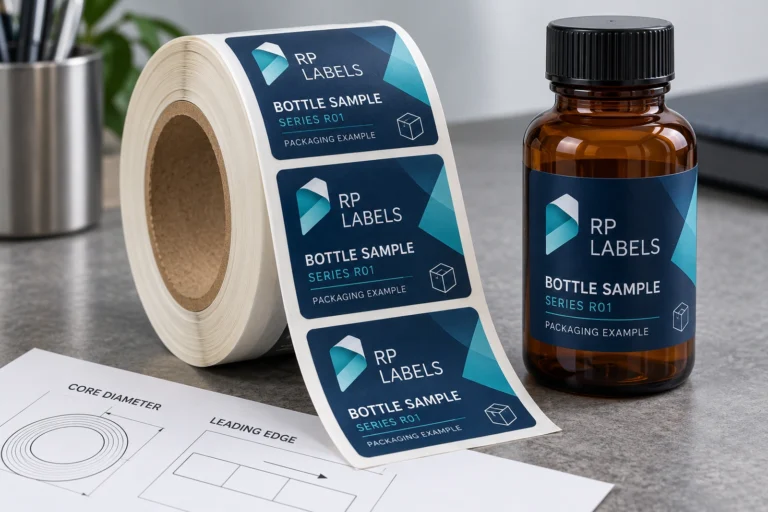
Correct artwork is only part of a machine-ready roll. Agree the winding diagram, core diameter and delivery limits with your packer before production.
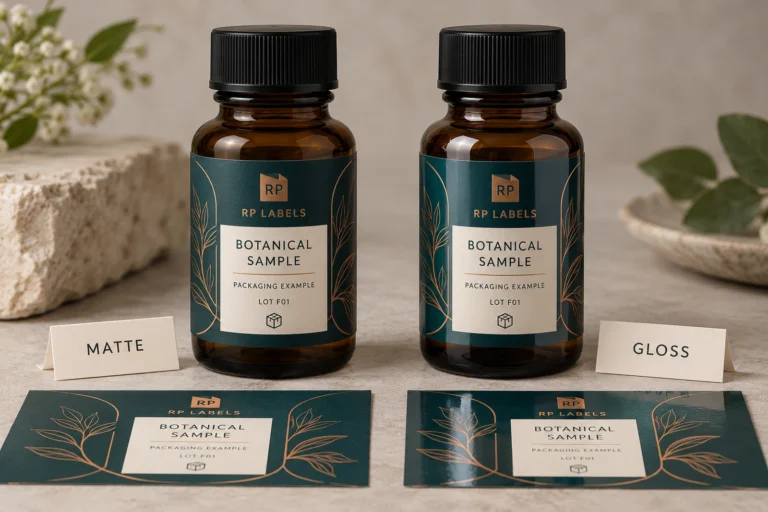
A finish that looks premium online may behave differently under shelf lights. Compare matte and gloss samples on the same bottle and under the lighting that matters.

A good-looking PDF is only part of label approval. These seven checks connect the artwork to your container, print specification and production handoff.
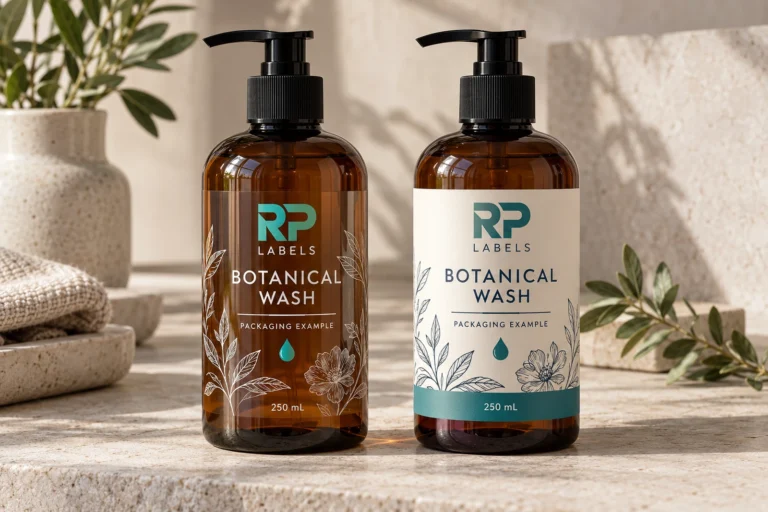
A transparent label can make the bottle part of the design. It can also hide the words you paid to print. Choose the construction around opacity and readability.

Holographic sticker paper is a search phrase, not a complete purchase specification. Ask what the label is made from and which areas should keep the optical effect.