Switching Vial Label Suppliers: Transfer the Specification
A finished label photo cannot carry the whole job to a new printer. Separate what must remain equivalent, what may change and what still needs review.

Practical RP Labels guides to custom label sizing, materials, application formats and packaging verification.

A finished label photo cannot carry the whole job to a new printer. Separate what must remain equivalent, what may change and what still needs review.
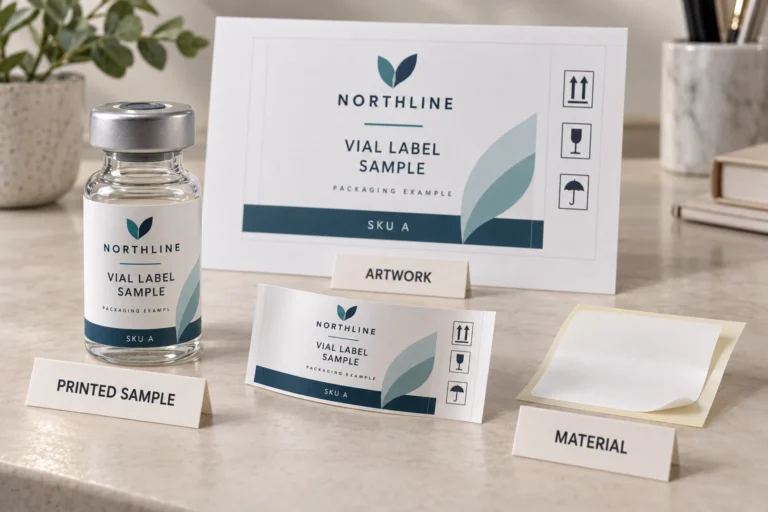
A PDF, a material swatch and your own printed sample answer different questions. Match the sample request to the purchasing decision before releasing production.

Waterproof is an incomplete buying instruction. Describe what gets wet, how long it stays wet and whether people wipe or handle the printed label.

The same color code can look different on another stock or finish. Keep a signed physical reference and agree how the next run will be compared.

A label can have the right outside dimensions and still lose a letter at the corner. Start from the supplier’s dieline and separate print bleed from live information.
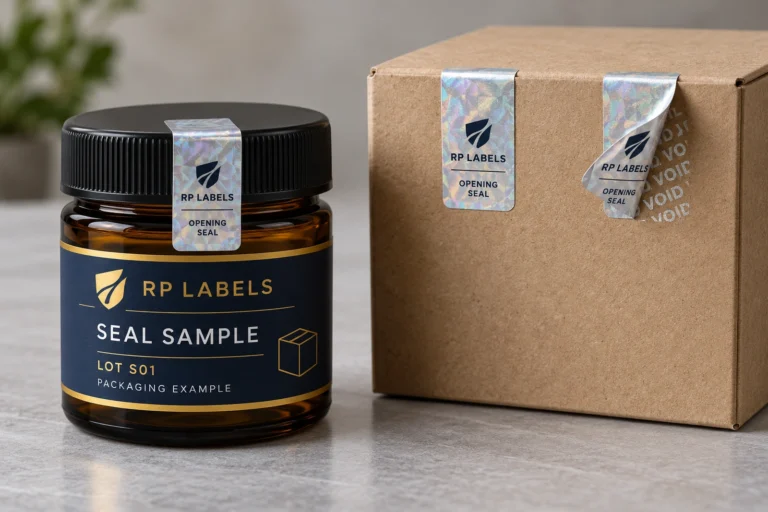
A holographic badge on the front of a bottle says little about whether its cap was opened. Define the closure and the visible evidence you want to inspect.
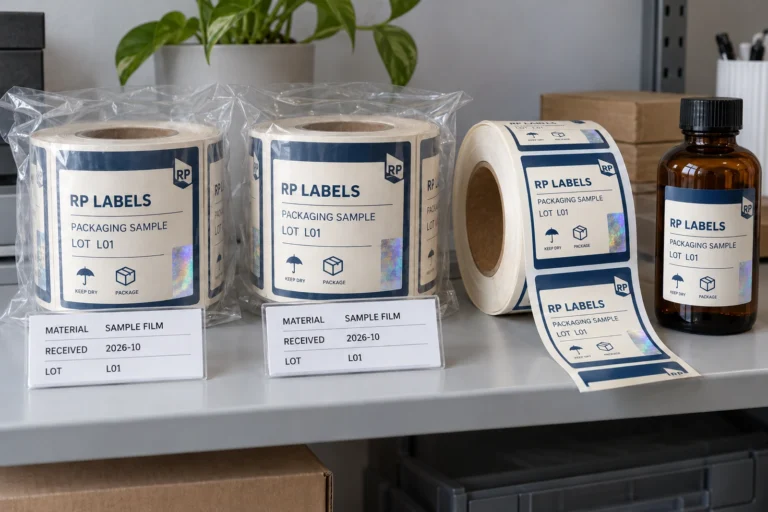
Unused labels are still a material inventory. Record their construction, batch and storage instructions so a future packing run does not start with unidentified stock.
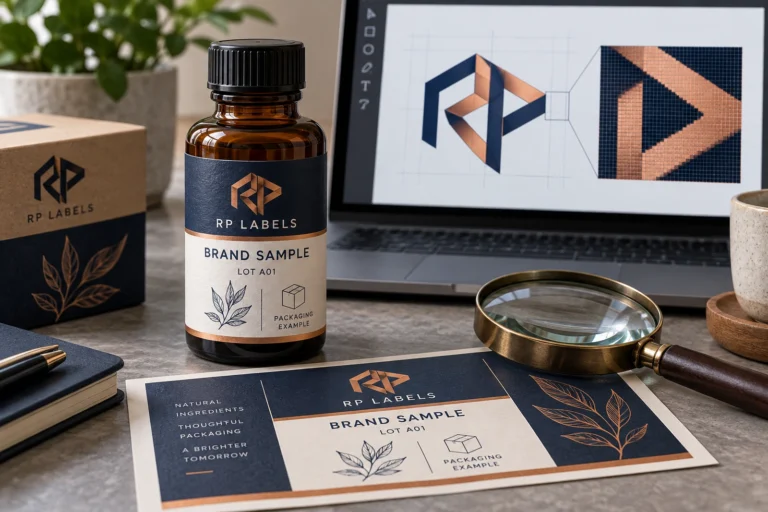
The file extension does not tell you whether a logo will print cleanly. Check the artwork inside the file and its intended size before sending it for production.
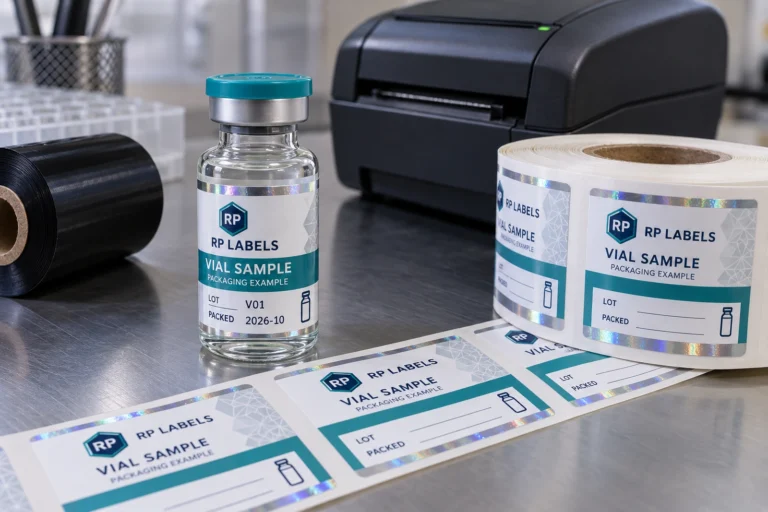
A reusable label design needs a reliable way to add changing lot and date information. Agree on the printing method and writable area before approving the finish.
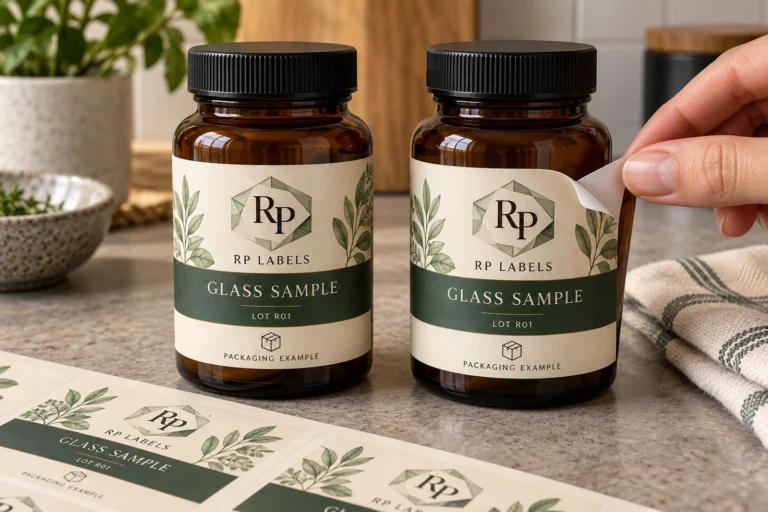
A bottle that must look finished on arrival and come clean later creates two different label requirements. Put removal conditions into the quote from the start.