Paper or Film Vial Labels? Choose Around Handling, Appearance and Cost
Compare paper and film vial labels around actual handling, appearance, print construction and price scope. Know what a material name cannot prove.

Practical RP Labels guides to custom label sizing, materials, application formats and packaging verification.

Compare paper and film vial labels around actual handling, appearance, print construction and price scope. Know what a material name cannot prove.

Check a tapered vial’s labeling zone before changing adhesive. Compare shorter labels, partial coverage and custom shapes using the actual container.
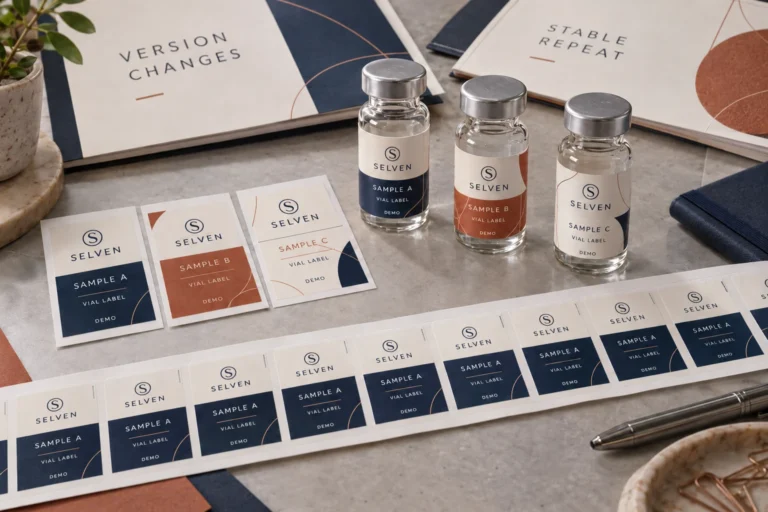
Compare digital and flexographic vial label proposals by artwork mix, preparation, revisions and finished scope, without assuming a universal break-even.

Separate metallic or holographic appearance from the process used to create it. Compare coverage, readable panels, scope and representative samples.

Before changing a holographic vial label, separate camera and lighting effects from a packaging problem. Review information panels and viewing tasks.
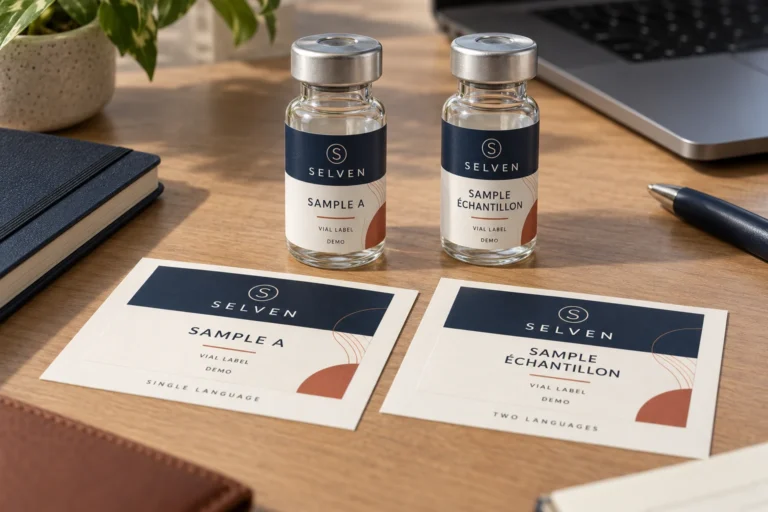
Choose combined or separate language versions before shrinking vial label text. Review approved wording, hierarchy, characters and quantity per design.

Coordinate vial labels with externally supplied cartons using component IDs, artwork revisions and a paired review, while keeping scopes explicit.

Agree vial-label roll joins with the packer before ordering. Confirm permission, identification, usable counts and how joined sections will be handled.

Compare mixed and separate SKU sheets for hand-applied vial labels. Plan the sheet map, picking sequence, unequal usage and quantities for each design.

Clarify spot inks, CMYK simulation and artwork swatches before ordering vial labels. Compare the output color route and appropriate proof evidence.