Holographic Sticker Paper vs Printed Film: A B2B Buying Guide
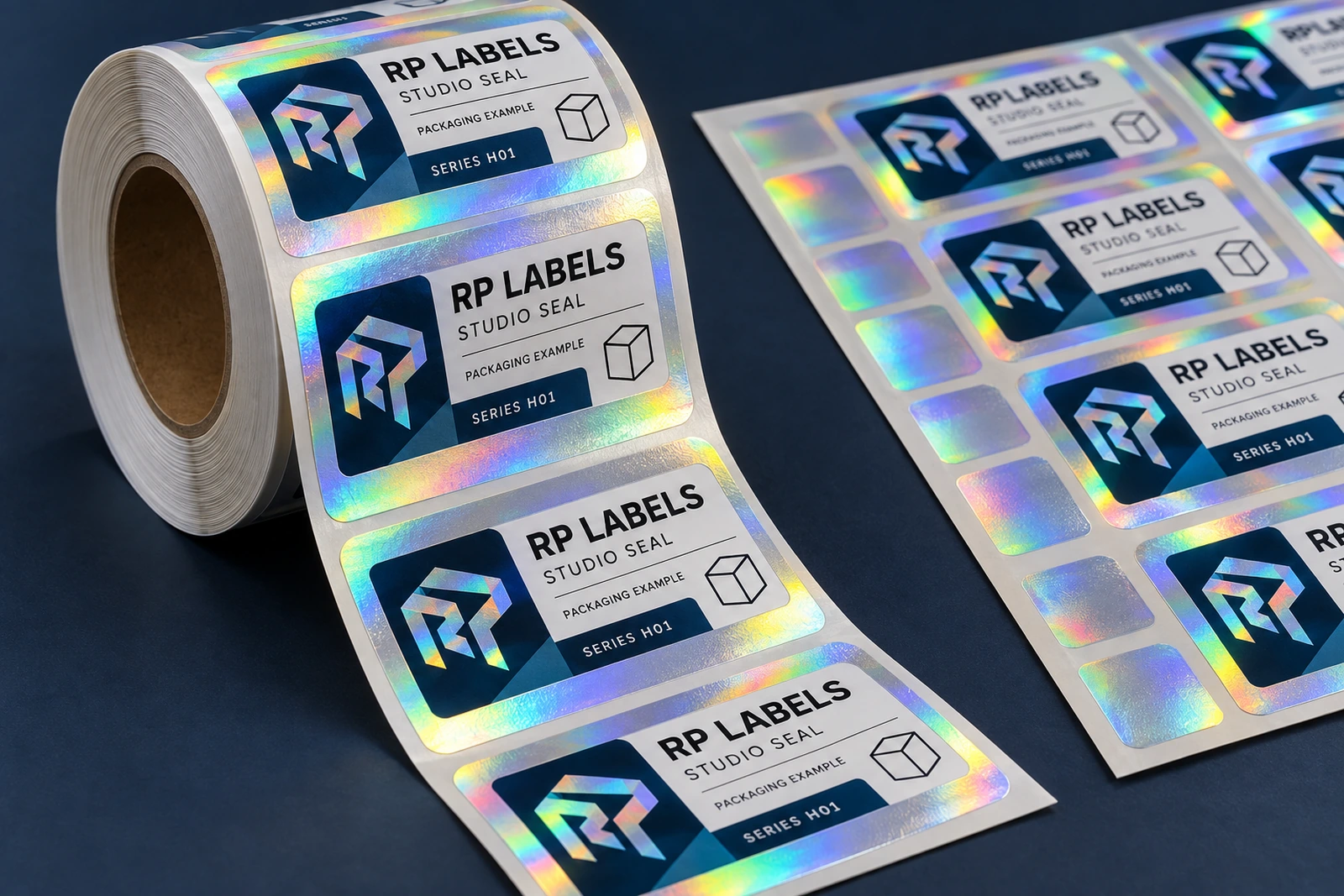
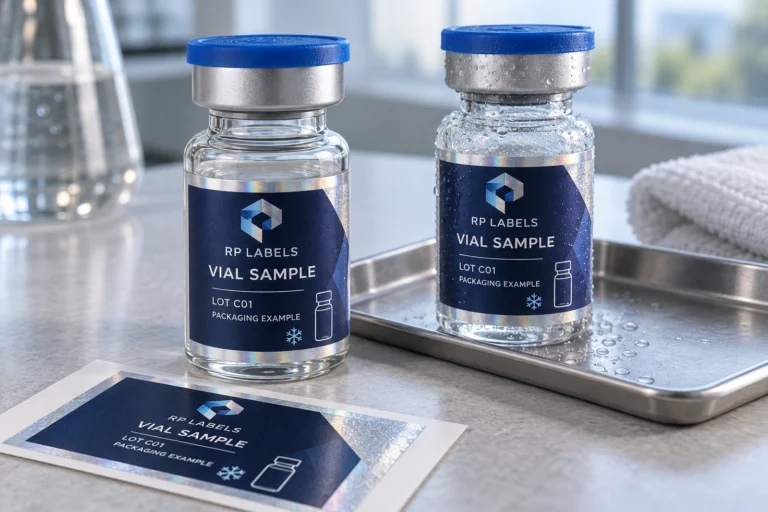
A buyer searches for holographic sticker paper, sees a bright rainbow sample and asks for the same finish. The problem is that a visual description has reached the quotation before a material specification has. Two labels can look similar in a photograph and still use different face materials, adhesives, coatings and supply formats.
My starting question would be: what must the finished label do on the package, apart from catching the light? For a retail carton, appearance and clean application may lead the decision. For a bottle handled around moisture, the construction needs a different review. Buying the effect without identifying the construction is an easy way to compare prices that are not for the same job.
The search phrase does not identify the whole construction
Holographic describes an optical appearance. Sticker paper is often used loosely in shopping descriptions, so do not rely on the name to tell you whether the printable face is paper, film or a laminated construction. Ask the supplier to identify the actual face material, adhesive, release liner and any protective finish.
Do not assume that every reflective film behaves alike either. A film label with one adhesive can have a different application boundary from a visually similar option with another adhesive. A face material that resists moisture does not establish how well the complete label will hold on your container. Request the proposed specification and relevant material information before approving a sample.
Decide where the rainbow should remain visible
Printed coverage is part of the design decision. A label can expose a reflective border, use the effect behind selected graphics, or reserve a quieter information panel. If the whole surface is visually active, the most important words may have to compete with it. A smaller exposed area can sometimes do more useful work than a completely reflective background.
Discuss whether opaque white printing is available and where it would be used. A white backing can change how color appears over a reflective material and can reduce the visible metallic effect in the covered areas. Avery’s white-underprint explanation illustrates that distinction for specialty label materials. Confirm the proposed printer’s process rather than treating the example as a promise about your order.
Ask the proof to identify the transparent, opaque and exposed reflective regions. Then inspect a physical sample while rotating it. The accepted reference should represent the balance you want between effect and reading comfort, not merely the brightest camera angle.
Compare two buying routes honestly
Printable stock for a small in-house job
A hypothetical studio owner wants a handful of packaging stickers for a short event. Buying compatible printable stock can be reasonable when the team already understands its printer and cutter. The owner values immediate access and the freedom to revise a design without commissioning a full printed run.
That route still has boundaries. Confirm printer compatibility, cutting requirements and the supplier’s stated material limitations. Include ink, rejected sheets and application time in the comparison. A low purchase price for stock is not necessarily the lowest cost for finished, usable labels.
A defined custom printed construction
A hypothetical packaging buyer needs several thousand matching labels for repeat orders. The concern shifts to a retained material specification, repeatable artwork and the format used by the packing team. A custom printed order may be a better fit if the buyer needs the supplier to deliver finished labels rather than a blank material to process internally.
The tradeoff is less spontaneous revision. Changing a finish or product name after approval may affect the order. The buyer should obtain a clear proof, sample plan and quantity split before releasing production. Neither route wins automatically: one solves a quick internal task, the other supports a defined supply requirement.
Build the comparison around the package
Use the same artwork and intended container when comparing candidate materials. Specify whether the surface is a carton, glass bottle, plastic jar or another package. Tell the supplier about ordinary handling, possible moisture, application temperature and storage conditions. These are inputs for selecting and checking the construction, not conditions a decorative finish guarantees by itself.
Ask what the sample represents. Is it the proposed material and finish, or a general appearance reference? Apply representative samples using the planned method. Review edges, fit, legibility and changes after the conditions you agreed to assess. Define the assessment with the supplier rather than inventing a standard test from a marketing image.
For a dry promotional carton, a simpler specification may meet the brief without paying for unnecessary additions. For a handled cosmetic bottle, extra finishing may be worth discussing. The useful comparison is the cost of meeting the actual packaging requirement, including application and avoidable waste.
Keep appearance separate from security
A rainbow effect does not establish tamper evidence, uniqueness or a working verification system. If the buyer needs visible evidence of removal or controlled identification, specify that objective separately and discuss the construction and verification process needed for it. Do not let the word holographic stand in for those requirements.
Our existing guide to appearance, tamper evidence and verification covers that distinction. This buying guide concentrates on material and printed coverage. A decorative studio seal can be a good purchase without being a security label; the mistake is presenting one function as proof of another.
Questions to send before requesting a price
Ask for face material, adhesive reference, finish, available printed-white coverage, finished size and delivery format. Add quantity per artwork version and the actual package surface. If labels feed an applicator, confirm roll presentation with that equipment’s requirements. If they are applied by hand, explain how the packer will handle them.
Review our materials and finishes reference to organize the brief. Keep a physical appearance sample and its specification together. A sample with no construction record is difficult to use as the basis for a repeat order.
Frequently asked purchasing questions
Is holographic sticker paper always made from paper?
The phrase alone is not enough to establish the construction. Ask for the actual face material and any laminate or coating. Use the supplier’s material description, not a search-category name, in the order specification.
Will printed colors hide the holographic effect?
Printed coverage can change how much of the effect remains visible. Opaque layers may conceal it in selected areas. Confirm the coverage in the proof and examine a physical sample under changing angles.
Does a holographic finish prove that a label is secure?
No. Visual appearance and security functions are separate questions. Specify any removal evidence or verification requirement explicitly and request the corresponding construction and process details.
What is the best material for my bottle?
There is no universal answer from the finish name. Surface, dimensions, application method and expected conditions guide selection. Request a proposed construction and assess representative samples on the intended package.
Quote the construction, then judge the effect
Send RP Labels your holographic label brief with the package photo, artwork, quantity and areas where you want the optical effect visible. Ask for the material and print arrangement to be named in the quotation. You are buying a usable printed label, not the brightest square in a search result.