Vial Label Colors Match Here but Differ There: Agree Viewing Conditions
Compare the same pair before correcting the ink
The vial label and carton panel look matched in one room. In another, the pair looks less consistent. Before asking the printer to change the color, put the same identified components together and establish what changed in the viewing conditions. A new ink value is not a useful first answer to an undefined comparison.
I would compare the pair under agreed lighting relevant to the intended package, keeping orientation and background reasonably consistent. Separate a relationship that changes with light from ordinary glare, different samples and camera processing. The aim is an appearance approval with a known basis, not a promise that every material looks identical everywhere.
This article concerns immediate viewing conditions. It is separate from fading after exposure, which requires its own material and time-related evidence. No calibrated measurement, color tolerance or RP Labels laboratory capability is established here.
Distinguish a pair mismatch from one object looking different
Changing light can change how an individual object appears. The more specific concern here is whether two components that seem matched under one condition cease to match under another. That difference can matter when a label and carton or old and new references are meant to communicate a shared brand color.
Capture One’s official metamerism documentation, updated in March 2025, describes changes in perceived matching with changed conditions, including illumination and viewing geometry. It also discusses the limits of color capture. Its context is reproduction and photography, not a production acceptance specification for vial labels.
That background explains why a phone photograph cannot diagnose every physical mismatch. Ask whether the concern is visible when the same pair is viewed directly, or only in particular images. A different camera adjustment can create a different representation without changing the packaging. Do not use that uncertainty to dismiss a repeatable physical concern either.
Establish the reference and the relationship being approved
Identify both components and their revisions. Are you comparing a label with an external carton, two printed constructions, or old and new stock? Record which panel is the intended reference and what appearance relationship matters. A vague instruction to match the brand leaves that decision open.
The repeat-order color-reference guide covers preserving and identifying the accepted reference. Use it before comparing unidentified samples from a drawer. If either component changed its material or finish, expose that change rather than silently treating it as an unchanged print.
Also identify which light conditions are commercially relevant and which were incidental. Ask the responsible color reviewer how those conditions should be represented. This guide does not prescribe a light-booth standard, a numerical tolerance or an obligation to match under every possible lamp.
Use a viewing record with one variable changed at a time
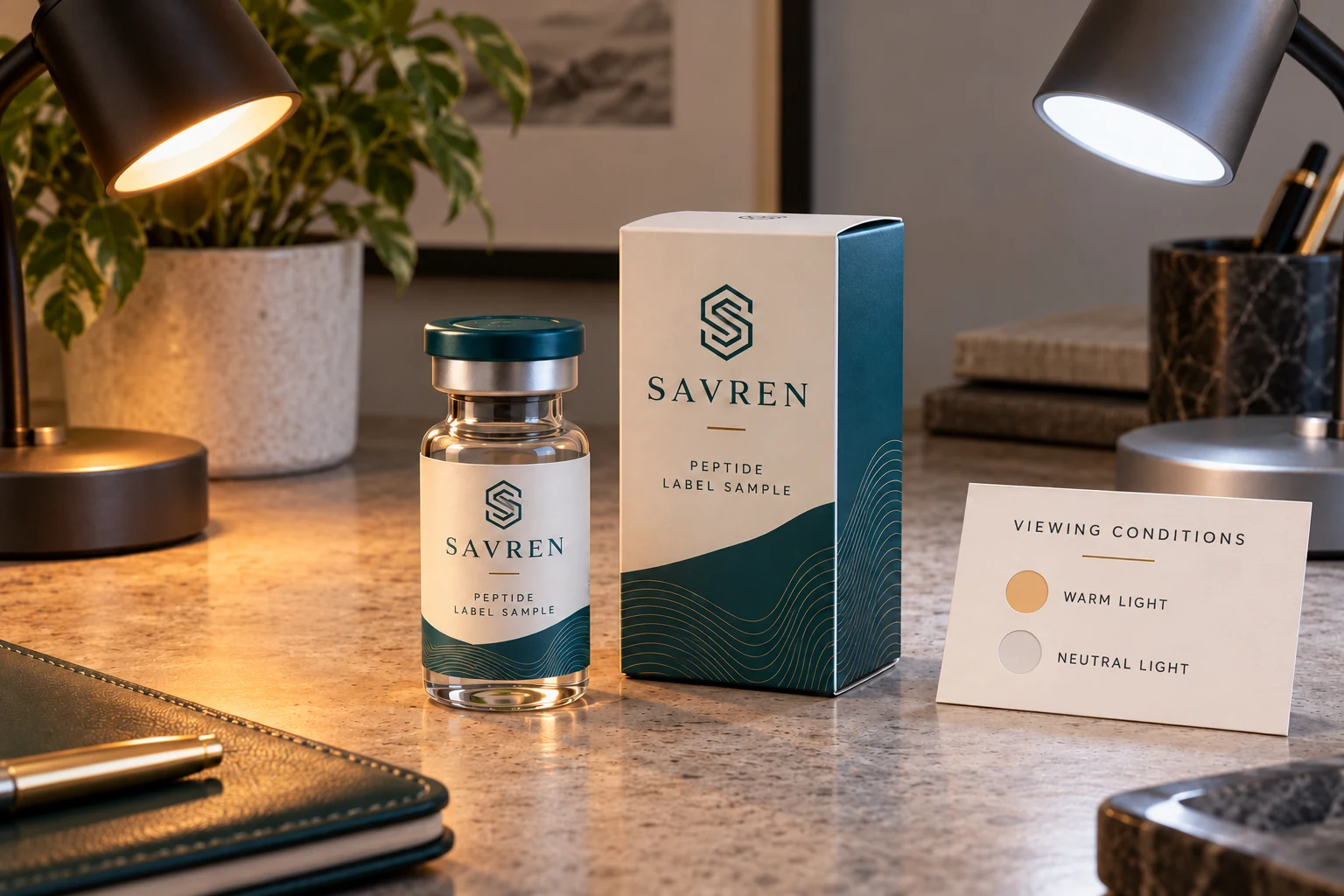
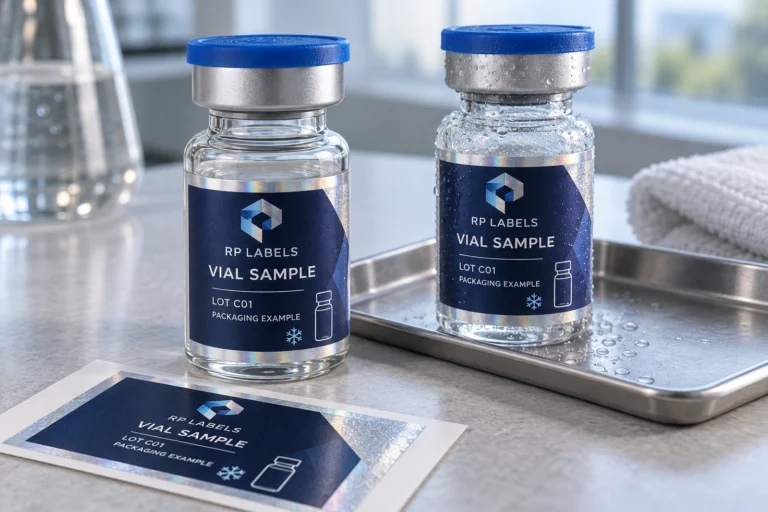
The scene identifies a component pair and two illustrative lights. It is not a calibrated comparison or proof of metamerism; examine the actual identified pair under the agreed conditions.
| Record item | What to keep consistent or identify | What the comparison can clarify |
|---|---|---|
| Physical pair | Same labeled specimens and component references | Whether sample substitution explains the concern |
| Light condition | Named or otherwise identifiable relevant viewing arrangement | Whether the pair’s relationship changes with illumination |
| Orientation and background | Comparable position and surroundings | Whether glare or geometry is dominating the observation |
| Observation | Which region differs and how the pair relates | A specific discussion instead of a generic wrong-color complaint |
| Image record | Camera/view conditions and purpose | Whether a photograph is evidence or only communication context |
| Approval basis | Reference, relevant conditions and responsible reviewer | What the accepted appearance decision actually covers |
Compare the pair side by side before changing either sample. Record the same relevant regions in each condition. If one sample is rotated, moved into glare or photographed with different automatic adjustments, note that limitation rather than attributing every difference to the inks.
When a physical light-dependent relationship appears repeatable, ask the competent supplier or color reviewer which further assessment is appropriate. If instrument-based work is required, agree its scope and conditions rather than inventing a numerical pass limit from this article. A visual observation can justify investigation without proving a particular colorant cause.
Decide which part of the proposal needs review
If the concern exists only in a photograph while the physical pair meets the agreed viewing task, a photography review may be the next useful action. The reflective-label photography guide helps separate presentation from package-level readability. Reprinting immediately could leave the same image problem attached to new stock.
If the physical relationship fails the intended relevant conditions, discuss the actual materials, print proposal and reference with the responsible parties. Ask what can be changed and what appearance evidence would support a candidate. An external carton supplier may need to participate; the label printer should not have to guess the other component’s specification.
If the intended effect includes reflection, define which regions should remain stable and which are deliberately responsive. Trying to make every angle of a metallic accent behave like an opaque printed panel may be an unclear goal. A fair alternative can be a quieter information panel or a consciously accepted component difference, subject to the brand’s requirements.
Two illustrative approvals require different responses
Imagine a brand coordinating a matte label panel with a paperboard carton. The pair is acceptable in one relevant viewing arrangement but looks noticeably different in another. The buyer should document the same pair under both conditions and ask for a color assessment tied to the actual constructions before editing a color value.
Now imagine a buyer comparing an ordinary phone photograph of a reflective label with a directly viewed carton. The first task is to put the physical components together under comparable conditions. Rebuilding the label from that mixed comparison may solve a camera representation rather than the actual package relationship.
These are illustrative situations, not RP print failures or measured demonstrations of metamerism. A counterexample matters too: if the physical pair satisfies the agreed conditions and the alleged difference comes from substituted samples, retaining the accepted proposal may be the right decision. More color adjustment is not automatically more control.
Questions about color and lighting
Is every color change under light called metamerism?
Do not use the word as a diagnosis of every appearance change. Identify whether a pair’s match changes, and separate glare, sample differences and image processing. The relevant reviewer can assess the actual concern.
Does a matching color code settle the issue?
It is useful input, but not the complete appearance agreement. Identify the physical construction, reference, compared component and relevant viewing conditions before treating a shared code as a guaranteed match.
Can an AI image prove a lighting-dependent match?
No. It can illustrate a review setup. It cannot reproduce calibrated spectral behavior or establish how real inks and materials compare. Use the actual identified specimens for the decision.
What should the inquiry include?
For custom peptide vial labels, send the identified label and comparison component, construction references, relevant viewing conditions, approved appearance reference and quantity per design through the project inquiry form. Describe the relationship that changes and ask which available assessment or sample can answer it.