Static During Label Dispensing: Bring the Packer into the Liner Decision
Before changing label liners for suspected static, record what happens at detection, release and after separation. Send the packer a useful review brief.

Practical RP Labels guides to custom label sizing, materials, application formats and packaging verification.

Before changing label liners for suspected static, record what happens at detection, release and after separation. Send the packer a useful review brief.

Confirm the actual outside label zone on coated glass vials. Build a surface brief, separate fit from adhesion, and request relevant evidence before approval.

Resolve ambiguous dates before vial-label proof approval. Confirm the field owner, actual date meaning, transfer format, recipient read-back and final display.

Compare vial-label quotes in pieces, rolls or metres using pitch, lanes and non-label lengths. Keep theoretical positions separate from usable and billable counts.

Match a material datasheet and its revision to the offered vial-label construction. Identify changed components, unresolved references and approval limits.
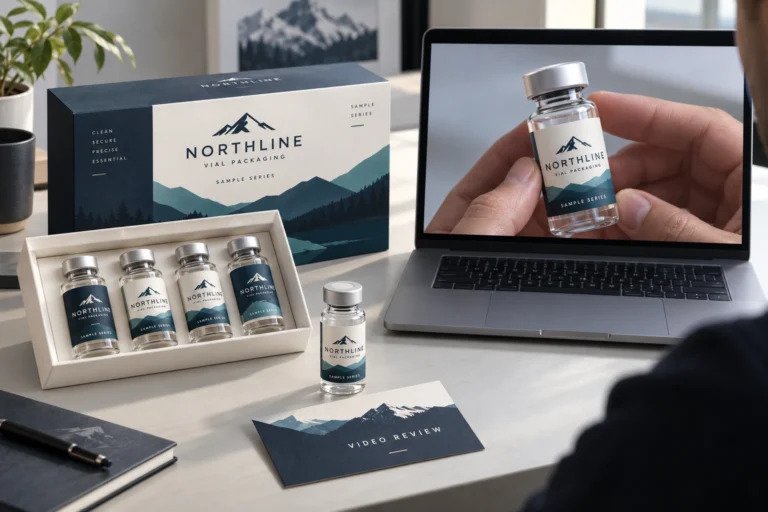
Separate what a vial-label video can approve from color, handling and application questions. Use an identified sample and a bounded approval record.

Learn which evidence to ask for when reviewing recycled-content or recyclability claims for custom vial packaging.

A familiar supplier’s sample feels reassuring before anyone checks the product-name field. Another sample looks more premium because its presentation folder is attractive. Before choosing, identify the actual purchasing criteria and record observations on the samples themselves.

A carton of printed labels carries the printer’s job or batch reference. The label artwork also includes a product-lot field supplied by the buyer. Those references may be linked in the buyer’s process, but they do not mean the same thing and should not silently replace one another.

A buyer sends a photograph of another label and asks for the same look. The useful part may be its information hierarchy, a restrained finish or the way a panel wraps around a small vial. The photograph does not, by itself, provide authorized production assets or permission to reproduce another brand’s identity.