Damaged Label Shipment: Keep Transport Evidence Separate from the Replacement Order
Preserve the evidence and define the next order separately
A carton of custom label rolls arrives with a damaged corner. The buyer needs usable labels quickly and starts discussing a replacement. Before the damaged packaging disappears, create an identified record of what arrived. Keep the transport report, the stock-release decision and any replacement printing instruction connected, but do not let one stand for the others.
Photograph the outer carton, inner arrangement and affected label stock, with the shipment reference and receiving observations. Ask the booking party which current carrier procedure applies and what must be retained. Separately identify the exact designs and quantities needed for recovery. A damage report does not itself authorize printing, establish reimbursement or prove that every roll is unusable.
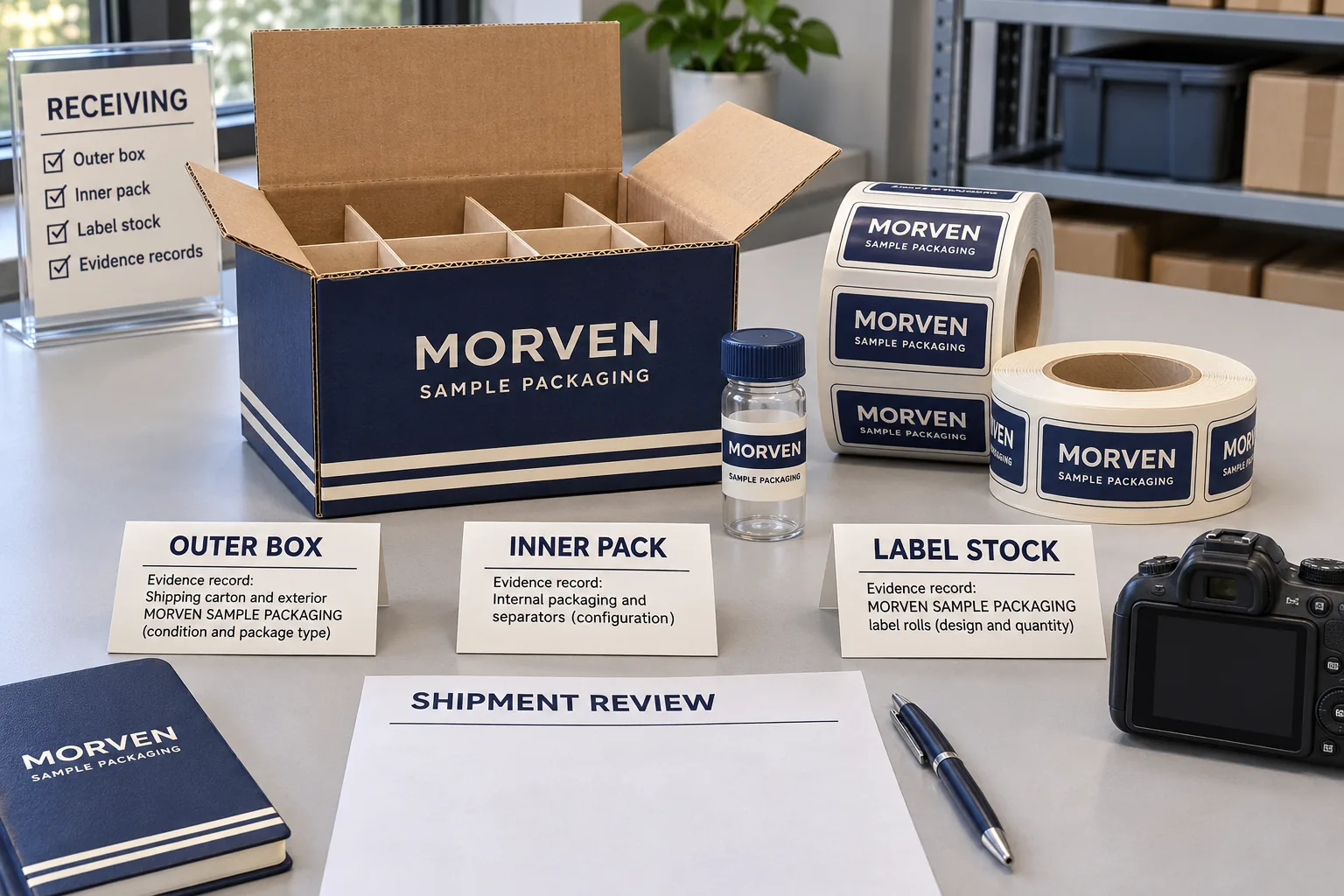
Record three objects rather than one damaged-box picture
The outer carton shows the received packaging condition. Inner protection shows how the rolls were arranged and separated. The label stock shows the actual object the buyer needs to use. Connect the photographs through carton and roll references instead of sending unrelated close-ups that cannot be reconciled with the shipment.
DHL’s published damage-reporting guidance asks for exterior, interior and contents photographs, and distinguishes pictures taken before dispatch from those taken at receipt. This is a carrier-specific example of useful evidence, not the governing procedure for every shipment. Obtain the current requirements for the actual service and agreement. This guide provides no universal deadline, compensation amount or insurance conclusion.
Make timely contact with the responsible booking party and follow the applicable reporting instructions. Identify who is coordinating with the carrier and who is reviewing the goods. Do not assume the person physically receiving the parcel owns every contractual or claim action.
Use a shipment-to-stock evidence map
Retain originals of relevant records and label descriptions clearly. Keep observations separate from explanations that have not yet been established. A wet area, dent or displaced layer can be described without claiming to know where or why it occurred.
| Record | Useful connection | Question still requiring a decision |
|---|---|---|
| Shipment | Waybill or booking reference and received carton count | Which actual service and reporting process applies? |
| Outer package | Carton reference and condition photographs | What investigation or inspection is requested? |
| Inner arrangement | Protection and position of identified rolls | What arrived, rather than what was expected? |
| Stock observation | Design, revision, roll identity and affected area | Which goods can the responsible reviewer release? |
| Preservation | Location and status of packaging and stock | What must remain available for assessment? |
| Recovery request | Required usable quantity per design | What replacement scope and timing can be confirmed? |
Protect personal or commercially sensitive information when sharing copies beyond the authorized parties. Preserve the original reference needed for the actual case. A cropped public image is not a substitute for the complete private shipment record.
Do not turn inspection into an undocumented repair
Before discarding, rewrapping or attempting to restore the affected rolls, ask what the responsible parties need for assessment. Record any necessary handling already performed. Keep original packaging available while the applicable preservation instructions are being confirmed.
Do not feed an uncertain roll into the labeling line merely to demonstrate a problem. The receiving-inspection guide addresses stock identity and release. Use an appropriate controlled review by the responsible team to determine usability. A visually damaged carton and a rejected label roll are different observations.
If unaffected stock is released, record the particular identified units and basis. Avoid converting one accepted outer roll into approval of every inner layer or carton. Conversely, do not label the entire shipment unusable solely because an outer corner is dented. Retain unknowns until the responsible review resolves them.
Separate a carrier report from the supplier’s response
Ask who is preparing the transport record, what information is outstanding and which case reference the parties should use. Keep submitted evidence and responses together. A conversation with the printer may support coordination without establishing that a formal carrier report has been lodged.
The actual transport and purchase terms determine the relevant responsibilities. Do not infer an automatic replacement, refund or full reimbursement from the word damaged. This article does not decide liability. If parties disagree about their obligations, use their governing agreement and appropriate qualified advice rather than treating a photograph as a complete contractual determination.
The roll pack-out guide concerns prevention and proposed support for future shipments. Its packing discussion should use the new observations, but improving a future arrangement does not settle the treatment of the current stock or the commercial case.
Make the recovery instruction an identified printing job
If replacement labels are proposed, confirm the required quantity per artwork, revision, construction, format and receiving destination. Distinguish an urgent request from a confirmed production or delivery commitment. A general message saying replace the order may be ambiguous when only part of a mixed shipment is affected.
State whether the request concerns the original accepted artwork or a newly revised design. A wording change creates an additional approval question. Do not let urgency transfer the old sign-off to an unreviewed file or silently authorize an entire repeat when only one design is needed.
The replacement-run guide helps specify what a proposed correction should demonstrate. Use it for the production review after the receiving evidence is organized. Confirm any cost allocation and transport scope explicitly; neither an open carrier case nor an urgent shortage establishes free production.
Questions when a label shipment arrives damaged
Does a damaged box mean every label must be rejected?
No automatic conclusion follows. Identify the affected units and have the responsible receiving reviewer assess the stock against its accepted requirements. Keep unresolved goods under the appropriate hold.
Can I discard packaging after taking one photograph?
Confirm the applicable preservation and inspection instructions first. A single exterior image may leave the inner arrangement and condition of the actual contents undocumented.
Does requesting a replacement close the transport case?
Do not assume that. Keep the carrier report, stock status and proposed printing recovery as explicit records with their own responsible parties and confirmations.
Send a bounded recovery inquiry
For custom vial-label orders, use the project inquiry form with the original order reference, affected artwork and roll identities, observations, quantities requiring review and destination. Share relevant photographs through the agreed authorized channel. Ask for a confirmed assessment and recovery proposal while the responsible booking party handles the applicable shipment-reporting process.